



A 44-year-old schoolteacher from Multan described the pain as the worst of his life — sharp, radiating agony that started in his lower back and travelled down toward his groin, leaving him unable to stand straight. An ultrasound confirmed what he feared: a 6mm calcium oxalate stone lodged in his left ureter. His urologist recommended watchful waiting for now, but told him if it didn’t pass within weeks, surgery would be the next step. He came to us asking whether homeopathic medicine for kidney stones could help it pass — and whether there was anything he could do to make sure it didn’t come back.
Kidney stones (گردے کی پتھری) are one of the most acutely painful conditions a person can experience, and Pakistan has one of the highest rates of renal stone disease in the world. Heat, hard water, and dietary habits create a perfect environment for stone formation — and recurrence rates without intervention hover around 50% within five years.
In this article, you’ll learn which homeopathic remedies have the strongest clinical track record for kidney stones, how to use them correctly, and what lifestyle adjustments genuinely reduce recurrence. This is practical, experience-backed guidance — not a generic remedy list.
What Are Kidney Stones — and Why Do So Many Pakistanis Suffer From Them?
Kidney stones (گردے کی پتھری), medically known as renal calculi (پتھری), are hard mineral deposits that form inside the kidneys when urine becomes concentrated and certain substances — most commonly calcium, oxalate, and uric acid — crystallize. Small stones may pass on their own; larger ones can obstruct the urinary tract and cause intense pain, blood in urine, and infection.
Pakistan sits in what nephrologists call the “stone belt” — a geographic band spanning South Asia, the Middle East, and North Africa where high ambient temperatures, dehydration, and mineral-rich diets create optimal conditions for stone formation. Studies from urological centres in Lahore, Karachi, and Peshawar consistently place the prevalence of kidney stone disease among the highest in Asia.
Several factors make Pakistani patients particularly vulnerable. The intense summer heat — often exceeding 45°C in cities like Multan and Hyderabad — leads to chronic low-grade dehydration that concentrates urine. Spinach, tomatoes, and red meat, all dietary staples in Pakistan, are high in oxalates and purines respectively, both of which feed stone formation. Hard groundwater consumed in rural areas is another contributing factor, particularly in Punjab and Sindh.
Calcium oxalate stones account for approximately 75% of all kidney stones in Pakistan. Uric acid stones — closely linked to high meat consumption and gout — make up most of the remainder. Understanding the stone type matters for treatment because different homeopathic remedies have affinities for different stone compositions, a nuance that distinguishes genuine natural kidney stone treatment in Pakistan from a one-size-fits-all approach.
How Does Homeopathy Help with Kidney Stones?
Homeopathy works on the principle of “like cures like” — a substance that produces symptoms similar to an illness in a healthy person can, when highly diluted, stimulate the body to resolve those same symptoms. For kidney stones, this means selecting a remedy that matches not just the stone, but the entire presenting picture: the character of the pain, the location of the obstruction, the type of urinary symptoms, and the patient’s constitutional tendencies toward stone formation.
This is where homeopathy offers something genuinely different from conventional pain management. A patient with sharp, radiating pain extending from the left kidney down toward the bladder, accompanied by nausea and restlessness, points toward a very different remedy than one with dull, aching pain in the right flank with scanty, dark urine. The precision of symptom-matching is what makes it effective — and what separates it from simply taking a herb.
At Warsan Homoeopathic Laboratories, we’ve been working with patients experiencing renal calculi since 1977. Our practitioners and partner clinics across Pakistan have observed consistent patterns: remedies selected on a clear symptom match tend to support the passage of small to medium stones, reduce the intensity and duration of colic episodes, and — most importantly for long-term health — help shift the underlying constitutional tendency toward stone formation. This last effect is the hardest to achieve with pain relievers or lithotripsy, both of which address the stone but not the terrain that keeps producing them.
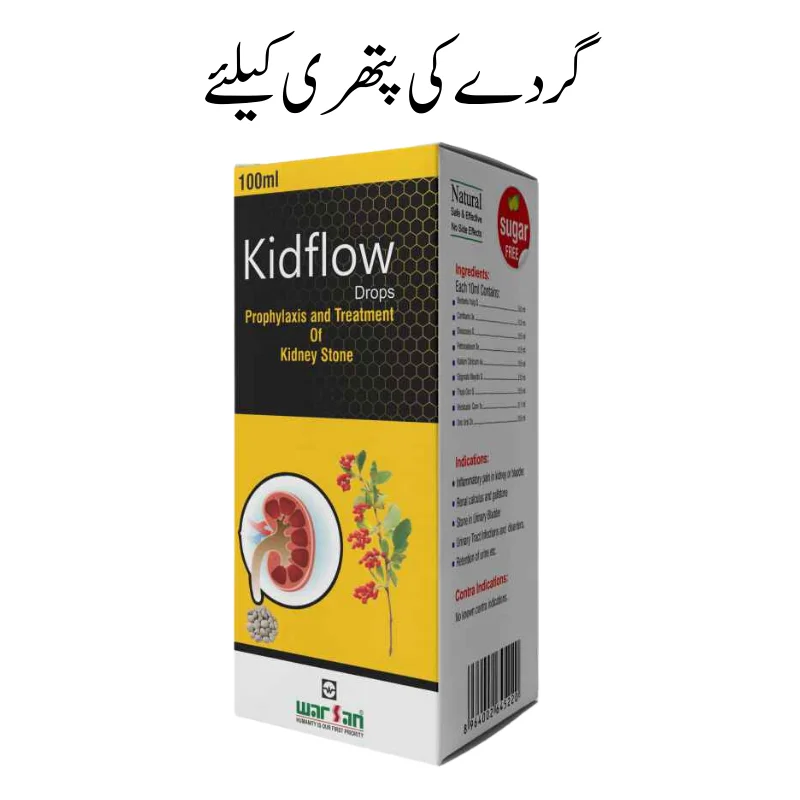
KidFlow Drops
Top Homeopathic Remedies for Kidney Stones in Pakistan
Berberis Vulgaris (Q or 6X)
Berberis Vulgaris is the most widely indicated remedy for kidney stones in homeopathic practice — and the berberis vulgaris kidney stone remedy has an almost specific affinity for left-sided renal colic. The characteristic symptom picture includes sharp, radiating pain that shoots from the left kidney downward toward the bladder and thigh, with a sensation of bubbling or bubbling-like movement in the affected area. Urine may be scanty, dark yellow, or contain sediment. Patients often feel worse from movement and better when still. This remedy is often used in Mother Tincture for acute colic and 6X for longer-term supportive treatment. Dose: Q (10 drops in water) every 2–3 hours during acute pain; 6X twice daily for prevention.
Lycopodium Clavatum (30C)
Lycopodium has a strong affinity for the right kidney and is particularly useful for right-sided renal calculi with associated digestive disturbance. The patient often experiences red sediment in the urine — a characteristic that clinicians consider strongly indicative of this remedy — along with bloating, flatulence, and an aggravation of symptoms between 4 PM and 8 PM. Lycopodium is also a deeply constitutional remedy, suited to patients who have a chronic tendency toward right-sided urinary symptoms and digestive complaints together. Dose: 30C twice weekly.
Cantharis Vesicatoria (30C)
Cantharis is indicated when there is intense burning and cutting pain during urination — a burning that feels almost intolerable and is present both before and after passing urine. It’s the primary remedy when urinary tract inflammation accompanies stone passage, or when a stone is irritating the bladder walls. Patients may experience an almost constant urge to urinate with only a few drops passing each time. This remedy addresses the inflammatory and spasmodic components of stone passage with particular effectiveness. Dose: 30C every 2–3 hours during acute episodes, reducing frequency as symptoms ease.
Ocimum Canum (30C or 6C)
Ocimum Canum — derived from a variety of basil — is one of the more specific remedies for uric acid stones and for right-sided kidney pain accompanied by vomiting. The patient is typically restless, anxious, and experiences significant nausea during the colic attack. Urine may have a strong, characteristic odour, and the pain is often sharp and twisting. It’s a valuable remedy that often doesn’t appear in generic lists, yet in our clinical experience at Warsan Homoeopathic, it covers a significant proportion of acute uric-acid stone presentations. Dose: 30C every 2–4 hours during acute pain.
Sarsaparilla Officinalis (30C)
Sarsaparilla is particularly indicated when a stone has passed or is near the bladder — there’s typically severe pain at the end of urination rather than throughout, and patients may pass gravel or white sandy sediment in their urine. The pain is characteristically worse at the close of urination and may be accompanied by a burning sensation that extends from the urethra outward. It’s also a useful preventive remedy for those who have passed stones previously and want to reduce the crystallization tendency. Dose: 30C twice daily during active symptoms.
Solidago Virgaurea (Q or 6X)
Solidago — goldenrod — is a useful kidney-supportive remedy when there is dull, persistent aching across the lower back and kidneys with scanty, dark urine and general sluggishness of renal function. It’s less acute than Berberis but has a tonic effect on the kidneys that makes it valuable in prevention and in recovering kidney function after stone passage. It’s one of the remedies we recommend most for renal calculi holistic treatment — particularly when ongoing kidney support is the goal rather than acute colic relief. Dose: Q (10 drops twice daily) or 6X twice daily.
Expert Tip: In acute kidney stone colic, Berberis Vulgaris Q and Cantharis 30C are often used together — Berberis addressing the radiating renal pain and Cantharis managing the burning urinary symptoms. These can be alternated every 30–60 minutes in an acute attack. This combination approach is a practical clinical tool, but always inform your practitioner so they can monitor stone progress and escalate to conventional care if obstruction or infection develops.
 Warsan Product Recommendation
Looking for a ready-made formulation? Warsan Homoeopathic’s Renal Stone Relief Formula combines the most clinically relevant kidney stone remedies — including Berberis Vulgaris, Lycopodium, and Sarsaparilla — into a single GMP-certified preparation designed for both acute relief and long-term stone prevention.
You can explore and order this product at warsan.com.pk, with delivery available across Pakistan including Lahore, Karachi, Islamabad, Multan, Faisalabad, and Peshawar.
We strongly recommend pairing any ready-made formulation with a practitioner consultation, particularly if you’ve had stones confirmed by imaging. Our team at Warsan Homoeopathic can help identify the right constitutional approach for your specific stone type and symptom pattern.
This recommendation is for informational purposes. Always consult a qualified practitioner before starting treatment, especially in acute or obstructive cases. Results may vary.
How to Use Homeopathic Remedies — Dosage, Timeline & Lifestyle Tips
Using remedies correctly — and supporting them with the right lifestyle adjustments — determines how well they work. Here’s what clinical experience shows for the best outcomes with homeopathic medicine for kidney stones.
Hydration is non-negotiable. No homeopathic remedy will work optimally against kidney stones in a dehydrated patient. Pakistani patients — particularly in cities like Multan, Hyderabad, and Bahawalpur during summer — need a minimum of 3–3.5 litres of water daily. Coconut water and barley water (jau ka paani) are traditional Pakistani options that also alkalinize urine slightly, which helps reduce oxalate crystallization.
Take remedies away from food and strong flavours. Dissolve pellets under the tongue 20–30 minutes from meals, tea, or toothbrushing. Strong chai, pan masala, and camphor products are all potential antidotes — keep them away from remedy dosing times.
Match the remedy to the phase. Acute colic calls for frequent dosing — every 30 minutes to 2 hours — with a decrease in frequency as pain eases. Prevention and constitutional treatment uses less frequent dosing: once or twice daily, or two to three times per week for higher potencies like 30C and 200C.
Reduce oxalate-heavy foods. Palak (spinach), tomatoes, chocolate, and strong black tea are high in oxalates and are among the most common dietary contributors to calcium oxalate stones in Pakistan. Moderate consumption rather than elimination is the realistic target for most patients.
Did You Know? Pakistan’s “stone belt” geography overlaps almost exactly with ancient Ayurvedic and Unani texts that warned about renal calculi risk in hot, arid regions. Berberis Vulgaris — now the cornerstone of the berberis vulgaris kidney stone remedy approach — has been used in the subcontinent for urinary conditions for over 500 years, long before modern homeopathy formalized its use.
Common Mistakes That Prevent Recovery
Even the most accurately selected homeopathic medicine for kidney stones will underperform when these common errors are present.
Treating only during acute pain and stopping when it passes. Acute colic subsides — either because the stone passed, the spasm relaxed, or the obstruction shifted temporarily. Stopping treatment the moment pain eases means the underlying lithic tendency remains completely unaddressed. Constitutional preventive treatment needs to continue for at least 3–6 months after the acute episode to meaningfully reduce recurrence risk.
Ignoring stone type in remedy selection. Calcium oxalate stones, uric acid stones, and phosphate stones each have different contributing mechanisms and respond to different remedies. A patient with uric acid stones who takes Berberis as their only remedy — because it’s the most well-known — may see limited results. Ocimum Canum and Uricum Acidum are far more specific to the uric acid picture. Knowing your stone type from a urological analysis is clinical information your homeopathic practitioner needs.
Relying on homeopathy alone for large or obstructive stones. Any stone above 8–10mm, or one causing urinary obstruction, hydronephrosis, or fever suggesting infection, requires conventional urological assessment immediately. Homeopathy plays a supportive role here, not a primary one. Delayed treatment of obstructive uropathy can cause permanent renal damage.
Neglecting water intake while on remedies. This is the single most common reason patients plateau. The remedies may be perfect — but without adequate hydration flushing the urinary tract, stone passage and dissolution are mechanically compromised.
Homeopathy vs. Conventional Medicine — A Fair Comparison
Conventional urology manages kidney stones with a range of well-validated tools: alpha-blockers (like tamsulosin) to relax the ureter and facilitate stone passage, NSAIDs and opioids for pain, extracorporeal shock wave lithotripsy (ESWL) to fragment larger stones, and ureteroscopy or percutaneous nephrolithotomy for complex cases. For large, obstructive, or infected stones, these interventions are genuinely necessary and lifesaving.
Where natural kidney stone treatment in Pakistan fills a real gap is in small to medium stone management, recurrence prevention, and the broader constitutional support that reduces the body’s tendency to form stones in the first place. Conventional medicine excels at removing existing stones; it has limited tools for changing the physiological terrain that keeps producing them.
A balanced approach — confirming stone size and location with imaging, ruling out obstruction or infection, then using homeopathic treatment for smaller stones and prevention — is both safe and rational. We always advise patients at Warsan Homoeopathic to keep their urologist informed and to repeat imaging at appropriate intervals.
This article is for educational purposes and is not medical advice. Please consult a qualified homeopathic practitioner.
Conclusion
Kidney stones in Pakistan are almost epidemic in scale — driven by heat, diet, and water quality in ways that make recurrence almost inevitable without a deliberate preventive strategy. Homeopathic medicine for kidney stones works on two levels: helping pass existing stones by reducing spasm and supporting urinary flow, and shifting the constitutional tendency that keeps producing them in the first place.
Three things to carry forward: remedy selection must match your stone type and symptom picture, not just the diagnosis. Acute and preventive treatment are two distinct phases requiring different dosing approaches. And hydration remains the single most powerful thing you can do alongside any treatment.