



For many women across Pakistan, leucorrhea — the whitish vaginal discharge often called “safaid pani” — is a quiet, recurring concern that rarely gets discussed openly. Whether mild and occasional or persistent and uncomfortable, it affects women of nearly every age group, from teenagers entering puberty to women managing hormonal changes later in life. This has led many to search for homeopathic medicine for leucorrhea as a gentler, natural option alongside proper hygiene and medical guidance when needed. This guide explains what leucorrhea is, why it happens, and what a safe white discharge treatment Pakistan women can consider actually involves — along with when professional medical evaluation becomes necessary.
 The right remedy, potency, and duration depend on each woman’s specific symptom pattern. This is why it’s best to consult a qualified homeopathic physician rather than self-selecting a remedy, particularly if the discharge is persistent, heavy, or accompanied by pain.
What Is Leucorrhea (White Discharge)?
Leucorrhea refers to a whitish or yellowish discharge from the vagina, made up mainly of mucus produced by glands in the cervix and vaginal walls. In its mild, physiological form, it is the body’s natural way of keeping the vaginal area clean and moist, and most women experience some degree of normal discharge at different points in their monthly cycle. However, when the discharge becomes heavier, develops an odor, changes color, or is accompanied by itching, burning, or discomfort, it is generally considered pathological leucorrhea and may indicate an underlying imbalance or infection that needs attention.Common Causes of Leucorrhea in Pakistani Women
Several factors are commonly associated with leucorrhea:- Hormonal fluctuations — changes in estrogen levels around puberty, ovulation, pregnancy, and menopause naturally affect discharge.
- Poor intimate hygiene — inadequate cleaning or the use of harsh soaps can disturb the vagina’s natural balance.
- Infections — bacterial, fungal (such as candida), or parasitic infections are among the most common causes of abnormal discharge.
- Nutritional deficiencies — anemia and general weakness are often linked with more persistent leucorrhea in clinical observation.
- Stress and fatigue — prolonged physical or emotional stress can affect hormonal balance and immunity.
- Diet and clothing habits — spicy or oily food, and tight, synthetic undergarments, are often cited as aggravating factors.
Symptoms That Need Attention
Normal discharge is typically clear to milky white, thin, and odorless. Signs that may call for medical evaluation include discharge that is thick, yellow, green, or foul-smelling; discharge accompanied by itching, burning, or pelvic pain; discharge with blood outside of normal menstruation; and discharge that persists or worsens despite home care. Recognizing this pattern early is often the first step toward finding appropriate relief.Homeopathic Medicine for Leucorrhea: How It Works
Homeopathy does not treat leucorrhea as a single, uniform condition with one standard remedy. Instead, it follows the principle of individualized treatment, considering a woman’s specific discharge pattern — color, consistency, timing, and accompanying symptoms — alongside her general constitution before a remedy is selected. This individualized approach is part of why homeopathic remedies for leucorrhea are often described as gentle, with improvement building gradually over time rather than instantly, though, as with any treatment, responses vary between individuals.Commonly Used Homeopathic Remedies for Leucorrhea
Several remedies are traditionally associated with leucorrhea and related menstrual discharge concerns.. These are shared for general educational awareness only, and should not be treated as a self-prescription guide:- Pulsatilla — often considered for discharge that is thick, creamy, and changeable in nature.
- Sepia — traditionally used where there is a yellowish-green discharge with a sense of pelvic heaviness.
- Alumina — commonly associated with discharge that is especially profuse, often worse before menses.
- Kreosote — sometimes used where the discharge is acrid, causing irritation to surrounding skin.
- Borax — often considered for discharge resembling egg-white, occurring mid-cycle.
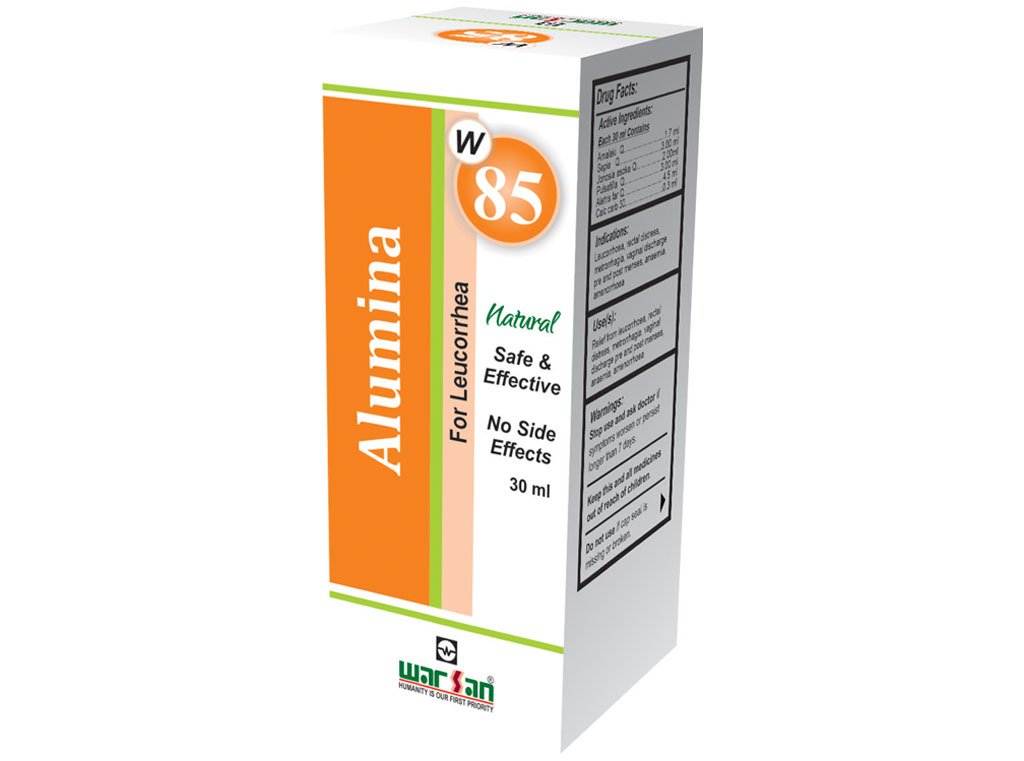
Warsan No. 85 (Alumina)
Warsan Homeopathic · Women’s Health
Explore Warsan No. 85 (Alumina) from Warsan and review its formulation, packing, dosage, directions for use, and product information before use.
View ProductA Practical Example
Consider a hypothetical example: a 24-year-old university student in Multan has noticed a persistent, mildly yellow discharge for several weeks, along with occasional lower back discomfort. Rather than ignoring it, a more considered approach would involve maintaining proper intimate hygiene, consulting a qualified homeopath to identify a remedy suited to her specific discharge pattern, and having the discharge evaluated by a doctor if it does not improve within a reasonable period. This illustrative scenario reflects the kind of holistic thinking homeopathy typically applies — it is not a real patient case.Lifestyle and Hygiene Tips for White Discharge Treatment Pakistan Women Can Follow
Alongside any homeopathic remedy, several everyday habits are commonly recommended:- Maintain intimate hygiene — gentle washing with plain water, avoiding harsh soaps or douches.
- Wear breathable cotton undergarments — and avoid tight-fitting synthetic clothing.
- Stay hydrated and eat a balanced diet — including iron-rich foods if anemia is a contributing factor.
- Manage stress — adequate rest and light physical activity can support hormonal balance.
- Track your symptoms — noting when discharge changes in color, amount, or odor helps a practitioner identify patterns.
Precautions and Safe Use
Because Warsan operates in the healthcare sector, it’s important to be clear about the limits of any treatment claim:- No homeopathic remedy can guarantee complete relief from leucorrhea for every woman, and results differ from person to person.
- Self-medicating with higher potencies without professional guidance is not advisable.
- Discharge that is foul-smelling, blood-tinged, or accompanied by fever or severe pain should be evaluated by a doctor promptly, since these can indicate an infection requiring direct medical treatment.
- Homeopathic treatment should be seen as a complementary, natural option — not a replacement for professional diagnosis when symptoms are severe or worsening.
- Always check that any product carries proper labelling, batch details, and manufacturing information before purchase.