



Polycystic Ovary Syndrome, commonly known as PCOS or PCOD, has become one of the most frequently searched women’s health concerns in Pakistan, affecting women from their teenage years through their thirties and beyond. Irregular periods, weight changes, acne, and unwanted hair growth often send women looking for answers — and for many, that search includes homeopathic treatment for PCOS as a natural option alongside proper medical evaluation. This guide explains what PCOS/PCOD is, why it develops, and how homeopathy approaches it as part of an individualized, safe care plan — along with when a gynecologist’s evaluation is genuinely necessary.
What Is PCOS/PCOD?
Polycystic Ovary Syndrome (PCOS), also referred to as Polycystic Ovarian Disease (PCOD), is a common hormonal condition affecting women of reproductive age. It is generally characterized by irregular or missed periods, elevated levels of male hormones (androgens), and the presence of multiple small, underdeveloped follicles on the ovaries, often seen on ultrasound. PCOS is considered a hormonal and metabolic condition rather than a disease confined to the ovaries alone, and its presentation can vary significantly from one woman to another.Common Symptoms of PCOS in Pakistani Women
Symptoms of PCOS/PCOD vary widely, but commonly include:- Irregular or absent menstrual periods — often the first and most noticeable sign.
- Weight gain or difficulty losing weight — particularly around the abdomen.
- Acne and oily skin — linked to elevated androgen levels.
- Excess facial or body hair (hirsutism) — another androgen-related symptom.
- Hair thinning on the scalp — in some women with PCOS.
- Difficulty conceiving — due to irregular or absent ovulation.
What Causes PCOS/PCOD?
The exact cause of PCOS is not fully understood, but it is believed to involve a combination of genetic and lifestyle factors. Several factors are commonly associated with PCOS:- Insulin resistance — many women with PCOS have higher insulin levels, which can increase androgen production.
- Hormonal imbalance — elevated luteinizing hormone (LH) relative to follicle-stimulating hormone (FSH) is frequently observed.
- Family history — PCOS tends to run in families, suggesting a genetic component.
- Weight and lifestyle factors — excess weight can worsen insulin resistance and hormonal imbalance, though PCOS also affects women of normal weight.
- Chronic stress — prolonged stress may contribute to hormonal disruption in some women.
Homeopathic Treatment for PCOS: How It Works
Homeopathy does not approach PCOS as a single condition with one fixed remedy. Instead, it follows the principle of individualized treatment, considering a woman’s specific symptom pattern — menstrual irregularity, weight tendencies, skin changes, and emotional state — alongside her overall constitution before a remedy is selected. This individualized approach is part of why homeopathic treatment for PCOS is often described as a gradual, supportive process rather than an instant fix, with responses varying between individuals, as with any treatment approach.Commonly Used Homeopathic Remedies for PCOS
Several remedies are traditionally associated with PCOS/PCOD-related symptoms. These are shared for general educational awareness only, and should not be treated as a self-prescription guide:- Pulsatilla — often considered for irregular, delayed, or scanty periods with emotional sensitivity.
- Sepia — traditionally used for hormonal imbalance with fatigue, low mood, and irregular cycles.
- Calcarea Carbonica — commonly associated with weight gain, sluggishness, and delayed menstruation.
- Thuja Occidentalis — sometimes used where ovarian cysts and irregular cycles are prominent.
- Lachesis — often considered where symptoms intensify around ovulation or before menstruation.
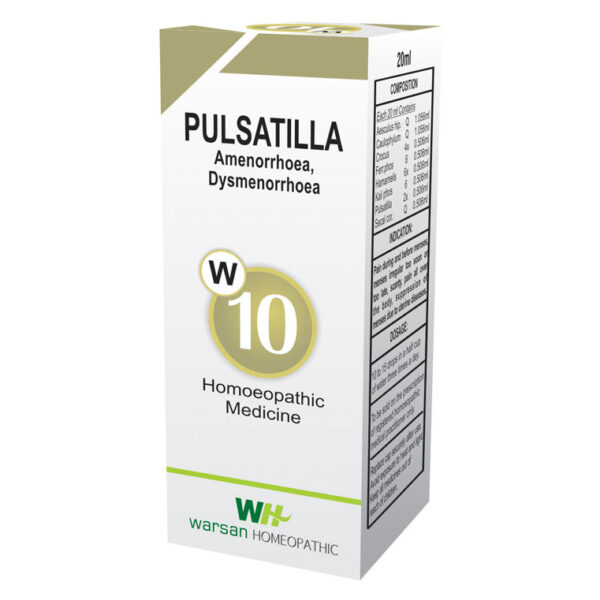
Warsan No. 10 (Pulsatilla)
Warsan Homeopathic · Hormonal Imbalance
Explore Warsan No. 10 (Pulsatilla) from Warsan and review its formulation, packing, dosage, directions for use, and product information before use.
View ProductPCOD Natural Remedy Pakistan Women Can Combine With Homeopathy
Alongside any homeopathic remedy, several lifestyle measures are commonly recommended as part of a broader PCOD natural remedy Pakistan women can realistically follow:- Maintain a balanced diet — reducing refined sugar and processed carbohydrates may help support healthier insulin levels.
- Stay physically active — regular, moderate exercise is widely associated with improved hormonal balance in PCOS.
- Prioritize consistent sleep — poor sleep patterns can worsen hormonal and metabolic imbalance.
- Manage stress — breathing exercises, light stretching, or quiet time can help regulate cortisol levels.
- Track your cycle — a simple symptom diary can help you and your practitioner identify patterns over time.
A Practical Example
Consider a hypothetical example: a 26-year-old office worker in Lahore has noticed irregular periods, occasional acne, and gradual weight gain over the past year. Rather than self-treating, a more considered approach would involve getting an initial evaluation from a gynecologist to confirm the diagnosis, consulting a qualified homeopath to identify a remedy suited to her specific symptom pattern, and adjusting her diet and activity levels alongside any treatment. This illustrative scenario reflects the kind of holistic thinking homeopathy typically applies to PCOS — it is not a real patient case.Precautions and Safe Use
Because Warsan operates in the healthcare sector, it’s important to be clear about the limits of any treatment claim:- No homeopathic remedy can guarantee complete relief from PCOS for every woman, and results differ from person to person.
- Homeopathic treatment for PCOS should not replace an initial medical diagnosis, especially since PCOS can carry metabolic risks like insulin resistance that need professional monitoring.
- Self-medicating with higher potencies without professional guidance is not advisable.
- Women trying to conceive, or with significantly irregular bleeding, should be evaluated by a gynecologist alongside any homeopathic support.
- Always check that any product carries proper labelling, batch details, and manufacturing information before purchase.