


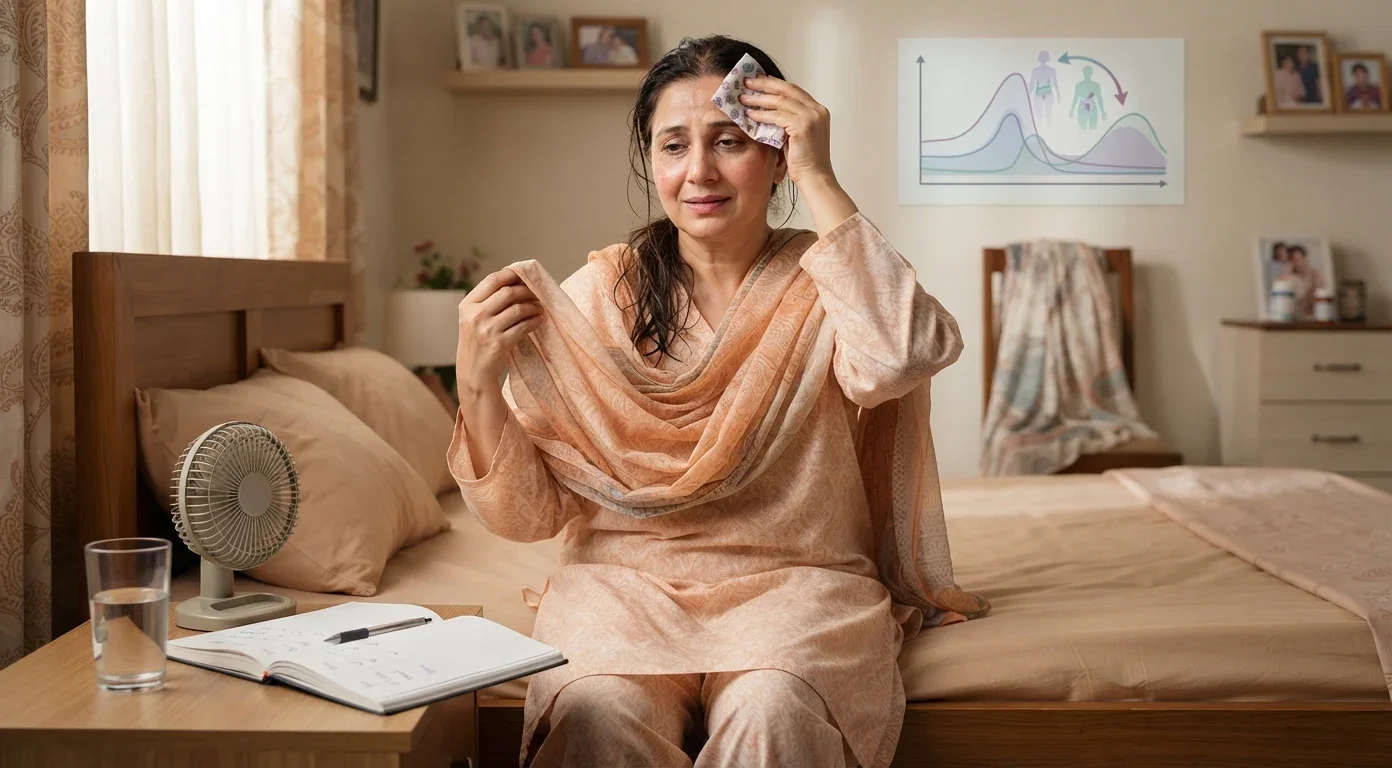
There’s a particular kind of loneliness in standing in your own kitchen in the middle of a Lahore winter, suddenly drenched in sweat, fanning yourself with a dupatta while everyone else in the room is reaching for a shawl. For many Pakistani women, this moment — and the confusion, embarrassment, or even guilt that can come with it — happens for years before anyone says the word “menopause” out loud. One Pakistani publication once described it bluntly as “the dreaded M-word,” and that reluctance to name it plainly is itself part of the problem.
Menopause is not an illness, a weakness, or something to be managed quietly and apologetically. It’s a universal biological transition that every woman who lives long enough will go through, and understanding what’s actually happening in the body — rather than just enduring the symptoms — makes an enormous difference in how manageable this stage of life feels. This guide walks through what menopause actually involves, what the hot flushes and mood changes are really about, and where both lifestyle adjustments and gentle homeopathic support can reasonably fit.
What’s Actually Happening in the Body
Menopause is officially defined as the point reached after twelve consecutive months without a menstrual period, typically occurring around age 51, though it varies. The years leading up to it — called perimenopause — are when most of the noticeable symptoms begin, sometimes starting in a woman’s late 40s, driven by declining and increasingly erratic estrogen levels as the ovaries gradually wind down their function.
This hormonal shift doesn’t just affect the reproductive system. Estrogen influences temperature regulation, mood-related brain chemistry, bone density, and more, which is exactly why menopause symptoms show up in so many different, seemingly unrelated ways.
Hot Flushes: The Symptom Almost Everyone Recognizes, But Few Understand
Hot flushes (also called hot flashes) are the most widely reported menopausal symptom, affecting somewhere between 80 and 85 percent of women during the menopausal transition, according to research published through the US National Institutes of Health. A hot flush typically feels like a sudden wave of intense heat spreading across the face, neck and chest, often with visible flushing, sweating, and a racing heartbeat, usually lasting one to a few minutes.
What’s less widely known is just how long this can go on. Research reviewed by Patient.info found that frequent hot flushes persist for more than seven years in over half of women experiencing them — this isn’t a brief, two-week inconvenience for most people, but a genuinely long-term adjustment. When hot flushes happen at night, they’re called night sweats, and they’re a major reason menopausal women report disrupted sleep, since you may wake up drenched and need to change clothes or sheets in the middle of the night.
A Journal of the College of Physicians and Surgeons Pakistan review specifically focused on managing hot flushes notes that vasomotor symptoms affect an estimated 50 to 85 percent of women over 45, with core body temperature rising by around half a degree Celsius during an episode — a small-sounding number that nonetheless triggers a very real, very uncomfortable physical response.
The Mood Changes Nobody Warns You About
Hot flushes get most of the attention, but many women find the emotional symptoms of perimenopause and menopause equally, if not more, disruptive: irritability that seems to arrive from nowhere, anxiety, low mood, tearfulness, and a frustrating sense of not quite feeling like yourself. Disturbed sleep from night sweats compounds this considerably — it’s hard to regulate your mood on broken sleep, regardless of the underlying cause.
This is also where Pakistani cultural context matters in a way that’s rarely addressed directly: in households where menopause isn’t discussed openly, women experiencing these mood shifts often don’t have language for what’s happening to them, and family members may misread irritability or low mood as a personality change rather than a biological transition with an identifiable cause. Simply naming what’s happening — to yourself and to the people around you — is itself a meaningful first step most articles skip over.
Why This Varies So Much From One Woman to the Next
Not every woman experiences menopause the same way, and the variation is well documented:
- Some women sail through with barely noticeable symptoms, while others find them significantly disruptive to daily life and sleep.
- An abrupt menopause — caused by surgical removal of the ovaries, or by chemotherapy or radiation — tends to produce more sudden and severe symptoms than a gradual, natural transition.
- Research has found notable differences between populations; Japanese women, for instance, report a particularly low incidence of hot flushes compared to Western populations, hinting that diet, lifestyle, or genetic factors may play a meaningful role that researchers don’t yet fully understand.
- Health conditions such as an overactive thyroid or diabetes can sometimes produce flushing symptoms that mimic menopausal hot flushes, which is one good reason not to self-diagnose without ever checking in with a doctor.
What Genuinely Helps: Lifestyle Steps
Several well-supported, practical adjustments can reduce how often and how severely hot flushes and related symptoms occur:
- Identify and reduce your personal triggers — caffeine, spicy food, alcohol, and warm rooms are commonly reported triggers; a simple symptom diary over a few weeks often reveals your own specific pattern.
- Dress in layers — lightweight, breathable layers you can remove quickly make sudden heat waves far more manageable, especially outside the home.
- Keep your bedroom cool at night — this is one of the single most effective changes for reducing night sweats and improving sleep quality.
- Stay physically active — regular exercise is associated with better mood regulation and sleep during the menopausal transition, even though it doesn’t directly stop hot flushes.
- Consider cognitive behavioural therapy (CBT) — several studies have found menopause-specific CBT genuinely effective for managing the distress of hot flushes, particularly when they’re triggered or worsened by stress.
- Talk to a doctor about hormone replacement therapy (HRT) if symptoms are significantly affecting your quality of life — it remains the most effective medical treatment for hot flushes, though it isn’t right for every woman, and the decision should involve a proper discussion of individual risks and benefits.
Where Supportive Homeopathic Care Fits
Alongside lifestyle changes, many women — in Pakistan and elsewhere — explore gentle homeopathic support for menopausal symptoms as a complementary option. Homeopathic literature traditionally associates several remedies with different menopausal symptom patterns:
- Sepia — traditionally associated with hot flushes accompanied by a sense of indifference, exhaustion, and irritability.
- Lachesis — traditionally associated with hot flushes that are worse upon waking, along with talkativeness and a sense of mental overactivity.
- Pulsatilla — traditionally associated with changeable moods, tearfulness, and symptoms that worsen in warm rooms.
- Sanguinaria — traditionally associated with hot flushes accompanied by a visibly flushed, red face.
- Amyl Nitrosum — traditionally associated with sudden, intense flushing and redness spreading quickly across the face and chest.
As with any homeopathic approach, these associations reflect traditional use rather than claims of guaranteed effectiveness, and the right remedy, if any, depends on a woman’s overall symptom pattern — best assessed by a qualified homeopathic physician rather than self-selected from a list. It’s also worth being honest about the evidence: clinical research specifically on homeopathy for menopausal symptoms remains limited, so this is reasonably approached as a gentle, complementary option alongside lifestyle changes, not as a proven substitute for medical treatment when symptoms are severe.
When to See a Doctor Rather Than Manage Alone
Most menopausal symptoms, however uncomfortable, are a normal part of this transition and don’t require urgent care. That said, certain situations are worth bringing to a doctor specifically:
- Bleeding after twelve months without a period (postmenopausal bleeding), which always warrants medical evaluation.
- Hot flushes or mood symptoms severe enough to significantly disrupt daily functioning, sleep, or relationships.
- Symptoms appearing unusually early (well before age 45), which may need evaluation for premature ovarian insufficiency.
- Persistent low mood, hopelessness, or anxiety that feels disproportionate or doesn’t ease with the usual coping strategies — this deserves proper mental health support, not just “waiting it out.”
- Any new symptom you’re unsure is related to menopause, particularly if you have an existing health condition like thyroid disease or diabetes.
A Modern Tool Worth Knowing About: Menopause Tracking Apps
One genuinely useful recent shift is the rise of dedicated menopause-tracking apps and telehealth menopause clinics, which let women log symptoms like hot flush frequency, sleep quality, and mood day by day, building a clear picture to bring to a doctor’s appointment rather than relying on memory alone. Several international health systems now also run menopause-specific telehealth consultations, making specialist input more accessible for women who might otherwise go years without ever discussing their symptoms with a doctor — a particularly meaningful shift in contexts where menopause still carries social stigma.
A Meaningful Takeaway
Menopause in Pakistani households doesn’t have to stay the quiet, slightly embarrassing thing nobody names directly. Hot flushes and mood changes have a clear, well-understood biological explanation, genuinely effective lifestyle strategies exist, and both medical and gentle complementary options are available for women whose symptoms need more support. The single most useful shift isn’t a specific remedy — it’s simply talking about it plainly, at home and with a doctor, instead of treating a universal biological transition as something to manage in silence.
Frequently Asked Questions
Q1: At what age does menopause usually start in Pakistani women?
Menopause typically occurs around age 51 globally, though perimenopausal symptoms like irregular periods and early hot flushes can begin years earlier, often in the late 40s. Individual timing varies considerably and can be influenced by genetics and health history.
Q2: How long do hot flushes usually last?
A single hot flush typically lasts one to a few minutes, but the overall symptom can persist for years — research shows frequent hot flushes continue for more than seven years in over half of women who experience them.
Q3: Is hormone replacement therapy safe?
HRT is considered the most effective medical treatment for hot flushes, but it isn’t suitable for every woman, and the decision depends on individual health history and risk factors. It should always be discussed directly with a doctor rather than started or avoided based on general assumptions.HRT is considered the most effective medical treatment for hot flushes, but it isn’t suitable for every woman, and the decision depends on individual health history and risk factors. It should always be discussed directly with a doctor rather than started or avoided based on general assumptions.HRT is considered the most effective medical treatment for hot flushes, but it isn’t suitable for every woman, and the decision depends on individual health history and risk factors. It should always be discussed directly with a doctor rather than started or avoided based on general assumptions.HRT is considered the most effective medical treatment for hot flushes, but it isn’t suitable for every woman, and the decision depends on individual health history and risk factors. It should always be discussed directly with a doctor rather than started or avoided based on general assumptions.
Q4: Can homeopathic remedies replace hormone therapy for severe symptoms?
No. Homeopathic remedies are best considered a gentle, complementary option for women with mild to moderate symptoms, not a replacement for medical treatment when symptoms are severe or significantly affecting quality of life. A doctor’s input matters most in those cases.
Q5: Why do some women barely notice menopause while others struggle significantly?
Symptom severity varies widely due to factors including how abruptly menopause occurs (surgical versus natural), individual hormone sensitivity, genetics, lifestyle, and possibly population-level differences still being studied by researchers.
Q7: Should I see a doctor if I haven't had a period in over a year but then start bleeding again?
Yes, always. Any bleeding after twelve consecutive months without a period is considered postmenopausal bleeding and should be evaluated by a doctor promptly, regardless of how light or brief it seems.
Q7: Can homeopathic remedies cure varicose veins?
No. Homeopathic remedies are used by some people as a complementary option for comfort, but they cannot reverse damaged vein valves or replace lifestyle measures and medical treatment when symptoms are significant or red-flag signs are present