


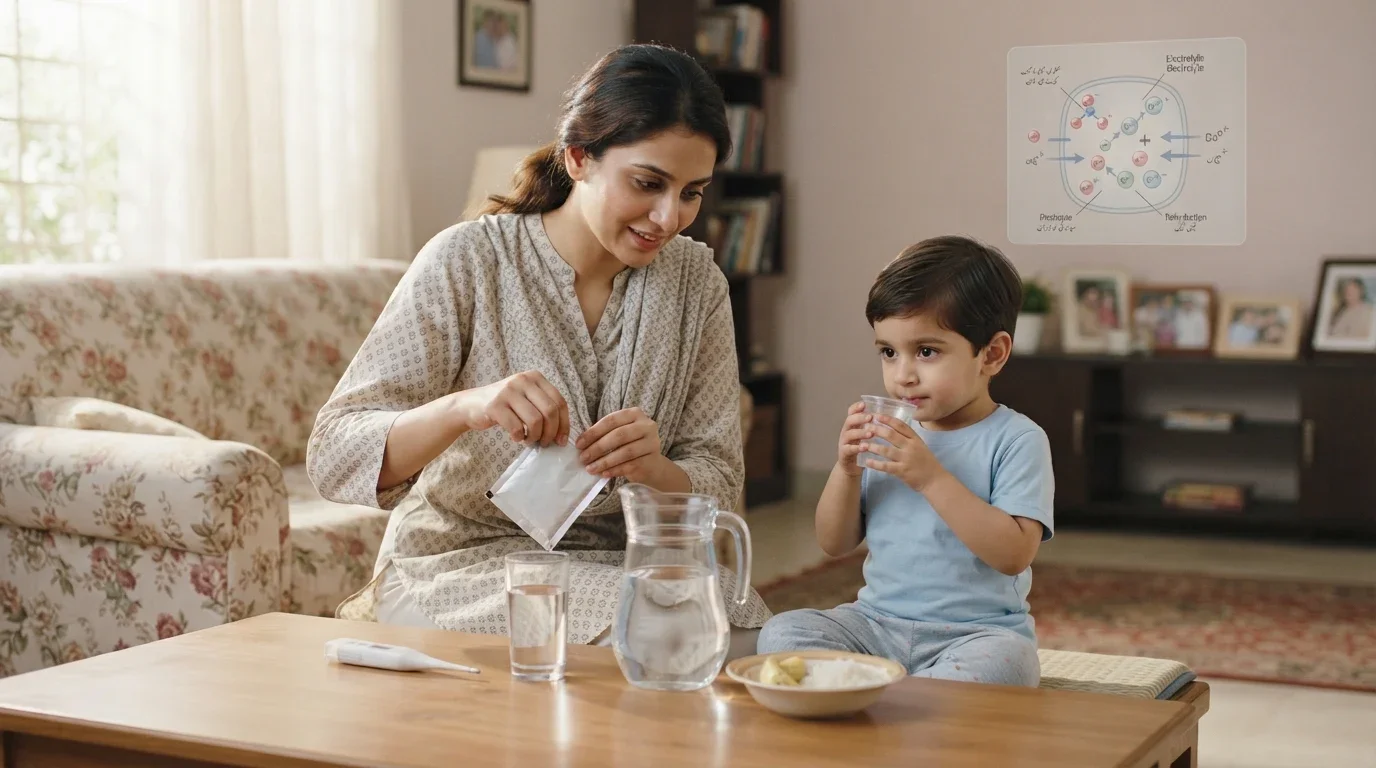
It usually starts the same way for most parents: a 2 a.m. diaper change that’s suddenly, alarmingly different, or a toddler who runs to the bathroom for the third time before lunch. Your mind immediately jumps between two extremes — “it’s probably nothing” and “should I be in an emergency room right now?” Childhood diarrhoea is one of those conditions where the right answer genuinely depends on details most parents have never been taught to look for, and getting those details right matters more than almost anything else in pediatric care.
Here’s the fact that should anchor everything else in this guide: diarrhoea itself rarely kills a child. Dehydration does. The World Health Organization reports that diarrhoeal disease remains among the leading causes of death in children under five worldwide, killing hundreds of thousands of children each year — and the overwhelming majority of those deaths are preventable with one deceptively simple intervention: getting fluids and the right electrolytes back into the child fast enough. This guide walks through exactly how to do that, what gentle supportive steps are reasonable at home, and precisely which warning signs mean it’s time to stop managing things yourself and call a doctor.
What Actually Counts as Diarrhoea in a Child?
Not every loose or frequent stool is diarrhoea, and knowing the difference saves a lot of unnecessary worry. Medically, diarrhoea in children is generally defined as three or more loose or watery stools in 24 hours, or stools noticeably more frequent or watery than that child’s normal pattern. There’s an important exception worth knowing: exclusively breastfed babies often pass very loose, seedy stools multiple times a day as completely normal behaviour, which can look alarming to a new parent but usually isn’t diarrhoea at all. What should get your attention is a clear, sudden change from your own child’s usual pattern, especially if it’s watery and persists beyond 24 hours.
Why Hydration Comes First, Before Anything Else
If you take away one thing from this entire guide, make it this: replacing lost fluids and electrolytes is the single most important treatment for diarrhoea in children, and it matters more than any medicine, diet change, or home remedy. A child’s body is proportionally more water than an adult’s, and young children can slide from mild fluid loss into dangerous dehydration far faster than adults do — sometimes within hours during a bad episode.
This is exactly where Oral Rehydration Solution, universally known as ORS, becomes the cornerstone of care.
What Is ORS and How Should You Use It?
ORS is a precisely balanced mixture of glucose and salts designed to help the gut absorb water efficiently, even during an active diarrhoeal episode. The current WHO/UNICEF-recommended low-osmolarity formula is more effective and causes less vomiting than older formulations, and it’s widely available in Pakistani pharmacies as a pre-measured sachet to dissolve in clean water.
- Always follow the exact mixing instructions on the sachet — using too little water makes the solution too concentrated and can worsen dehydration; too much water dilutes it and reduces effectiveness.
- Offer ORS in small, frequent sips rather than large amounts at once, especially if the child has been vomiting.
- Continue offering ORS after every loose stool, roughly replacing what’s being lost.
- Breastfed infants should keep breastfeeding throughout — breast milk itself is a form of hydration and nutrition that shouldn’t be paused.
The Second Pillar: Zinc Supplementation
Less widely known among parents, but strongly supported by two decades of research, is the WHO and UNICEF’s joint recommendation that children with acute diarrhoea receive zinc supplementation alongside ORS — specifically 10 mg per day for infants under six months and 20 mg per day for children six months and older, continued for 10 to 14 days. Multiple large clinical trials have found this measurably shortens the duration and severity of the episode and reduces the risk of future diarrhoea in the following two to three months. Ask your pharmacist or doctor about a pediatric zinc supplement alongside ORS — in many countries, the two are now sold as a co-packaged combination specifically because the evidence for using them together is so strong.
What Usually Causes It
Most childhood diarrhoea in Pakistan, as elsewhere, comes down to a short list of causes:
- Viral infections — rotavirus is historically the single most common cause of severe diarrhoea in young children worldwide, typically causing watery stools without blood.
- Bacterial infections — organisms like E. coli, Salmonella, or Shigella can cause diarrhoea, sometimes with blood or mucus in the stool (a pattern doctors call dysentery).
- Parasites — Giardia and similar organisms are a less common but real cause, especially with contaminated water.
- Food-related triggers — lactose intolerance, a new food, or simply overeating fruit can sometimes cause temporary loose stools without a true infection being involved.
Contaminated drinking water and poor hand hygiene remain the biggest drivers of infectious diarrhoea in children across Pakistan, which is also exactly why prevention (covered further below) matters as much as treatment.
When to Call the Doctor: The Warning Signs That Matter
Most episodes of child diarrhoea genuinely can be managed at home with ORS, zinc, and continued feeding. But certain signs mean home care isn’t enough, and a doctor needs to be involved without delay:
- Signs of dehydration — noticeably fewer wet diapers or reduced urination, a dry mouth and lips, sunken eyes, no tears when crying, or unusual sleepiness and difficulty waking.
- Blood or significant mucus in the stool.
- High fever, particularly in an infant under three months old, where any fever warrants prompt medical attention.
- Persistent vomiting that prevents the child from keeping down ORS or fluids.
- Severe abdominal pain, or a baby who seems unusually irritable, lethargic, or difficult to console.
- Diarrhoea lasting more than 24 hours in an infant, or more than a few days in an older child, without improvement.
- Any infant under 6 months of age with diarrhoea, given how quickly dehydration can progress at that age.
If you’re ever genuinely unsure, the safer choice is always to call a doctor or visit a hospital rather than wait and see — dehydration in a small child can escalate faster than many parents expect.
What NOT to Do
A few well-meaning instincts can actually make things worse:
- Don’t give over-the-counter anti-diarrhoeal medications like loperamide to infants and young children — pediatric guidelines specifically advise against these, since they can mask how much fluid a child is actually losing and, in some infections, slow the body’s ability to clear the infection.
- Don’t restrict a child to a bland, limited diet for days on end. Older advice recommended the “BRAT diet” (bananas, rice, applesauce, toast), but current pediatric guidance favours continuing a child’s normal, age-appropriate diet as soon as they’re willing to eat, since this supports faster recovery and better nutrition.
- Don’t stop breastfeeding. It should continue throughout the illness, even if the baby also needs ORS.
- Don’t rely on homemade sugar-salt mixtures instead of a properly formulated ORS sachet unless a health worker has specifically taught you a safe ratio — getting the proportions wrong can do more harm than good.
Gentle Supportive Care at Home
Once hydration and feeding are on track, several simple home measures support a child’s comfort and recovery:
- Keep offering small, frequent meals once appetite returns, rather than forcing large meals.
- Use a gentle barrier cream to protect the skin around the diaper area, which can get irritated from frequent loose stools.
- Keep the child resting, since recovery from any infection draws on the body’s energy.
- Maintain careful handwashing for everyone in the household, since many causes of diarrhoea spread easily between family members, especially siblings.
Some Pakistani families also look at gentle, homeopathic or natural products marketed for children’s digestive comfort as a complementary option alongside the essentials above. If you’re considering this route, it’s worth being clear-eyed about what such products can reasonably offer: they are not a substitute for ORS, zinc, or a doctor’s evaluation when warning signs are present, and any product given to a young child should be checked against its label for appropriate age and dosing, ideally with a pharmacist’s or doctor’s input. Hydration and recognising red flags are not optional extras to be balanced against other remedies — they are the treatment, and everything else is secondary.
Prevention: The Part That Often Gets Skipped
A meaningful share of childhood diarrhoea in Pakistan is preventable through a few consistent habits:
- Rotavirus vaccination, which is included in Pakistan’s Expanded Programme on Immunization and significantly reduces the risk of severe rotavirus diarrhoea.
- Consistent handwashing with soap, especially before meals and after using the toilet or changing a diaper.
- Safe drinking water — boiling or properly filtering water where supply quality is uncertain.
- Continued exclusive breastfeeding for the first six months, which itself lowers a baby’s risk of infectious diarrhoea.
Where Technology Is Quietly Helping Parents
One genuinely useful shift in recent years is how much easier it’s become to get fast, reliable guidance without rushing straight to an emergency room for every uncertain symptom. Telemedicine platforms and hospital helplines now let Pakistani parents describe symptoms to a doctor or triage nurse by phone or video within minutes, which is particularly useful at 2 a.m. when the question is simply “does this need an ER visit tonight, or can it wait until morning.” Some pediatric hospitals and NGOs have also built simple WhatsApp-based symptom checklists for exactly this kind of first-pass triage. None of this replaces an in-person doctor’s visit when real warning signs are present, but it does close the gap between “I’m worried” and “I’m getting expert input,” which matters a great deal in the middle of the night with a sick toddler.
A Meaningful Takeaway
Childhood diarrhoea is common, usually short-lived, and in the vast majority of cases entirely manageable at home — provided parents focus on the one thing that genuinely determines the outcome: keeping the child hydrated, with ORS and zinc as the two evidence-backed tools that matter most. Everything else — diet, rest, gentle supportive products, even which specific germ caused it — is secondary to that single priority. Learn the warning signs once, keep a sachet of ORS in the house, and you’ll be equipped to handle the vast majority of episodes calmly and correctly, while knowing exactly when it’s time to pick up the phone and call a doctor instead.
Frequently Asked Questions
Q1: How much ORS should I give my child?
This depends on the child’s age, weight and how much fluid they’re losing, and the exact amount is specified on the ORS packet or by a doctor. As a general principle, offer small sips frequently rather than a large volume at once, and continue offering fluids after every loose stool.
Q2: Can I make ORS at home instead of buying a sachet?
A properly formulated commercial ORS sachet is strongly preferred, since the salt-to-sugar ratio must be precise — getting it wrong can worsen dehydration. If a health worker has specifically taught you a safe homemade recipe for an emergency, follow their exact instructions; otherwise, a pharmacy sachet is the safer choice.
Q3: Should I stop giving my child solid food during diarrhoea?
No. Current guidance favours continuing a child’s normal, age-appropriate diet as soon as they’re willing to eat, rather than restricting them to bland foods for days. Continued feeding supports recovery and nutrition.
Q4: Is it normal for a breastfed baby to have very loose stools?
Yes, frequent, loose, seedy stools are a normal feature of exclusively breastfed babies and aren’t necessarily diarrhoea. A sudden, clear change from that baby’s own usual pattern, however, is worth paying attention to.
Q5: When is diarrhoea considered an emergency?
Treat it as an emergency if you see signs of dehydration (very few wet diapers, dry mouth, sunken eyes, unusual sleepiness), blood in the stool, persistent vomiting that prevents fluids from staying down, high fever in an infant under three months, or if the child seems unusually lethargic or difficult to wake.
Q6: Can zinc supplements really help, or is that just a developing-world recommendation?
Zinc supplementation alongside ORS is a WHO/UNICEF recommendation backed by multiple large clinical trials and systematic reviews, shown to shorten the duration and severity of acute diarrhoea in children and reduce the risk of recurrence in the following months. It’s worth asking your pharmacist or doctor about it for any child with diarrhoea, not just in regions with limited healthcare access.
Q7: Are homeopathic remedies safe to try for my child's diarrhoea?
They may be considered by some families as a gentle, complementary option once ORS, zinc and proper hydration are already in place, but they should never replace these essentials or delay a doctor’s visit when warning signs are present. Always check age-appropriate dosing on the label and consult a pharmacist or doctor first.