



This homeopathic potency guide 6X 30C 200C explains what these common potency markings mean and helps first-time buyers understand the differences when a product page lists a number and letter after the remedy name.
Knowing how to choose homeopathic medicine potency correctly matters just as much as choosing the right remedy, since the same substance prepared at different potencies is generally used differently. This guide explains what potency means, how 6X, 30C, and 200C differ, and what beginners in Pakistan should keep in mind before selecting one. If you’re brand new to homeopathy itself, our beginner’s guide to how homeopathy works is a good place to start before diving into potencies.
What Does “Potency” Mean in Homeopathy?
Potency in homeopathy refers to the strength of a remedy after it has been diluted and succussed (shaken) a specific number of times from the original mother tincture; it is written as a number followed by a letter, such as 6X, 30C, or 200C.
The potency number indicates how many times a substance has gone through this dilution and succussion process, not how much of the raw substance is physically present. A higher number means the substance has been diluted more times, following a specific, standardized method described in the homeopathic pharmacopoeia. This is why two bottles of the same remedy name, such as Arnica 6X and Arnica 200C, are prepared very differently and are generally used for different situations.
Understanding the Potency Scales: X, C, and LM
Homeopathic potencies are prepared on a few standard scales, and recognizing the letter after the number is the first step in reading a label correctly.
- X (decimal) scale — the remedy is diluted 1 part in 10 at each stage; 6X means this dilution-and-succussion cycle has been repeated six times.
- C (centesimal) scale — the remedy is diluted 1 part in 100 at each stage; 30C and 200C mean the cycle has been repeated 30 and 200 times respectively.
- LM (millesimal) scale — a finer, less commonly used dilution scale, typically reserved for use under close professional supervision.
Because the C scale dilutes more per step than the X scale, a lower-looking C number is not necessarily weaker than a higher-looking X number; the two scales are not directly comparable on a like-for-like basis.
6X Potency Explained
6X is one of the lower potencies commonly recommended for beginners and for minor, everyday symptoms. It has gone through six dilution-and-succussion cycles on the decimal scale and is often used for common, mild, or frequently recurring complaints, typically taken more often than higher potencies. Warsan’s guidance for its dilutions and potencies range notes that people new to homeopathy are often advised to begin with 6X or 30C unless a registered homeopath prescribes otherwise.
30C Potency Explained
30C is one of the most widely used potencies in general homeopathic practice and is also considered suitable for beginners. Having gone through 30 dilution-and-succussion cycles on the centesimal scale, it is commonly used for both minor daily symptoms and moderately recurring issues, usually taken less frequently than 6X. As with any potency, the exact frequency and duration should follow the product label or a homeopath’s specific instructions rather than a fixed rule.
200C Potency Explained
200C is a higher potency, having gone through 200 dilution-and-succussion cycles on the centesimal scale. Higher potencies like 200C are generally reserved for cases that a homeopath has properly assessed, often for more established or deeper-seated complaints, and are typically taken less frequently than lower potencies such as 6X or 30C. Because higher potencies act differently in practice, self-selecting 200C without guidance is discouraged, and it is best purchased and used only on a homeopath’s recommendation.
Homeopathic Potency Guide 6X 30C 200C: A Quick Comparison
- 6X — lower potency, decimal scale, commonly used for minor and everyday symptoms, often taken more frequently, considered a reasonable beginner starting point.
- 30C — moderate, widely used potency, centesimal scale, suitable for minor to moderately recurring issues, a common beginner starting point alongside 6X.
- 200C — higher potency, centesimal scale, generally used for more established complaints under professional guidance, typically taken less frequently.
This comparison is a general guide, not a substitute for individualized advice. The right potency for a specific person and complaint should ultimately be confirmed with a qualified homeopath.
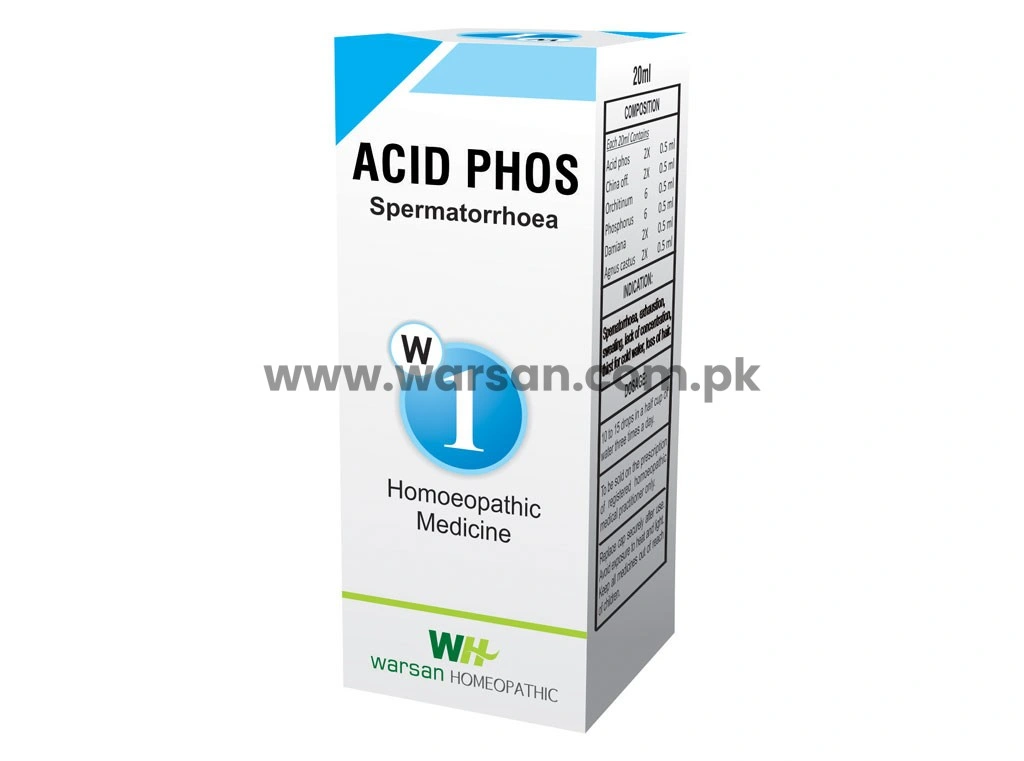
Warsan No. 1 (Acid Phos)
Warsan Homeopathic · Herbal Products
Explore Warsan No. 1 Acid Phos and learn more about the product, ingredients, recommended use, and dosage before use.
How to Choose the Right Homeopathic Medicine Potency
Selecting a potency is not simply a matter of picking a familiar remedy name and any number that happens to be in stock. A few practical steps can help beginners make a more informed choice.
- Start with a lower potency, such as 6X or 30C, if you are new to homeopathy and are addressing a minor or everyday symptom, unless a homeopath advises otherwise.
- Reserve higher potencies like 200C for complaints that have been properly assessed by a registered homeopath, rather than self-selecting them for convenience.
- Read the full label, including the potency, dosage instructions, and manufacturing and expiry dates, before purchasing or using any remedy.
- Use one potency of a remedy at a time unless a homeopath has specifically prescribed a combination or sequence.
- If symptoms do not improve within a reasonable period, consult a qualified homeopath rather than switching potencies on your own.
A Practical Example
Consider a hypothetical example: someone in Pakistan is dealing with a mild, occasional headache and wants to try a homeopathic remedy for the first time. Rather than reaching for the highest potency available, they check the product label, note that it is described as suitable for minor, everyday symptoms at 6X or 30C, and follow the printed dosage. If the headaches continue or worsen, they consult a homeopath rather than assuming a stronger potency will resolve the issue faster. This illustrates how potency selection should follow the nature of the symptom, not simply personal preference.
Common Mistakes When Choosing a Potency
- Assuming a higher potency number always means a “stronger” or faster-acting remedy, without understanding how the X and C scales actually work.
- Self-selecting high potencies like 200C for chronic or complex conditions without professional assessment.
- Mixing multiple potencies of the same remedy, or several different remedies, without a homeopath’s guidance.
- Ignoring the difference between the X and C scales when comparing two products.
- Continuing a potency indefinitely without reviewing progress with a homeopath.
Is a Higher Potency Always Stronger or Better?
Not necessarily. In homeopathy, potency describes how many times a remedy has been diluted and succussed, not a straightforward measure of strength in the conventional pharmaceutical sense. Higher potencies are generally reserved for specific situations assessed by a homeopath, while lower potencies are commonly used for everyday, self-limiting symptoms. Choosing a potency is therefore better understood as matching the preparation to the situation, rather than assuming that a bigger number automatically produces a better or faster result.
Safety Considerations When Using Different Potencies
Homeopathic remedies prepared at any potency should be used thoughtfully, particularly by first-time users.
- Homeopathic remedies are not a substitute for emergency medical treatment; seek immediate medical attention for severe, worsening, or life-threatening symptoms.
- Children, pregnant or breastfeeding women, and people with chronic conditions should use any potency only under the guidance of a qualified homeopath or physician.
- Avoid self-prescribing higher potencies such as 200C without professional input, especially for long-standing or complex health concerns.
- Always check the manufacturing and expiry dates on the bottle, and store remedies as instructed on the label.
Choosing Quality Homeopathic Potencies in Pakistan
Because potency depends on a precise, repeated dilution and succussion process, the manufacturer’s consistency in following standardized methods has a direct bearing on how reliable a remedy is. Warsan Homoeopathic, an ISO 9001:2015 and GMP certified manufacturer with over 25 years of experience serving Pakistan’s domestic and export markets, produces a full range of dilutions and potencies, including common beginner strengths such as 6X and 30C. When choosing any potency, check that the packaging clearly states the potency, ingredients, and manufacturing and expiry dates, and buy from a manufacturer that is transparent about its certifications and preparation standards.
Consistency across production batches matters especially for potencies, since the entire preparation relies on repeating the same dilution and succussion steps accurately at every stage. A manufacturer that documents its quality-control process, rather than relying on labeling claims alone, is generally a more dependable source for beginners who are still learning to distinguish between potencies.
How Long Does It Take to See Results at Different Potencies?
Response time varies by individual, the complaint being addressed, and the potency used, so there is no fixed timeline that applies to every case. Lower potencies such as 6X, often used for minor and everyday symptoms, are sometimes taken more frequently over a short period, while higher potencies such as 200C, typically used for more established complaints, are often taken less frequently and may be assessed over a longer course under a homeopath’s supervision. If there is no noticeable change after a reasonable trial period, or if symptoms worsen, it is best to stop self-treatment and consult a qualified homeopath rather than increasing the potency or frequency on your own.
Reading a Potency Label Correctly
Before buying or using any homeopathic remedy, take a moment to read the full label rather than relying on the remedy name alone. Check the potency marking (such as 6X, 30C, or 200C), the recommended dosage or drop/tablet count, the manufacturing and expiry dates, and any specific storage instructions. If the label is unclear, damaged, or missing this information, it is safer to confirm the correct usage with a homeopath or the manufacturer before taking the remedy.