


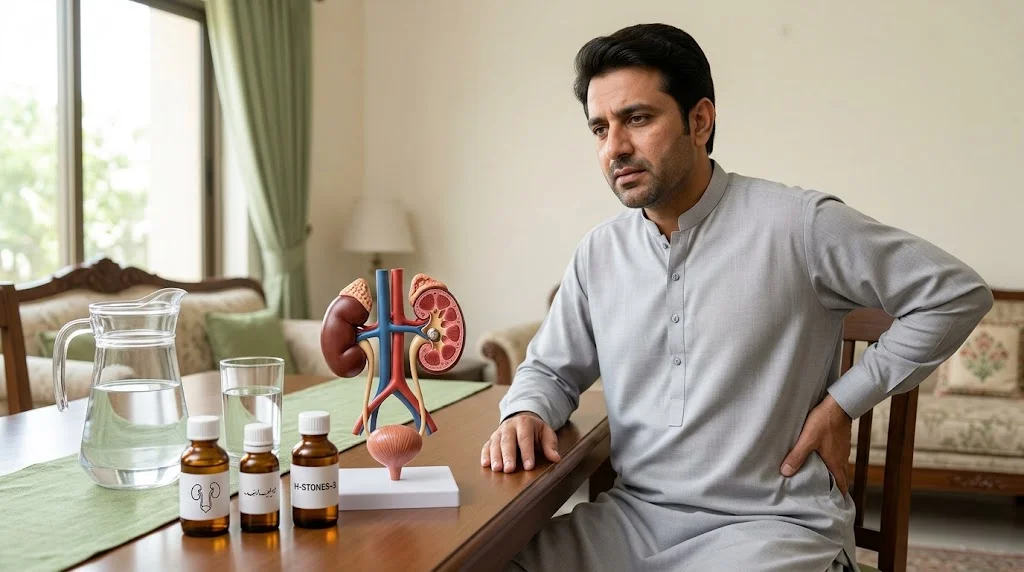
The sudden, radiating pain of a kidney stone is something many Pakistanis describe as one of the worst they’ve ever experienced, often sending people straight to the emergency room. Once the acute episode passes, though, many patients start looking at longer-term options for managing and preventing future stones, which is where homeopathic medicine for kidney stones often comes up in searches. This guide explains how kidney stones form, what homeopathy’s role may realistically be, and what a sensible kidney stone treatment Pakistan patients can consider actually looks like — along with the situations where emergency medical care is genuinely necessary.

What Are Kidney Stones?
Kidney stones are hard deposits made of minerals and salts, such as calcium oxalate or uric acid, that form inside the kidneys when urine becomes concentrated enough for these substances to crystallize. Stones can range from tiny grains that pass unnoticed to larger stones that block the flow of urine and cause severe pain. They are a common urinary tract condition in Pakistan, affecting people of various ages, and tend to recur in those who have had one before.Common Causes and Risk Factors for Kidney Stones in Pakistan
Several factors are commonly associated with kidney stone formation:- Inadequate water intake — low fluid intake, especially in Pakistan’s hot climate, concentrates urine and promotes crystal formation.
- Diet high in salt and animal protein — can increase the risk of certain stone types.
- Family history — a personal or family history of kidney stones increases future risk.
- Obesity — excess body weight is linked to a higher risk of stone formation.
- Certain medical conditions — such as gout, urinary tract infections, or metabolic disorders.
- Sedentary lifestyle — limited physical activity can be a contributing factor for some individuals.
Symptoms of Kidney Stones
Common symptoms include severe pain in the side or back, often radiating toward the lower abdomen or groin, pain during urination, pink, red, or brown urine, frequent urination, nausea, and vomiting. Symptoms can range from a dull ache to sudden, severe colicky pain depending on the size and location of the stone, and many people first become aware of a stone only when it begins moving within the urinary tract.Homeopathic Medicine for Kidney Stones: What Role Can It Play?
Homeopathy approaches kidney stones by considering a person’s overall constitution, the nature of the pain, and associated urinary symptoms, rather than treating all stones the same way. Some homeopathic remedies are traditionally used to help ease the discomfort associated with smaller stones and to support their natural passage, and some patients explore homeopathic medicine for kidney stones as part of a longer-term approach to reducing the chances of recurrence. It’s important to be realistic here: homeopathy is not established as a reliable way to dissolve larger, already-formed stones, and its role is best understood as supportive and preventive rather than a guaranteed substitute for medical or surgical treatment when a stone is large or causing a blockage.Commonly Used Homeopathic Remedies for Kidney Stones
Several remedies are traditionally associated with kidney stones and related urinary complaints. These are shared for general educational awareness only, and should not be treated as a self-prescription guide:- Berberis Vulgaris — often considered for radiating pain from the kidney region toward the bladder, with a frequent urge to urinate.
- Lycopodium Clavatum — traditionally used where there is reddish, sandy sediment in the urine.
- Cantharis — sometimes used for intense burning during urination associated with urinary irritation.
- Hydrangea Arborescens — commonly associated with supporting the passage of small stones or gravel.
- Sarsaparilla — often considered where pain is worse at the end of urination.
Warsan Urofast Syrup
Warsan Homoeopathic · Kidney & Urinary Range
Explore Warsan Urofast Syrup, whose formulation includes Berberis vulgaris, Lycopodium, Hydrangea, Cantharis and Sarsaparilla, and use it alongside a urologist’s evaluation.
View ProductA Practical Example
Consider a hypothetical example: a 38-year-old factory worker in Lahore who drinks very little water during long shifts has experienced recurring episodes of mild flank discomfort, confirmed by ultrasound to be a small kidney stone. Rather than waiting for another painful episode, a more considered approach would involve a proper urological evaluation to understand stone size and type, consulting a qualified homeopath alongside this for ongoing supportive care, and making consistent hydration and dietary changes to reduce the risk of new stones forming. This illustrative scenario reflects the kind of holistic thinking homeopathy typically applies — it is not a real patient case.Prevention Tips for Kidney Stone Treatment Pakistan Patients Can Follow
Alongside any homeopathic remedy, several lifestyle measures are widely recommended to help reduce the risk of kidney stones:- Drink plenty of water — adequate hydration is one of the most effective ways to reduce stone risk, particularly important in Pakistan’s hot climate.
- Moderate salt intake — reducing excess dietary salt can help lower calcium levels in urine.
- Limit animal protein in excess — very high intake of red meat can increase the risk of certain stone types.
- Maintain a healthy weight — through balanced diet and regular physical activity.
- Know your stone type if you’ve had one before — some dietary advice depends on whether stones are calcium, uric acid, or another type.
Precautions and Safe Use
Because Warsan operates in the healthcare sector, it’s important to be clear about the limits of any treatment claim:- No homeopathic remedy can guarantee that it will dissolve or completely prevent kidney stones for every individual, and results differ from person to person.
- Self-medicating with higher potencies without professional guidance is not advisable.
- A large stone, a blocked ureter, high fever, or inability to pass urine are medical emergencies that require immediate hospital care, not home remedies.
- Homeopathic treatment should be seen as a complementary, supportive option — not a replacement for proper diagnosis and urological care, especially for larger or recurrent stones.
- Always check that any product carries proper labelling, batch details, and manufacturing information before purchase.