


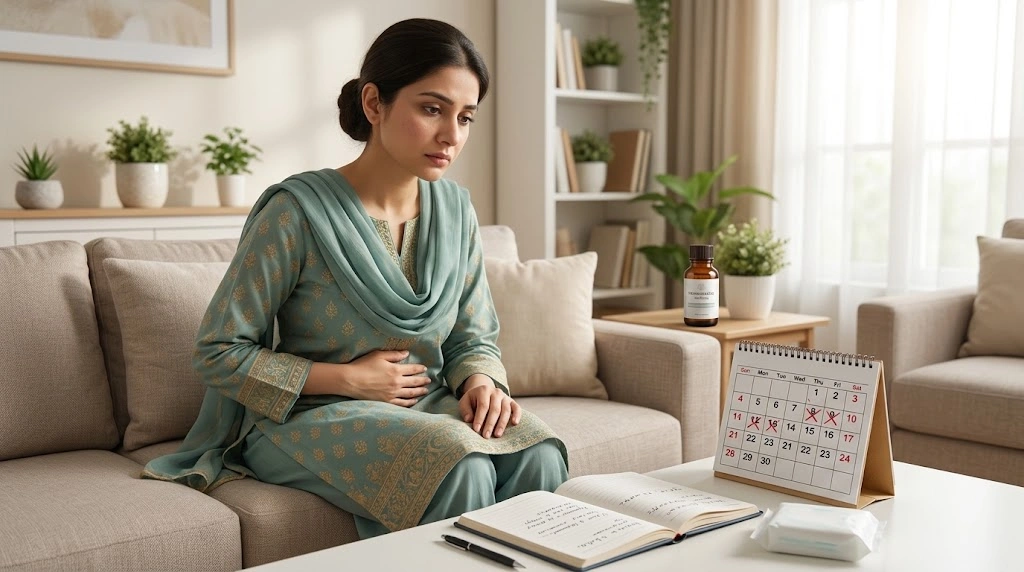
Periods that arrive unpredictably, last far longer than a week, or come with unusually heavy flow can affect far more than just a few uncomfortable days each month. Many women across Pakistan search for a homeopathic medicine for irregular heavy periods Pakistan households can rely on as a natural, supportive option alongside proper medical guidance. This guide explains what menorrhagia is, why it happens, and how homeopathy approaches it — along with when heavy or irregular bleeding needs a doctor’s attention rather than self-treatment.
What Is Menorrhagia (Heavy or Irregular Periods)?
Menorrhagia is the medical term for menstrual bleeding that is excessively heavy, prolonged, or both. It’s generally described as periods lasting longer than seven days, needing to change a pad or tampon more than once an hour for several hours in a row, or passing blood clots larger than a coin. Irregular periods, meanwhile, refer to cycles that vary significantly in length or timing from month to month, sometimes combined with heavy flow — a pattern doctors may describe as abnormal uterine bleeding.
Occasional variation in flow or timing is common and not usually a concern. It’s when heavy or irregular bleeding becomes a repeated pattern, or starts interfering with daily activities, that it’s worth exploring both the underlying cause and available treatment options.
Common Symptoms to Watch For
Signs that periods may have crossed into menorrhagia or a significant irregularity include:
- Bleeding that lasts more than 7 days
- Soaking through a pad or tampon every hour for several hours
- Needing to change protection during the night
- Passing blood clots larger than a coin
- Cycles that vary widely in length, or bleeding between periods
- Fatigue, weakness, or shortness of breath, which can signal anemia from blood loss
If several of these apply to you regularly, it’s a good idea to track your cycle and discuss the pattern with a healthcare provider.
What Causes Heavy or Irregular Periods?
Several factors can contribute to menorrhagia and cycle irregularity:
- Hormonal imbalance — irregular levels of estrogen and progesterone can prevent the uterine lining from shedding normally, a common cause especially around menarche and perimenopause.
- Uterine fibroids or polyps — noncancerous growths in or on the uterus can lead to heavier or prolonged bleeding.
- Thyroid dysfunction — an underactive or overactive thyroid can disrupt normal menstrual regulation.
- Stress and lifestyle factors — high stress, sudden weight changes, and irregular routines can all affect cycle regularity.
- Bleeding or clotting disorders — less commonly, an underlying blood disorder can contribute to unusually heavy bleeding.
Because the cause varies so much between women, understanding your own pattern — and ruling out anything that needs direct medical attention — is an important first step before choosing any treatment approach.
The Homeopathic Approach to Menorrhagia
Homeopathy doesn’t treat heavy or irregular periods as one fixed condition with a single remedy. Instead, it looks at each woman’s specific bleeding pattern, associated symptoms, and overall constitution before selecting a treatment. To understand how homeopathy works as a system, it helps to know that it follows the principle of individualized, symptom-based prescribing rather than a single formula for every case.
This individualized approach is part of why homeopathic remedies for menstrual concerns are often described as gentle, with a focus on supporting the body’s own balance over time — though, as with any treatment, results and timelines vary between individuals.
Commonly Used Homeopathic Remedies for Excessive Menstrual Bleeding Natural Remedy Options
Several homeopathic remedies are traditionally associated with heavy or irregular menstrual bleeding. These are shared here for general educational awareness only, and should not be treated as a self-prescription guide:
- Sabina — traditionally considered one of the primary remedies for bright red, gushing bleeding that worsens with the slightest movement.
- China (Cinchona Officinalis) — often used where heavy blood loss has left a woman feeling notably weak or faint.
- Belladonna — associated with sudden, heavy, bright red bleeding, sometimes accompanied by a throbbing headache.
- Calcarea Carbonica — commonly considered for heavy periods accompanied by fatigue and a tendency toward weight gain.
- Ferrum Metallicum — traditionally used for periods that are prolonged, heavy, and tend to arrive earlier than expected.
Some Warsan formulations are also traditionally associated with menstrual balance, such as Aletris Cordial Syrup, which is positioned for menstrual disorders and uterine tonic support.
The right remedy, potency, and duration depend entirely on the individual’s bleeding pattern and overall symptoms. This is why it’s best to consult a qualified homeopathic physician rather than self-selecting a remedy, especially when bleeding is heavy or persistent.
A Practical Example
Consider a hypothetical example: a 38-year-old mother of two in Islamabad has noticed her periods becoming heavier and less predictable over the past several months, along with increasing tiredness. Rather than simply managing each cycle as it comes, a more considered approach would involve keeping a record of cycle length and flow, having a doctor rule out fibroids or thyroid issues, and then consulting a qualified homeopath to explore a remedy suited to her specific pattern alongside any medical guidance received. This illustrative scenario reflects the kind of holistic thinking homeopathy typically applies — it is not a real patient case.
Precautions and Safe Use
Because Warsan operates in the healthcare sector, it’s important to be clear about the limits of any treatment claim:
- No homeopathic remedy can guarantee resolution of heavy or irregular bleeding for every woman, and results differ from person to person.
- Heavy bleeding can lead to anemia, so persistent or worsening symptoms should not be managed through self-medication alone.
- Self-medicating with higher potencies without professional guidance is not advisable.
- Homeopathic treatment should be seen as a complementary, natural option — not a replacement for medical evaluation, especially where fibroids, thyroid disease, or a bleeding disorder are suspected.
- Always check that any product carries proper labelling, batch details, and manufacturing information before purchase.
Lifestyle and Self-Care Tips for Managing Heavy or Irregular Periods
Alongside any homeopathic remedy, several lifestyle measures are commonly recommended:
- Track your cycle — noting flow, duration, and any clots helps you and your practitioner spot patterns.
- Eat iron-rich foods — since heavy bleeding can contribute to iron-deficiency anemia over time.
- Stay well hydrated and rested — fatigue is common with heavier blood loss.
- Manage stress — since stress can influence hormonal balance and cycle regularity.
- Avoid unsupervised use of blood thinners or certain anti-inflammatory medications — these can sometimes affect bleeding, so check with a doctor first.
- Consider an excessive menstrual bleeding natural remedy as part of a wider plan — combining homeopathic support with these habits, and medical follow-up where needed, tends to work better than relying on any single approach alone.
Quality and Manufacturing You Can Trust
When considering any homeopathic medicine for irregular heavy periods, Pakistani women should look for manufacturers with verifiable quality assurance standards. Warsan Homoeopathic is an ISO 9001:2015 and GMP-certified manufacturer with over two decades of experience producing homeopathic medicines for the Pakistani and export markets, including a dedicated Women Range of products. Products are developed following standardized homeopathic pharmacopoeias, with attention to raw material quality and manufacturing consistency.
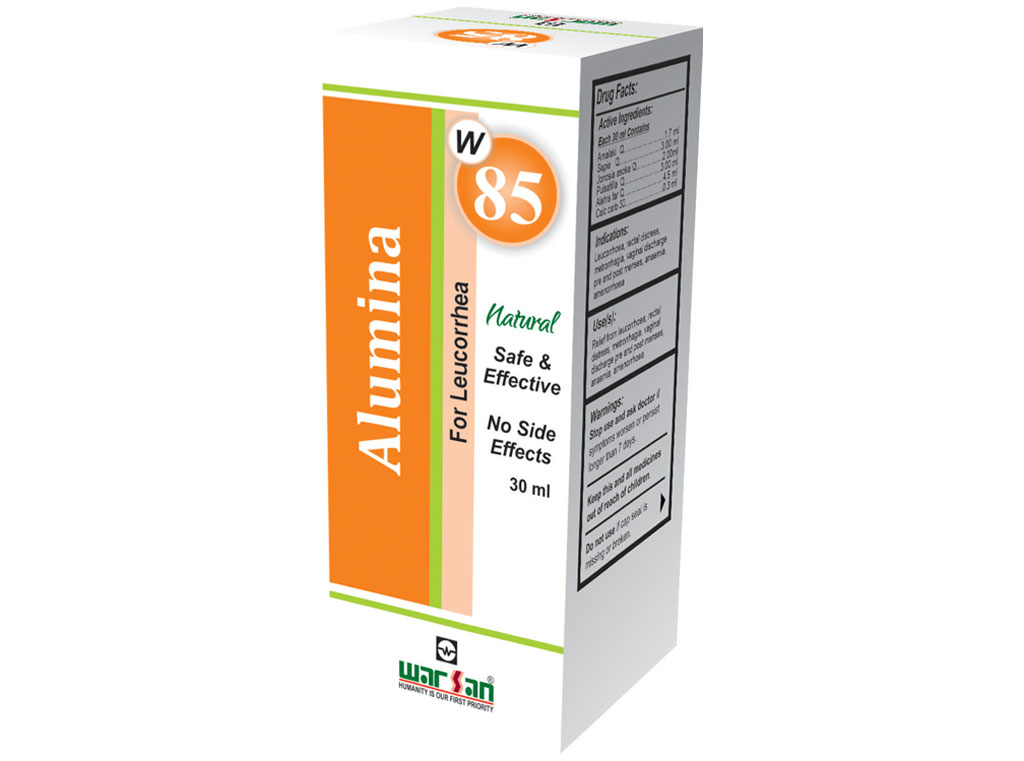
Warsan No. 85 (Alumina) 30ml
Warsan No. 85 (Alumina) is traditionally used for leucorrhea, vaginal discharge before and after menses, amenorrhea, and related menstrual imbalances, supporting overall women’s reproductive health.
Readers wanting broader context on menstrual irregularities may also find it useful to read this overview of 8 types of abnormal menstruation, which covers how menorrhagia compares to other common menstrual patterns.
When to See a Doctor
While homeopathy can be a supportive option for many women, certain signs call for prompt medical attention rather than self-treatment. These include soaking through protection every hour for several hours, periods lasting longer than seven days, passing large clots, bleeding between periods, signs of anemia such as persistent fatigue or dizziness, or any sudden, significant change in your usual pattern. A doctor can rule out fibroids, thyroid issues, or other underlying conditions that may need direct treatment.