
If you’re a parent in Lahore reaching for a homeopathic syrup for your child, or a patient in Karachi choosing between remedies for a chronic condition, there’s a good chance one question crosses your mind before you buy: is this actually halal? For many Pakistani households, that question matters just as much as effectiveness or price. Searching for halal homeopathic medicine Pakistan usually means you want a straight answer, not marketing language. This guide explains what halal certification for medicine actually involves, how homeopathic remedies are typically formulated, and exactly where Warsan Homeopathic stands today — including what we know for certain and what you should confirm directly before you buy.
What Does “Halal Certified” Actually Mean for a Medicine?
Halal certification is a formal, third-party process. An accredited certifying body examines a company’s raw materials, manufacturing process, and supply chain, then issues a certificate confirming the finished product meets Islamic dietary and preparation standards. For food products in Pakistan, this is a fairly established process. For pharmaceutical and homeopathic products, it’s less standardized — fewer certifying bodies actively certify medicines, and many manufacturers rely instead on ingredient transparency and general manufacturing certifications (like ISO or GMP) rather than a dedicated halal certificate.
This distinction matters. A company can be a fully licensed, high-quality manufacturer without holding a formal halal certificate — the two things measure different aspects of a product.
Why Homeopathic Remedies Are Often Considered Lower-Risk
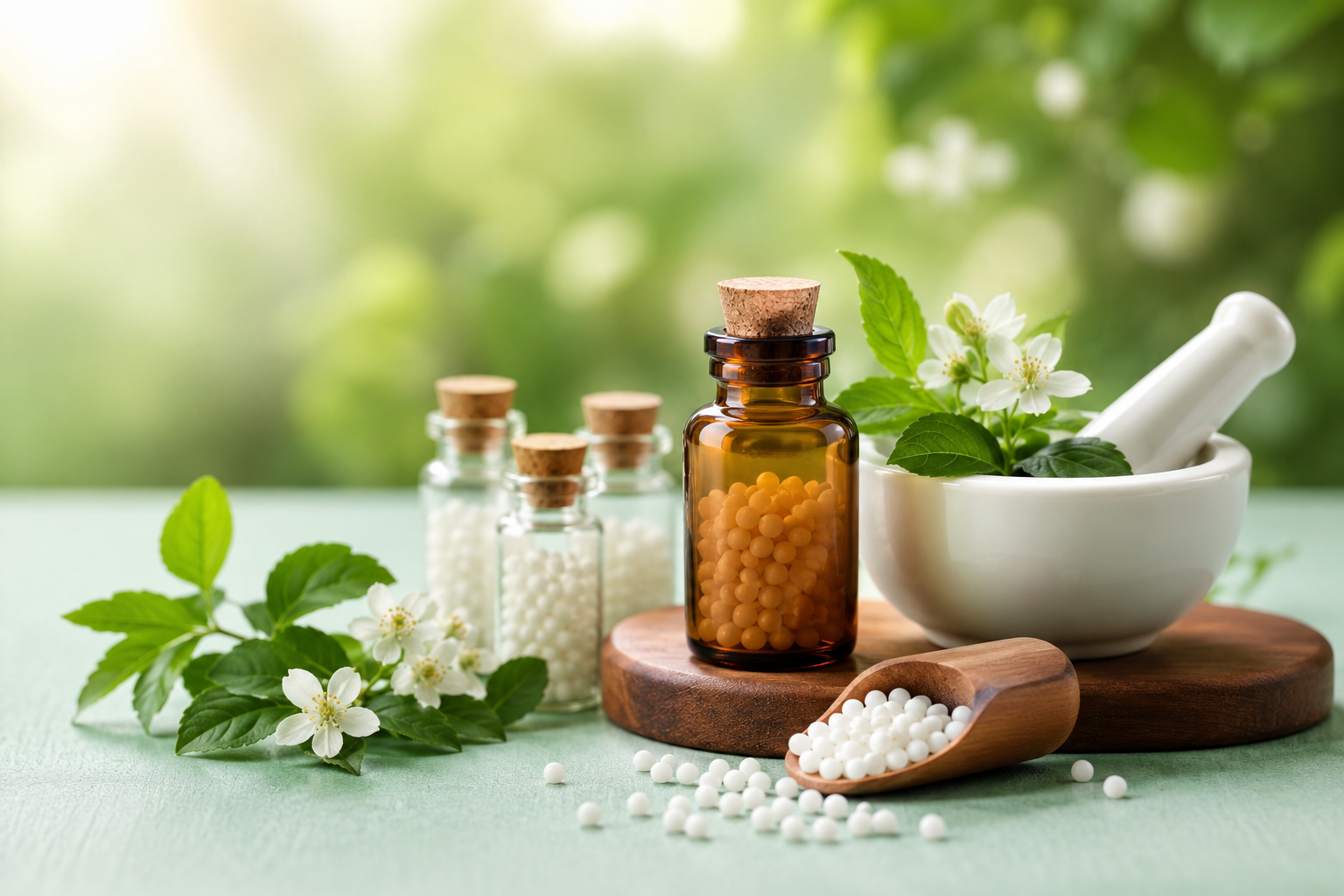
One reason halal-conscious consumers gravitate toward homeopathy in the first place is the nature of the formulations themselves. Most homeopathic remedies are derived from:
- Plant-based tinctures and extracts
- Mineral substances
- Highly diluted preparations of the original substance, often to the point where the original material is present only in trace amounts
Compared to conventional pharmaceuticals, which sometimes use gelatin capsules, animal-derived excipients, or alcohol-heavy solvents, homeopathic tablets and pills are frequently made using a lactose or sucrose base, and many oral drop formulations use only small amounts of alcohol as a preservative — a detail worth asking about directly if alcohol content specifically concerns you.
None of this automatically means a specific manufacturer’s specific product is certified halal. It simply explains why the category as a whole tends to raise fewer red flags for halal-conscious buyers than some other pharmaceutical categories.
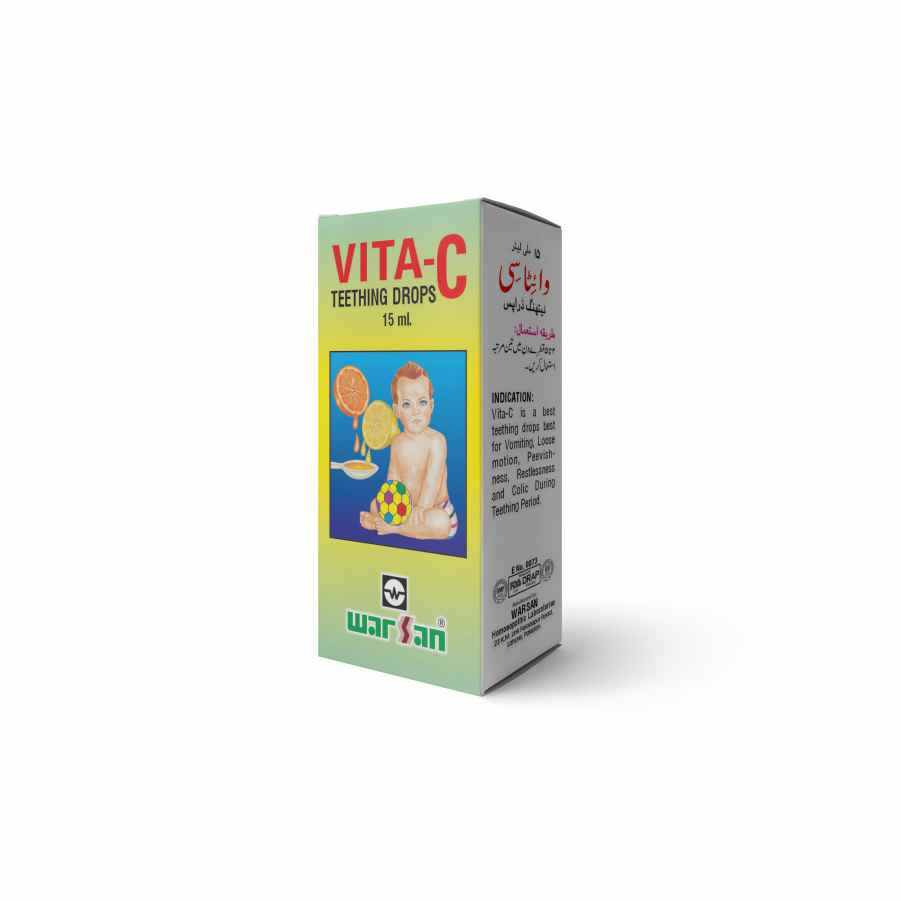
Vita-C Drops 15ml
Warsan Homeopathic • Kids Range • Drops
Explore Vita-C Drops 15ml and review the product details,
formulation, indications, and dosage information.
Where Warsan Homeopathic Stands Today
Here’s what we can confirm clearly: Warsan Homeopathic is an ISO 9001:2015 and GMP (Good Manufacturing Practice) certified company, manufacturing from our own facility in Lahore since 1977. These certifications confirm that our production processes, quality control systems, and manufacturing standards meet internationally recognized benchmarks.
What we cannot responsibly claim on your behalf is a specific, verified Halal certification from an accredited certifying body — at least not without pointing you to the actual certificate. Rather than make a claim we can’t back up with documentation, we’d rather be upfront: if halal certification status is a deciding factor for you, the most accurate answer will come from contacting us directly and asking about the specific product you’re considering. Certification status can also vary by product line, so a blanket answer for the whole company isn’t always accurate anyway.
ISO/GMP Certification vs. Halal Certification — What’s the Difference?
These two types of certification are commonly confused, so here’s a simple side-by-side:
| Certification Type | What It Confirms | What It Does Not Confirm |
| ISO 9001:2015 | Consistent quality management systems across manufacturing | Ingredient sourcing from a religious/dietary standpoint |
| GMP (Good Manufacturing Practice) | Clean, controlled, standardized production environment | Whether specific ingredients are halal-sourced |
| Halal Certification | Ingredients and processes meet Islamic dietary standards, verified by an accredited body | General manufacturing quality (a separate certification handles that) |
A company can legitimately hold one, two, or all three of these — they aren’t substitutes for each other.
How to Verify Halal Status Before You Buy — For Any Brand
Whether you’re evaluating Warsan or any other homeopathic brand in Pakistan, here’s a practical checklist:
- Ask for the certificate directly. A legitimate halal-certified company can usually provide a certificate number or the name of the certifying body.
- Check the ingredient list. Look specifically for gelatin, animal-derived glycerin, or alcohol content in oral drops.
- Confirm the certifying body is accredited. Not all “halal” labels come from recognized certification authorities — some are self-declared.
- Ask if certification covers the whole product range or specific SKUs. Certification sometimes applies to select products, not an entire catalog.
- When in doubt, contact the manufacturer. A transparent company should be willing to answer this clearly rather than deflect.
A Practical Scenario
Consider a Multan household choosing a homeopathic cough syrup for a school-age child during smog season. The parent wants two things confirmed before purchase: that the product is genuinely effective, and that it fits their family’s dietary values. In this situation, the smartest move isn’t to rely on a product description alone — it’s to check the certification claims that are actually documented (like ISO/GMP, which Warsan can confirm) and to directly ask about anything not explicitly stated, like halal status for that specific formulation. This two-step approach — verified facts first, direct confirmation second — applies to any homeopathic brand, not just one.
Why We’re Being Direct About This
It would be easy to write a vague, reassuring paragraph implying certification without saying it outright. We’re choosing not to do that. Trust, especially around health products for your family, is built by being precise about what’s confirmed and what isn’t — not by implying more than the facts support. Warsan’s ISO 9001:2015 and GMP certifications are real, documented, and something we’re proud of. Halal certification, if and when formally obtained for specific product lines, will be something we can point to with the same level of transparency.
Conclusion
Halal status matters to a large number of Pakistani consumers, and it deserves a straight answer rather than vague reassurance. What we can confirm with confidence is that Warsan Homeopathic is ISO 9001:2015 and GMP certified, manufacturing from our own Lahore facility since 1977 with consistent, documented quality standards. If halal certification for a specific product is what you need confirmed, reach out to us directly — we’d rather give you an accurate answer than an assumed one.