


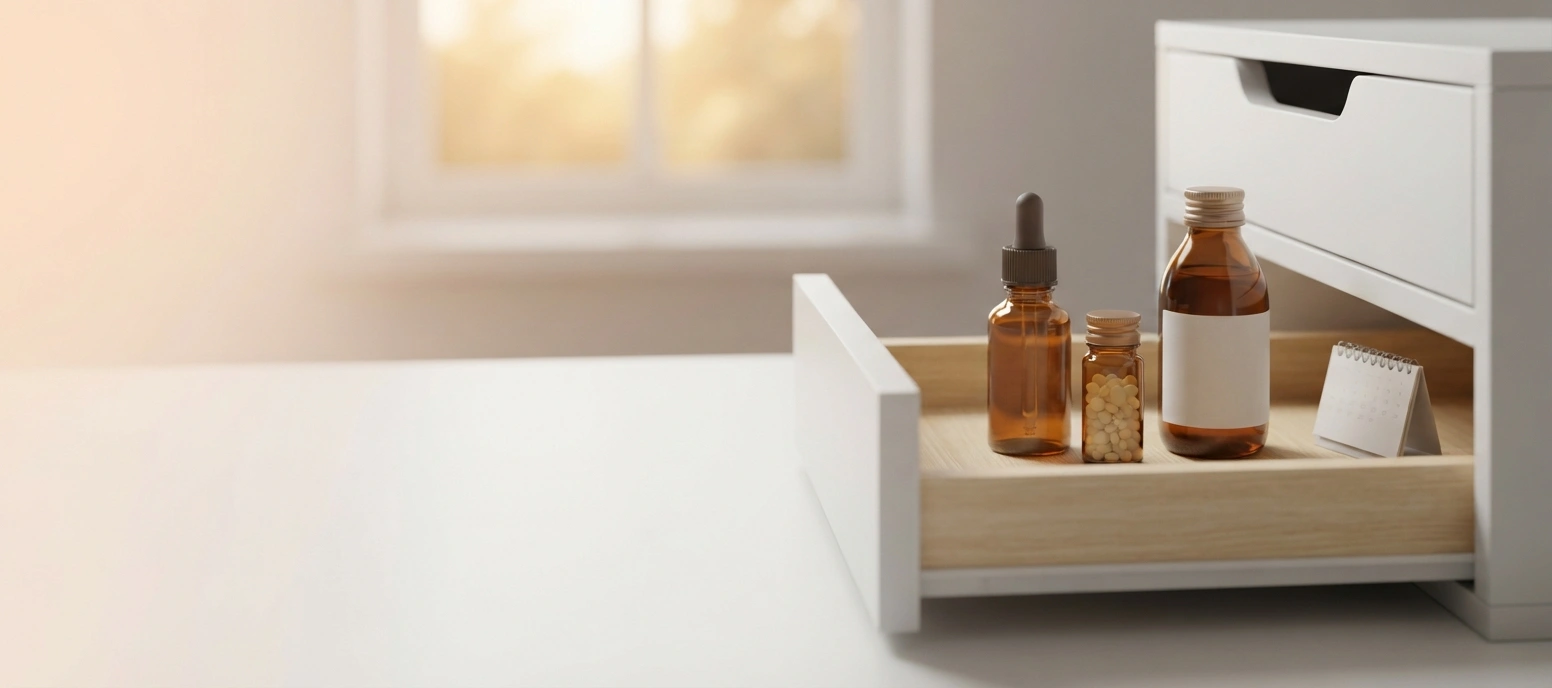
Many Pakistani households keep homeopathic remedies in their medicine cabinets for months or even years, eventually raising an important question: do homeopathic medicines expire? Yes, they can, although the homeopathic medicines shelf life in Pakistan may vary depending on the type of remedy and how it is stored. Tablets, dilutions, mother tinctures, and syrups can respond differently to age and storage conditions. Pakistan’s high summer temperatures, extended load-shedding periods, and humid coastal areas can also affect product stability when medicines are not stored properly. This guide explains how homeopathic medicines change over time, what the expiry date on a Warsan Homoeopathic product means, and practical ways to store these medicines safely, especially during Pakistan’s hottest months.

What Does “Expiry” Mean for Homeopathic Medicine?
Unlike a rumour that homeopathic remedies never expire, every homeopathic medicine sold in Pakistan is required to carry a manufacturing date and an expiry date on its packaging, just like any other registered pharmaceutical product. This printed date reflects the period during which the manufacturer can vouch for the product’s stated quality, strength, and safety when it has been stored under the recommended conditions. For most finished dosage forms, such as tablets, syrups, and combination drops, manufacturers typically assign a shelf life of a few years from the date of manufacture. Homeopathic dilutions and mother tinctures are prepared in an alcohol base, which acts as a natural preservative and generally keeps them stable for a long period when the bottle remains sealed and is stored properly. That said, “properly stored” is the operative phrase. Even a naturally stable preparation can lose potency, change colour, or develop an off smell well before its printed date if it has been left in a hot car, a sunlit window, or a damp bathroom cabinet. The safest rule for any Warsan Homoeopathic product, or any homeopathic remedy for that matter, is to always check the batch and expiry information on the label rather than assume the medicine is good indefinitely.Why Pakistan’s Heat Puts Extra Pressure on Shelf Life
In Pakistan, Homeopathic Medicine Shelf Life can be affected more severely by the country’s hot and humid climate than in cooler regions. Cities such as Multan, Sukkur, and parts of interior Sindh often experience summer temperatures above 40°C, while Karachi’s coastal humidity creates additional moisture-related stress. These conditions can speed up the natural degradation of pharmaceutical and homeopathic preparations. Frequent load-shedding compounds the problem. Many households assume that anything in the house is automatically safe from heat, but a closed cupboard in an unventilated room can easily exceed 35–40°C on a summer afternoon when the power is out and there’s no fan or air conditioning running. Direct sunlight through a window, storage above a refrigerator or stove, or transporting medicines in a car boot during a long journey between cities can all push a bottle of drops or a strip of tablets well past the temperature range printed on the label, even if the calendar date hasn’t been reached yet.Signs a Homeopathic Medicine May Have Gone Bad
Even before the printed expiry date, a few visible warning signs suggest a homeopathic medicine should not be used:- The liquid in a dilution or mother tincture has turned cloudy, has separated, or shows sediment that wasn’t there before.
- There is an unusual or sour smell that wasn’t present when the bottle was new.
- Tablets or pills have become soft, sticky, discoloured, or are stuck together inside the container.
- A syrup has changed colour, developed a strange smell, or shows any sign of fermentation or bubbling.
- The cap, dropper, or seal is damaged, allowing air and moisture to enter.
How to Store Homeopathic Medicine in Summer Heat
Knowing how to store homeopathic medicine in summer heat is the single biggest factor in getting the full shelf life out of any product. A few consistent habits make a real difference:- Keep medicines away from direct sunlight. Store bottles and boxes inside a cupboard or drawer rather than on an open shelf near a window.
- Aim for a stable, moderate room temperature. Most homeopathic products are formulated to remain stable below 25–30°C; an interior room away from the kitchen, generator exhaust, or west-facing windows is usually the coolest spot in a Pakistani home.
- Keep the original packaging. The outer carton and any amber-coloured glass bottle are designed to protect the contents from light exposure, which can affect the potency of dilutions over time.
- Close caps and droppers tightly after every use, and store bottles upright to prevent leakage or contamination of the dropper tip.
- Avoid the bathroom and kitchen. Both rooms see frequent temperature swings and higher humidity, which can accelerate spoilage of tablets, syrups, and creams.
- During extended load-shedding, move heat-sensitive items to the coolest room available rather than leaving them in a sealed, unventilated space; most homeopathic remedies do not require refrigeration unless the label specifically says so.
- When travelling in peak summer, especially between cities, carry medicines in an insulated bag rather than the car dashboard or boot, where temperatures can climb far above safe storage limits within minutes.
- Many homeopathic practitioners also advise keeping dilutions away from strong-smelling substances such as camphor, perfume, or mothballs, as a general precaution, though this is a traditional practice rather than something independently proven for every remedy.
Storing Different Forms of Homeopathic Medicine
Tablets and pills should stay in their original strip, bottle, or blister pack with the cap or foil fully sealed between uses. Handling pills with dry hands, or using the cap of the bottle rather than fingers to dispense them, reduces the chance of moisture or contamination affecting the remaining stock. Drops, dilutions, and mother tinctures benefit from their alcohol base, but heat and prolonged light exposure can still affect their strength over time. If you’re unsure which one you’re using, our mother tincture vs dilution guide explains the difference and how to use each correctly. Keeping the dropper clean and the bottle capped between doses matters as much as where the bottle is kept. Syrups generally have a shorter “in-use” period once opened compared with the shelf life of an unopened bottle, so it helps to note the date of opening and use the product within the timeframe mentioned on the label or by your physician, discarding any leftover syrup that has changed in colour, smell, or consistency. Ointments and creams are among the most heat-sensitive homeopathic products, since high temperatures can cause the base to separate or melt. These should always be stored below the temperature stated on the packaging and never left in a hot vehicle.How Manufacturing Quality Supports a Longer Shelf Life
The shelf life printed on any homeopathic product starts with how it was manufactured, not just how it is stored afterward. Warsan Homoeopathic, an ISO 9001:2015 and GMP certified manufacturer based in Lahore, follows standardized homeopathic pharmacopoeias and in-house quality checks during production, from sourcing raw materials to final packaging. Using purified, high-grade alcohol in mother tinctures and dilutions, along with properly sealed, light-protective packaging, is part of what allows a homeopathic product to hold its stated potency for the duration printed on the label, provided the consumer’s own storage conditions cooperate. This is also why checking a product’s packaging matters at the point of purchase, not only at home. Before buying homeopathic medicine from a pharmacy or online store, it helps to check that the manufacturing and expiry dates are clearly printed, that the seal is intact, and that the batch number is legible. Our guide on verifying genuine homeopathic medicine before you buy covers this in more detail. A product that has already spent time sitting in a hot shop display or an uninsulated delivery van has less shelf life left to work with by the time it reaches your home, regardless of what the box says, which is another reason to buy from a trusted, established manufacturer with reliable distribution and storage practices.
Water Berry Elixir
Warsan Homeopathic • Weight Management
Explore Water Berry Elixir from Warsan and review its formulation, packing, dosage, directions for use, and product information before use.
View ProductA Practical Example
Consider a household in Multan during peak summer, where daytime temperatures often exceed 42°C and load-shedding is common in the afternoon. If a family keeps its homeopathic first-aid kit on top of the refrigerator near the kitchen window, the combination of appliance heat and direct sunlight can push the internal temperature of that box well above safe storage limits for several hours a day. Simply relocating the same box to a drawer in a bedroom cupboard, away from windows and appliances, can meaningfully extend how long the medicines inside remain effective. This is a hypothetical scenario, but it reflects a storage mistake seen in many Pakistani homes during summer.Common Storage Mistakes Pakistani Households Make
A few habits show up repeatedly and are worth correcting:- Storing the family medicine box in the kitchen, where heat from cooking and appliances is highest.
- Leaving medicines in a car glovebox or boot for convenience during errands.
- Keeping the medicine cabinet inside a bathroom, where humidity is consistently higher than in other rooms.
- Buying new stock without using up or checking older bottles first, which leads to medicines being used well past their intended shelf life.
- Discarding the outer box or leaflet, which usually carries the batch number and expiry date once the smaller container’s printing has faded.