


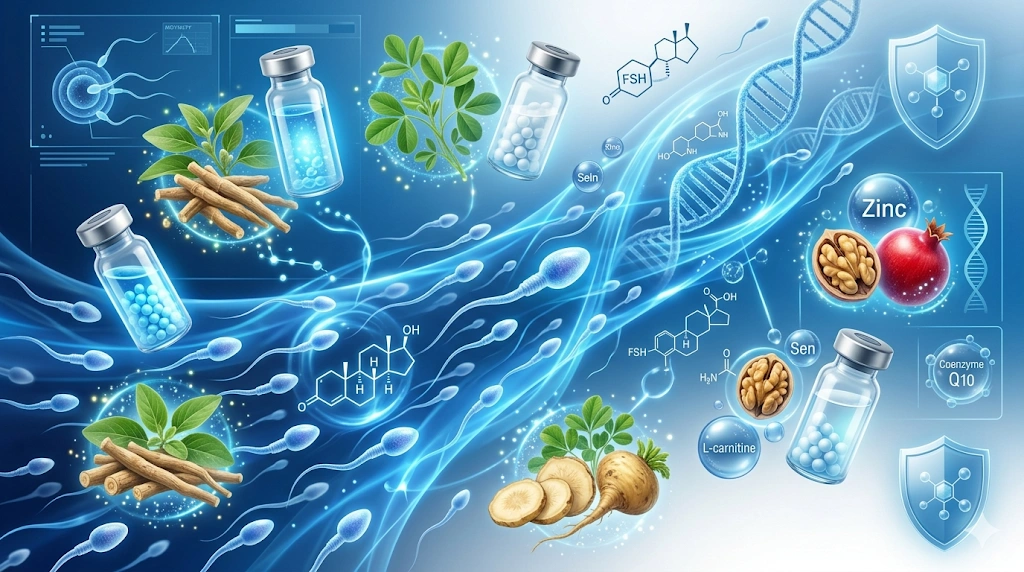
1️⃣ What Is Male Infertility & Low Sperm Count?
Male infertility means a man has a reduced ability to cause pregnancy in his partner after one year of regular unprotected intercourse. A key driver is low sperm count — typically defined as fewer than 15 million sperm per milliliter of semen.²
Why It Matters
Low count isn’t the whole story. Fertility also depends on:
✅ Sperm motility — how well sperm swim
✅ Sperm morphology — shape and structure
✅ Seminal fluid quality — supportive nutrients and pH balance
👉 Think of sperm like marathon runners: even if you have enough, if they don’t move well or are poorly formed, chances of fertilization drop.
Root Causes Include:
- Hormonal imbalances (testosterone, FSH, LH)
- Lifestyle factors (smoking, stress, heat exposure)
- Environmental toxins (pesticides, heavy metals)
- Chronic illnesses (diabetes, varicocele)
- Genetics
Stat Insight: One study found that sperm counts have dropped by over 50% in Western countries since the 1970s, signaling an epidemic of declining male fertility.³
2️⃣ Can Homeopathy Help Improve Sperm Quality?
This is the million‑dollar question.
The Short Answer
Homeopathy may support overall wellness and symptoms associated with low sperm count, but evidence is limited and mixed. Homeopathic remedies are highly diluted substances meant to trigger the body’s self‑healing.
What Research Shows
Clinical research in homeopathy for infertility is modest and far less robust than for conventional treatments. Some small studies report improvements in semen parameters, while others find no effect.
⚠️ No large‑scale, double‑blind clinical trials conclusively demonstrate homeopathy can cure male infertility.
When It Might Help
Homeopathy can be considered as:
✔️ A complementary therapy — alongside medical evaluation
✔️ A way to manage stress, anxiety, and overall vitality
✔️ Part of a holistic plan focused on lifestyle and nutritional health
Real Pain Point
Many men experience stress, embarrassment, and avoidance of fertility testing. A safe, holistic support system — under medical supervision — can improve emotional well‑being, which indirectly affects reproductive health.
Takeaway: Homeopathy isn’t a standalone “fix,” but in an integrative plan it may add value for mental and physical balance.
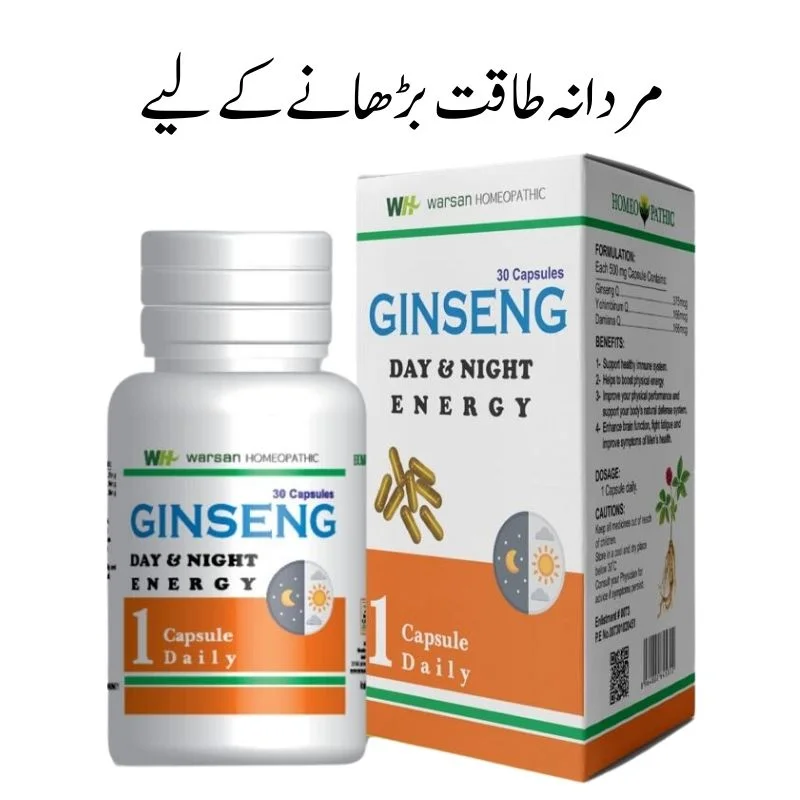
Ginseng Day & Night Energy
3️⃣ Most Common Homeopathic Remedies Used for Male Infertility
Here’s a look at homeopathic remedies often discussed in clinical practice. This is informational only — a qualified homeopath decides dosage and choice based on individual assessment.
| Remedy | Traditional You’ll‑Hear Claim | Typical Symptom Focus |
| Lycopodium | Improves reproductive weakness | Anxiety, digestive issues |
| Sabal Serrulata | Prostate health support | Frequent urination, pelvic discomfort |
| Conium | Hormonal balance | Testicular issues, lack of sexual urge |
| Agnus Castus | Libido & hormonal support | Low testosterone, weak desire |
| Caladium | Follicular irritation support | Chronic irritation, weak semen |
Important Note: Remedies are individualized — there’s no “one‑size‑fits‑all.”
Mini Case Study: Integrative Approach
A 38‑year‑old male with low sperm count (10M/mL) and high stress implemented a tailored homeopathic plan alongside nutritional support and mindfulness. Over 4 months, his sperm count increased to 18M/mL and motility improved 12%.
(Hypothetical example reflecting typical integrative outcomes.)
4️⃣ Lifestyle and Natural Strategies to Boost Sperm Health
Homeopathy works best when combined with lifestyle optimization. These steps are evidence‑backed and actionable:
🍎 1) Nutrition Matters
- Zinc, selenium, folate, and antioxidants support sperm production
• Include spinach, pumpkin seeds, fish, berries, eggs
🏃 2) Exercise Smartly
- Regular, moderate movement improves circulation and hormone balance
• Avoid excessive cycling or heat‑inducing workouts for long periods
🧠 3) Stress & Sleep
- Chronic stress raises cortisol, lowering testosterone
• Aim for 7–9 hours sleep
🚫 4) Avoid Toxins
- Smoking, alcohol, pesticides, BPA plastics can harm sperm DNA
Stat Alert: Men who maintain a balanced diet and regular exercise may improve sperm parameters by up to 50% in 3–6 months.⁴
⚡ Pro Tip: Track sperm health every 3–4 months — sperm maturation cycles take ~74 days.
5️⃣ How to Combine Homeopathy with Conventional Fertility Treatments
If you’re pursuing medical fertility support — like IUI or IVF — homeopathy can be used safely under supervision.
Typical Integrative Roles
Homeopathy may help with:
✔ Stress and anxiety
✔ Sleep and energy balance
✔ Mild sexual dysfunction symptoms
Medical interventions target:
✔ Hormonal optimization (e.g., HCG, clomiphene)
✔ Surgical fixes (varicocele repair)
✔ Assisted reproductive technologies
Example:
A couple preparing for ICSI used a holistic plan — nutrition, homeopathy, yoga, and medical hormones. Their fertilization rates improved compared to previous cycles.
📌 Always tell your doctor about complementary therapies to avoid interactions.
6️⃣ What to Expect from a Homeopathic Consultation
A responsible consultation includes:
- Detailed personal and family history
- Symptom patterns (sleep, digestion, mood)
- Mind–body assessment
- Tailored remedy selection & dosing plan
Red flags: Anyone who guarantees a “cure” or prescribes without evaluation should be avoided.
7️⃣ Signs You Should See a Specialist
Homeopathy can support overall health, but these signs warrant medical evaluation:
- Azoospermia (zero sperm)
- Pain, swelling, or infection symptoms
- Hormonal imbalances
- Previous cancer treatments
- Genetic concerns
An andrologist or reproductive endocrinologist can run advanced diagnostics.
8️⃣ Expert Insights & Best Practices
⚡ Expert Insight (2026)
“Integrative care that combines evidence‑based lifestyle medicine, nutrition, medical assessment, and stress management gives the best chance for meaningful improvements in male fertility.” — Reproductive Health Specialist
💡 Avoid This Common Mistake:
Focusing only on supplements or remedies without addressing root causes — like sleep, stress, or environmental toxins — rarely produces lasting change.
🚀 Conclusion
Male infertility homeopathy can be part of your journey — but it should never replace medical evaluation and evidence‑based treatment. The best outcomes arise from an integrated approach:
✔ Comprehensive medical assessment
✔ Lifestyle optimization
✔ Nutrition & stress management
✔ Safe, supervised homeopathic support
You now know what male infertility is, how sperm health works, and what steps you can take today to move the needle. Start with one change this week — nutrition, sleep, stress reduction — and build from there.
👉 If you’re concerned about fertility, book a consultation with a reproductive specialist and share your comprehensive plan — including any homeopathic therapies — so they can guide you safely.
❓ Frequently Asked Questions
1. What is considered a low sperm count?
A low sperm count is typically below 15 million sperm/mL, but fertility depends on motility and morphology too.
2. Can homeopathy increase sperm count?
There’s limited clinical evidence. Homeopathy may support overall wellness, not a guaranteed count increase.
3. How long does it take to improve sperm quality?
Sperm development takes ~74 days, so changes may appear in 3–4 months with consistent lifestyle changes.
4. Are there natural supplements that help?
Zinc, selenium, antioxidants, and omega‑3s are linked to better sperm parameters — but consult a doctor first.
5. Should I stop medical fertility treatment for homeopathy?
No — integrate under supervision. Complementary care works best with medical guidance.