


A 44-year-old schoolteacher from Multan sat across from our practitioner and said something we hear often: “I don’t feel sad exactly — I just feel nothing.” She’d been functioning for two years — teaching, cooking, managing her household — while feeling completely hollow inside. Her GP had offered antidepressants. She wasn’t opposed to them, but she was frightened by the side effects she’d read about and wasn’t sure her condition warranted medication. She wanted to know if there was another way.
Finding the right homeopathic remedy for depression is one of the more nuanced areas of homeopathic practice — and one of the most rewarding when it works. Depression in Pakistan is still heavily under-diagnosed. Many people attribute persistent low mood, loss of motivation, and emotional numbness to tiredness, family stress, or divine testing — and never seek help at all.
This article will walk you through the most effective homeopathic remedies for depression and low mood, how they’re selected, what to expect from treatment, and where the limits of this approach lie. The goal is to give you genuinely useful, clinically grounded information — not reassuring generalities.
What Is Depression — and Why Do So Many Pakistanis Suffer From It?
Depression (ذہنی افسردگی / اداسی) is a medical condition characterised by persistent low mood, loss of interest or pleasure, fatigue, disrupted sleep, changes in appetite, difficulty concentrating, and in severe cases, thoughts of worthlessness or self-harm. It’s not weakness, ingratitude, or a passing phase. It’s a recognised disorder of the nervous and endocrine systems — measurable in brain chemistry and treatable.
Pakistan’s mental health burden is significant and largely hidden. The World Health Organization estimates that over 44 million Pakistanis live with depression or anxiety — yet fewer than 3% ever access any form of mental health care. Psychiatrists are concentrated in major cities like Karachi and Lahore, leaving vast populations in smaller cities and rural areas without specialist support.
Cultural and structural factors deepen the problem. Depression is frequently dismissed as laziness or a spiritual failing. Women face particular pressure to remain emotionally available for their families regardless of their own internal state. Grief is expected to resolve on a fixed cultural timeline. Men rarely discuss emotional pain at all, making male depression especially under-reported.
Seasonal patterns also matter. In Pakistan’s cold, grey winter months — particularly in the northern regions — reduced sunlight exposure contributes to seasonal low mood that can tip into clinical depression for vulnerable individuals. Add to this the economic pressures of rising inflation, unemployment, and family obligations, and you have a population genuinely at risk. The search for the best homeopathic medicine for depression in Pakistan reflects a real, unmet need for accessible, stigma-free support.
How Does Homeopathy Help with Depression?
Homeopathy doesn’t treat “depression” as a single entity. It treats the person experiencing it — their specific emotional history, the quality of their low mood, what triggered it, what worsens and what relieves it, and the physical symptoms that accompany it. This is why selecting a homeopathic remedy for depression requires careful case-taking rather than a standard protocol.
The principle of “like cures like” means that a substance which produces deep despondency, isolation, and withdrawal in a healthy person — when potentised — can stimulate the body’s own regulatory capacity to reverse those very states. It doesn’t artificially elevate mood the way a stimulant would. It removes the obstacle to natural recovery.
What makes homeopathy particularly well-suited to depression is its ability to address emotional history alongside current symptoms. A patient whose depression began after bereavement needs a different remedy than one whose depression follows a career collapse, or one whose low mood is constitutional — present in milder form since adolescence and worsening under stress.
At Warsan Homoeopathic Laboratories, we’ve been supporting patients with mental and emotional conditions across Pakistan since 1977. Our GMP-certified practitioners approach depression cases with the time and attention they require — typically spending forty-five minutes to an hour on an initial consultation. In our experience, patients who feel genuinely heard in that first session respond better to treatment. The remedy works faster when the person feels the process respects them.
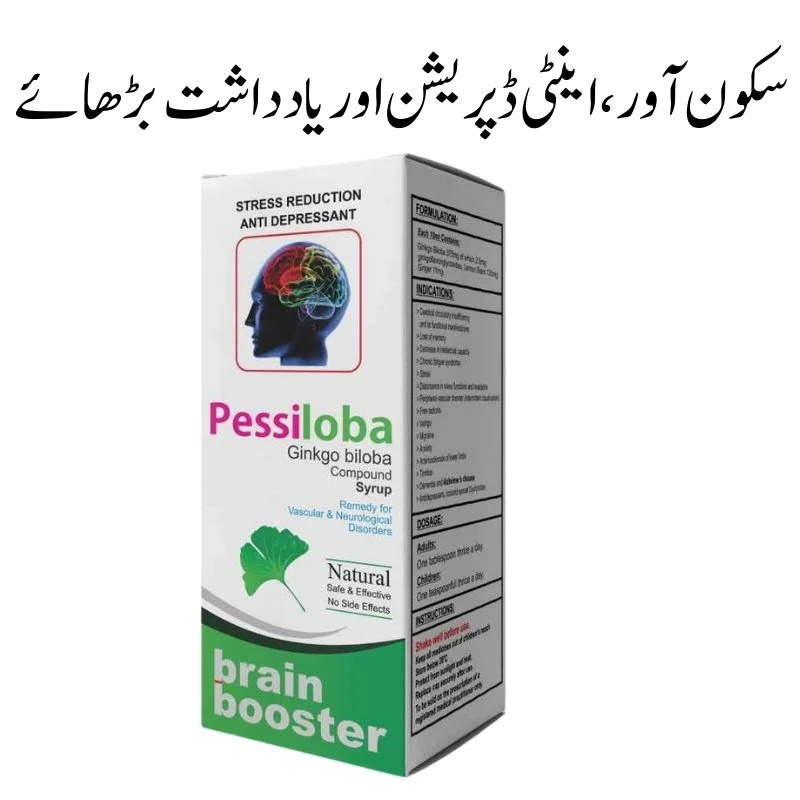
Pessiloba Syrup
Top Homeopathic Remedies for Depression in Pakistan
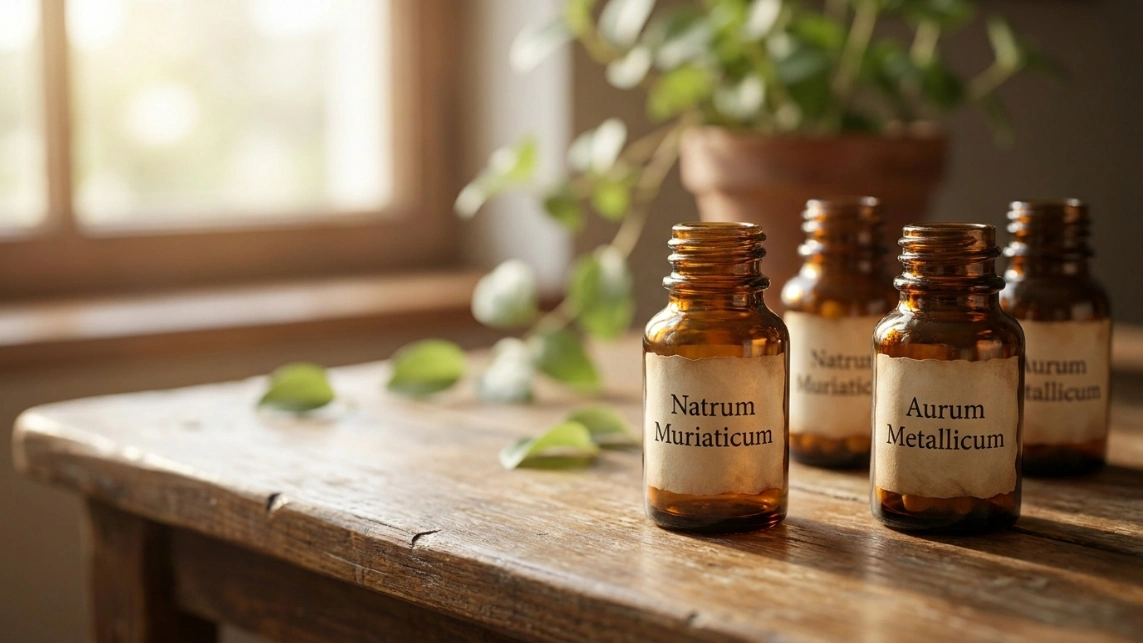
Natrum Muriaticum 200C — For Grief-Rooted, Internalised Depression
Natrum muriaticum depression homeopathy is among the most prescribed remedies in this category worldwide — and for good reason. It suits the person who carries grief or disappointment silently, dislikes being consoled (and may become irritated when someone tries), and maintains a composed exterior while suffering internally. They may weep alone but not in front of others. Past hurt — a loss, a betrayal, an unrequited love — remains alive and unprocessed. This is holistic mental health treatment at its most specific: a remedy that addresses not just the mood but the emotional pattern sustaining it. Natrum Mur 200C is typically given as a single dose, repeated after four to six weeks if needed.
Aurum Metallicum 30C — For Deep, Purposeless Despair
Aurum Metallicum is indicated when depression reaches its most severe and existential form — a sense that life has no value, that one has failed irredeemably, and that others would be better off without them. This remedy has a strong clinical history in patients with professional failure, loss of social status, or deep religious guilt. It’s the remedy most associated with suicidal ideation in homeopathic literature. If a patient expresses thoughts of self-harm, professional psychiatric evaluation is always the first step — this remedy supports, not replaces, that care. Aurum 30C under close practitioner supervision.
Ignatia Amara 200C — For Acute Grief and Emotional Shock
Ignatia is the primary remedy for depression that follows a specific, identifiable loss — a death, a divorce, a sudden rejection. The emotional picture is contradictory: the patient sighs constantly, alternates between tears and forced laughter, has a lump in the throat, and may exhibit seemingly inappropriate reactions to their grief. Ignatia doesn’t treat long-standing, constitutional depression as well as Natrum Mur, but for acute-onset, grief-triggered low mood, it works quickly and clearly. A single dose of 200C followed by observation over one to two weeks is the standard approach.
Sepia 30C — For Exhausted, Emotionally Detached Depression
Sepia suits the patient — most commonly women — who has simply run out of capacity to feel. They’re flat, indifferent, irritable with their family, and feel no pleasure in relationships or activities they once valued. This isn’t sadness so much as an emptiness. There’s often physical exhaustion alongside the emotional flatness, and a characteristic dragging sensation in the pelvis. Natural treatment for low mood with Sepia works particularly well in women experiencing postnatal depression, perimenopausal mood changes, or emotional exhaustion from long-term caregiving. Take 30C twice daily during acute phases.
Phosphoric Acid 6X — For Depression After Prolonged Mental or Physical Drain
Phosphoric Acid suits the person who has been depleted — through illness, overwork, grief, or long-term emotional strain — and now sits in a kind of apathetic vacancy. They’re not dramatically sad; they’re simply empty and indifferent. Memory and concentration suffer. They answer questions in monosyllables. This is the natural treatment for low mood most associated with burnout — a state increasingly common among professionals in Islamabad and Karachi carrying extreme workloads. Phosphoric Acid 6X taken three times daily over four to six weeks supports gradual restoration.
Pulsatilla 30C — For Weepy, Dependent, Changeable Low Mood
Pulsatilla fits mild to moderate depression characterised by weepiness, a strong need for reassurance and company, and rapidly shifting moods. The patient feels better when someone listens to them and worse when left alone. Fresh air reliably improves their state. This remedy works well in younger women and adolescents experiencing reactive low mood, and in patients whose depression is entangled with hormonal fluctuation. Pulsatilla 30C twice daily, reassessed after three weeks.
💡 Expert Tip: The single most useful question to ask when choosing between Natrum Mur and Ignatia is: when did this start? If there’s a clear trigger — a specific loss or shock — Ignatia is usually more indicated first. If the depression is longstanding, quiet, and rooted in accumulated grief over years, Natrum Mur runs deeper. Getting this distinction right saves weeks of ineffective treatment.
🌿 Warsan Product Recommendation
If you’re looking for a ready-made formulation to support mild to moderate low mood and emotional fatigue, Warsan MoodBalance — our emotional wellness support formula — combines key indicated remedies in balanced potencies for patients who want to begin treatment while arranging a full consultation.
You can explore it at warsan.com.pk.
For moderate to severe depression — particularly if there’s any element of hopelessness, social withdrawal, or loss of daily functioning — a full constitutional consultation is strongly recommended over self-prescribing. Our practitioners are available for teleconsultation across Pakistan, including Karachi, Lahore, Peshawar, Quetta, and Islamabad. You can also buy homeopathic medicine online Pakistan-wide through our website with nationwide delivery.
How to Use Homeopathic Remedies — Dosage, Timeline & Lifestyle Tips
For acute, grief-triggered depression, single doses of 200C potency remedies (Ignatia, Natrum Mur) are typically used — given once and then observed for one to two weeks before reassessing. For chronic, constitutional depression, lower potencies (30C, 6X) taken regularly over weeks are more appropriate. Higher potencies (1M) in long-standing cases are best managed by a qualified practitioner.
Expect subtle shifts in the first two to three weeks — slightly better sleep, small moments of lightness, reduced emotional reactivity. These are signs the remedy is working. Full stabilisation in genuine clinical depression usually takes three to six months. Patience is not optional; it’s part of the protocol.
In the Pakistani context, a few lifestyle factors make a measurable difference: morning sunlight exposure for at least twenty minutes (particularly important in winter in Lahore and the northern regions), maintaining a consistent sleep-wake schedule, reducing social isolation even when it feels uncomfortable to do so, and ensuring adequate iron and vitamin D levels — both are chronically deficient in Pakistani adults and both directly affect mood.
Avoid coffee, camphor, and strong aromatic substances during treatment. Store remedies away from direct sunlight and heat.
Did You Know? Vitamin D deficiency affects an estimated 73% of Pakistani adults — one of the highest rates in the world despite abundant sunshine. Vitamin D plays a direct role in serotonin synthesis, meaning that many cases of “depression” in Pakistan may be significantly worsened by an easily correctable deficiency. A simple blood test is worth doing before beginning any treatment.
Common Mistakes That Prevent Recovery
The most common mistake is choosing a remedy based on the word “depression” rather than on the specific emotional picture. Sepia and Natrum Mur can both present as emotional flatness and withdrawal, but they need different remedies and different potencies. Prescribing Natrum Mur to a Sepia patient — or vice versa — produces no result and leads patients to conclude that homeopathy doesn’t work for depression.
The second mistake is combining homeopathic remedies with frequent use of antidepressants and then attributing all improvement or failure to one without being able to distinguish which is doing what. This isn’t about choosing one over the other — it’s about being organised and systematic in your approach so you can actually assess what’s helping.
Third: expecting the remedy to work without any parallel engagement with the causes of depression. A remedy can reduce the biological burden of low mood, but it can’t change a harmful relationship, resolve a financial crisis, or process decades of unacknowledged grief on its own. Homeopathy works best as part of an approach that includes honest emotional work — whether through counselling, trusted relationships, or structured reflection.
Fourth: stopping treatment when symptoms improve slightly. Early improvement is the beginning of recovery, not the end of treatment. Stopping at three weeks when you need twelve is the single most common reason for relapse.
Homeopathy vs. Conventional Medicine — A Fair Comparison
Antidepressants — SSRIs, SNRIs, tricyclics — are genuinely effective for moderate to severe depression, particularly when biological factors dominate. For patients in acute crisis, for depression with psychotic features, or for cases where functioning has deteriorated to the point of inability to work or care for oneself, pharmaceutical intervention under a psychiatrist’s supervision is the appropriate first step. We state this clearly and without reservation.
Where the homeopathic remedy for depression offers a distinct advantage is in mild to moderate cases, in patients who’ve tried antidepressants and found side effects intolerable, in long-term maintenance after an acute episode, and in cases where the emotional history is complex and layered. SSRIs carry well-documented side effects — sexual dysfunction, emotional blunting, and discontinuation syndrome. None of these risks apply to homeopathic remedies.
Holistic mental health treatment in Pakistan works best when it’s genuinely integrated: not “homeopathy instead of psychiatry,” but the two working intelligently together, each applied where it’s most effective.
Conclusion
Depression is not a life sentence, and it’s not something to simply endure. The right homeopathic remedy for depression — matched to your specific emotional history, symptom pattern, and constitution — can meaningfully support recovery in ways that conventional treatment alone sometimes can’t.
Three things to take with you: remedy selection is everything — the diagnosis alone tells you very little about which medicine you need. Recovery takes time, typically measured in months rather than weeks, and that timeline is not a failure. And lifestyle factors, particularly sleep, sunlight, and nutrition, are not supplementary — they’re foundational.
To explore Warsan Homoeopathic Laboratories’ full range of emotional wellness and depression support medicines, or to book a consultation with our practitioners, visit warsan.com.pk. We’ve been supporting mental and emotional wellbeing across Pakistan since 1977 — with care that takes the whole person seriously.
FAQs
1. Is there an effective homeopathic remedy for depression?
Yes — several homeopathic remedies for depression have strong clinical track records, including Natrum Muriaticum for internalised grief, Aurum Metallicum for deep despair, Ignatia for acute loss, and Sepia for emotional exhaustion. The key is matching the remedy to the patient’s specific emotional picture rather than applying a single formula to all presentations. A qualified practitioner will identify the right fit.
2. What is the best homeopathic medicine for depression in Pakistan?
The best homeopathic medicine for depression in Pakistan depends entirely on the individual. Natrum Muriaticum 200C is among the most frequently indicated for the quiet, internalised depression common in Pakistani patients who carry grief silently. Sepia suits emotionally depleted women; Ignatia suits acute-onset grief. At Warsan Homoeopathic Laboratories, constitutional case-taking ensures the right remedy is selected for your full picture.
3. How does natrum muriaticum help with depression?
Natrum muriaticum depression homeopathy works by addressing a deep constitutional pattern of emotional suppression, unresolved grief, and withdrawal from intimacy. It’s indicated when the patient carries long-standing hurt silently, rejects comfort, and experiences periodic silent weeping. Given at 200C potency as a single dose, Natrum Mur can gradually ease the emotional rigidity that sustains this type of depression — with effects that deepen over weeks.
4. Can homeopathy be used alongside antidepressants for depression?
In most cases, homeopathic remedies can be used alongside antidepressants without pharmacological interaction. However, it’s important to inform both your homeopathic practitioner and your prescribing doctor so that changes in your condition can be assessed clearly. Never discontinue antidepressants without medical supervision — withdrawal should always be tapered gradually under a doctor’s guidance.
5. What is holistic mental health treatment for depression in Pakistan?
Holistic mental health treatment for depression in Pakistan typically combines an individually matched homeopathic remedy with lifestyle support — regular sleep, morning sunlight, social connection, and nutritional correction (particularly vitamin D and iron). It may also integrate counselling or psychological support. The goal is to address the biological, emotional, and environmental factors sustaining low mood together rather than managing symptoms in isolation.
6. How long does homeopathic treatment for depression take to show results?
Early signs of response — slightly improved sleep, small moments of emotional lightness, reduced irritability — often appear within two to four weeks of a well-matched remedy. Full recovery from established depression typically requires three to six months of consistent treatment. Constitutional remedies like Natrum Mur work gradually but produce lasting change. Patients who stop treatment at the first sign of improvement are the most likely to relapse.
7. Is natural treatment for low mood safe during pregnancy?
Natural treatment for low mood through homeopathy is generally considered safe during pregnancy, as remedies contain no pharmaceutical compounds. Several remedies — Ignatia, Pulsatilla, Sepia — are commonly used for perinatal mood changes. However, pregnancy requires careful case management, and any treatment for depression during this period should involve both your homeopathic practitioner and your obstetrician.
8. Where can I buy homeopathic medicine for depression online in Pakistan?
You can buy homeopathic medicine online in Pakistan through warsan.com.pk, with delivery available nationwide including Karachi, Lahore, Islamabad, Multan, and Peshawar. Warsan Homoeopathic Laboratories is a GMP-certified manufacturer with nearly 47 years of experience. Our online store carries both individual remedies and formulated combinations for emotional and mental wellness support.