
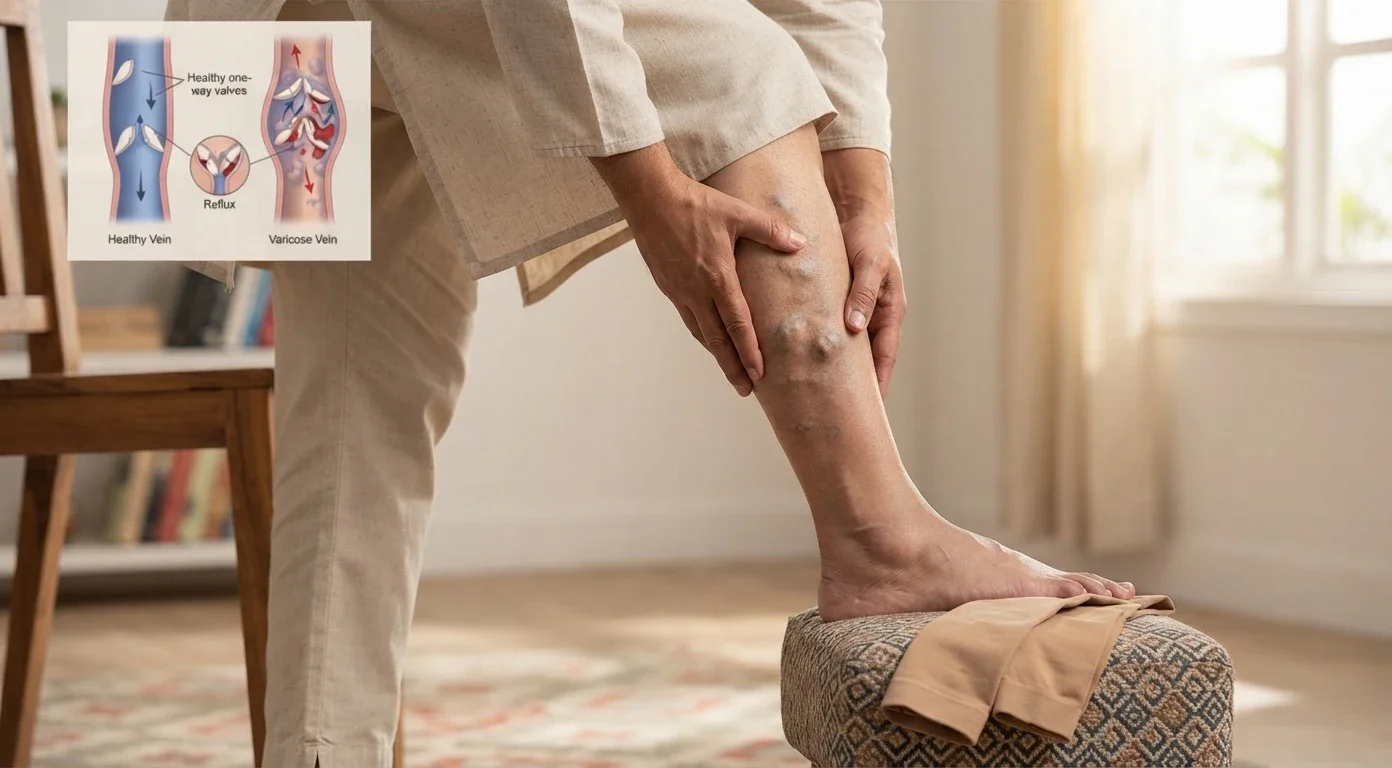
Ask any teacher, nurse, shopkeeper, or flight attendant how their legs feel by eight in the evening, and you will likely hear a familiar complaint: heaviness, aching, and a sensation that their legs are weighed down. While many people attribute this discomfort to a long day on their feet, that is not always the complete explanation. For many individuals, persistent evening leg heaviness may indicate a more specific underlying issue, such as varicose veins and heavy legs, or a broader circulatory condition known as chronic venous insufficiency.
Here’s what makes this worth understanding properly: varicose veins are often dismissed as a purely cosmetic concern, something to cover up rather than address. In most cases, that dismissal is harmless. But in some cases, the same visible, twisted veins can be the early, visible sign of a vein system working considerably harder than it should, and ignoring it can allow things to progress further than they needed to. This guide breaks down what’s actually happening in your veins, which symptoms are genuinely nothing to worry about, which ones deserve a doctor’s attention, and what helps in between.
What Varicose Veins Actually Are
Veins carry blood back up toward the heart, which, in the legs, means pushing blood against gravity. To manage this, leg veins rely on a network of one-way valves that snap shut after each pulse of blood, preventing it from flowing backward and pooling. When those valves weaken or stop closing properly, blood begins to pool and backflow instead, and the vein stretches and bulges in response. That visible, twisted, blue or purple vein just under the skin is what we call a varicose vein.
Small, thread-like versions of the same problem closer to the skin’s surface are usually called spider veins, which are typically cosmetic. True varicose veins are generally larger, more raised, and more likely to come with the physical symptoms this article focuses on.
Why Your Legs Feel Heavy, Even Before You See a Single Vein
This is the detail most people miss: the heavy, tired, achy sensation can show up before any vein is visibly bulging, because it’s really a symptom of poor venous return, not of the visible vein itself. Doctors describe a wider spectrum called chronic venous insufficiency, which the Cleveland Clinic maps across seven stages — starting with nothing more than legs that feel tired or achy by evening, long before any vein becomes visible, and only reaching the stage of visible varicose veins and skin changes later on. In other words, that end-of-day heaviness some people have lived with for years, assuming it’s “just tiredness,” can be an earlier chapter of the same underlying story.
Alongside heaviness, the most commonly reported symptoms include:
- A dull ache or throbbing, especially after standing for long periods
- Swelling around the ankles and lower legs, often worse by evening
- Burning, cramping, or a restless sensation in the legs, sometimes worse at night
- Itching around the affected vein
- Visible twisted, bulging, blue or purple veins
What Puts Someone at Higher Risk
Varicose veins are extremely common, and several well-documented factors increase the likelihood of developing them:
- Family history — a genetic tendency toward weaker vein valves runs in families.
- Prolonged standing or sitting — jobs requiring long hours on your feet, or long hours seated without movement, both increase pressure in leg veins over time.
- Pregnancy — increased blood volume and hormonal changes put extra pressure on leg veins, which is why varicose veins often first appear or worsen during pregnancy.
- Age — vein valves naturally lose some elasticity and effectiveness over the years.
- Excess body weight — added weight increases pressure on leg veins.
- Being female — hormonal factors mean varicose veins are reported more frequently in women than men, though men are far from immune.
When It’s More Than Just Heavy Legs: Red Flags for a Doctor
Most varicose veins are a long-term, manageable condition rather than a medical emergency, and many people live with them for years with only mild symptoms. But certain signs mean it’s time to see a doctor rather than simply manage things at home:
- Bleeding from a varicose vein, whether spontaneous or after a minor injury — this can occur because the skin over a varicose vein is often thin, and heavy bleeding needs leg elevation, firm pressure, and prompt medical attention.
- Skin changes near the vein — a reddish-brown or leathery discoloration, or skin that looks increasingly thin and fragile.
- Open sores or ulcers near the ankle that are slow to heal, which can signal more advanced chronic venous insufficiency.
- Sudden, severe swelling or pain in one leg, especially if the leg feels warm, tender, or looks noticeably more swollen than the other — this combination needs urgent evaluation, since it can indicate a deep vein thrombosis (a blood clot) rather than ordinary varicose vein symptoms, and is a genuinely different, more urgent situation.
- Veins that are increasingly painful, rapidly enlarging, or significantly interfering with daily activity.
None of this is meant to cause alarm — the large majority of varicose vein cases never reach this point. But knowing these specific red flags means you’ll recognise the difference between “manage it at home” and “call a doctor today” if it ever matters.
Lifestyle Steps That Genuinely Help
Several well-supported, low-cost habits can meaningfully ease symptoms and may slow how quickly things progress:
- Elevate your legs — raising your legs above heart level for 15–20 minutes a few times a day helps gravity do the opposite of its usual job, draining pooled blood back out of the lower legs.
- Wear compression stockings — these apply graduated pressure that supports vein function and reduces pooling; ask a doctor or pharmacist about the right compression level for you.
- Move regularly — walking activates the calf muscles, which act as a natural pump pushing blood back up the legs; this matters especially for anyone sitting or standing for long stretches.
- Avoid prolonged static standing or sitting — if your job requires long hours on your feet or at a desk, build in short movement breaks every 30–45 minutes where possible.
- Maintain a healthy weight — reducing excess pressure on leg veins through gradual, sustainable weight management.
- Avoid tight clothing around the waist, groin, or legs, which can restrict healthy blood flow.
Modern Medical Treatments: What’s Actually Available Today
For people whose symptoms are more than mild, vein specialists now have considerably more refined, minimally invasive options than the vein-stripping surgery of decades past. Endovenous laser ablation (EVLA) and radiofrequency ablation both use targeted heat delivered through a thin catheter to close off a problematic vein from the inside, typically as an outpatient procedure with a much faster recovery than traditional surgery. Sclerotherapy, where a solution is injected directly into smaller veins to close them, remains a well-established option for less severe cases. None of these are something to self-diagnose your way into — they’re decisions made with a vascular specialist based on an ultrasound assessment of how your specific veins and valves are functioning, but it’s worth knowing these effective, modern options exist if lifestyle steps alone aren’t enough.
Where Gentle, Supportive Care Fits
Alongside lifestyle changes and, where needed, medical treatment, some people look at complementary options for everyday comfort. Homeopathy has a long-standing tradition of remedies associated with vein and circulation support, and interestingly, this is one of the few areas where even some mainstream hospital patient-education resources (such as a University of Michigan Health patient library page) list specific homeopathic options people commonly ask about, including Hamamelis Virginica (traditionally associated with aching, bruised-feeling veins), Pulsatilla (traditionally associated with swollen veins that feel heavy and worse with warmth), Calcarea Fluorica (traditionally associated with vein wall elasticity), and Aesculus Hippocastanum (traditionally associated with a feeling of fullness and heaviness in the legs).
As with any homeopathic approach, these are shared for general educational awareness rather than as a self-prescription guide, and the right remedy and potency depend on an individual’s specific symptom pattern — best assessed by a qualified homeopathic physician. More importantly, no homeopathic remedy can reverse an already-damaged vein valve or replace medical evaluation when red-flag symptoms like bleeding, ulceration, or sudden one-leg swelling are present. Gentle supportive care sits alongside lifestyle habits and, where needed, a vascular specialist’s input — not in place of either.
A Realistic Daily Routine
For someone managing mild to moderate symptoms, a sensible daily approach looks less like a strict medical regimen and more like a handful of consistent habits: put your feet up for a few minutes mid-afternoon and again in the evening, wear compression stockings on days you know you’ll be on your feet for hours, take a short walk or stretch break every half hour or so if you sit or stand all day, and pay attention to whether symptoms are staying the same, easing, or clearly getting worse over time. That last point matters most — stable, mild symptoms rarely need urgent action, but a clear change in pattern is exactly when a doctor’s opinion is worth getting.
A Meaningful Takeaway
Heavy, tired legs at the end of the day are common enough that it’s easy to write them off as simply part of getting older or working hard. Sometimes that’s all it is. But understanding that this sensation can be an early, quiet signal from your vein system — not just fatigue — means you’re equipped to do something about it long before it becomes a visible, more stubborn problem. A few consistent habits, knowing the specific red flags that need a doctor, and an honest understanding of what supportive care can and can’t do, together make this a condition most people can manage well on their own terms.
Frequently Asked Questions
Q1: Are varicose veins always a sign of a serious problem?
No. Most varicose veins are a chronic but manageable condition, and many people live with them for years with only mild symptoms. They become more concerning only when accompanied by specific red flags like bleeding, skin ulcers, or sudden one-leg swelling and pain.
Q2: Can varicose veins be prevented entirely?
Not entirely, since genetics play a significant role, but lifestyle habits like staying active, avoiding prolonged static standing or sitting, maintaining a healthy weight, and using compression stockings when needed can meaningfully reduce the risk and slow progression.
Q3: Is it normal for varicose veins to get worse during pregnancy?
Yes, increased blood volume and hormonal changes during pregnancy commonly cause varicose veins to appear or worsen, and they often improve somewhat after delivery, though not always completely.
Q4: Do compression stockings actually work, or are they just uncomfortable?
They genuinely help for many people by supporting vein function and reducing blood pooling, though getting the right compression level and correct fit, ideally with a doctor’s or pharmacist’s guidance, matters for both comfort and effectiveness.
Q5: When should heavy legs be checked by a doctor instead of managed at home?
See a doctor if you notice bleeding from a vein, skin discoloration or ulcers near the ankle, or especially sudden, severe swelling and pain in one leg that feels warm to the touch, since this last combination can indicate a blood clot rather than ordinary varicose vein symptoms.
Q6: Are modern treatments for varicose veins painful or require long recovery?
Modern options like endovenous laser ablation and radiofrequency ablation are generally outpatient procedures with considerably shorter recovery times than older surgical vein stripping, though the right choice and expected recovery depend on an individual assessment by a vascular specialist.
Q7: Can homeopathic remedies cure varicose veins?
No. Homeopathic remedies are used by some people as a complementary option for comfort, but they cannot reverse damaged vein valves or replace lifestyle measures and medical treatment when symptoms are significant or red-flag signs are present