


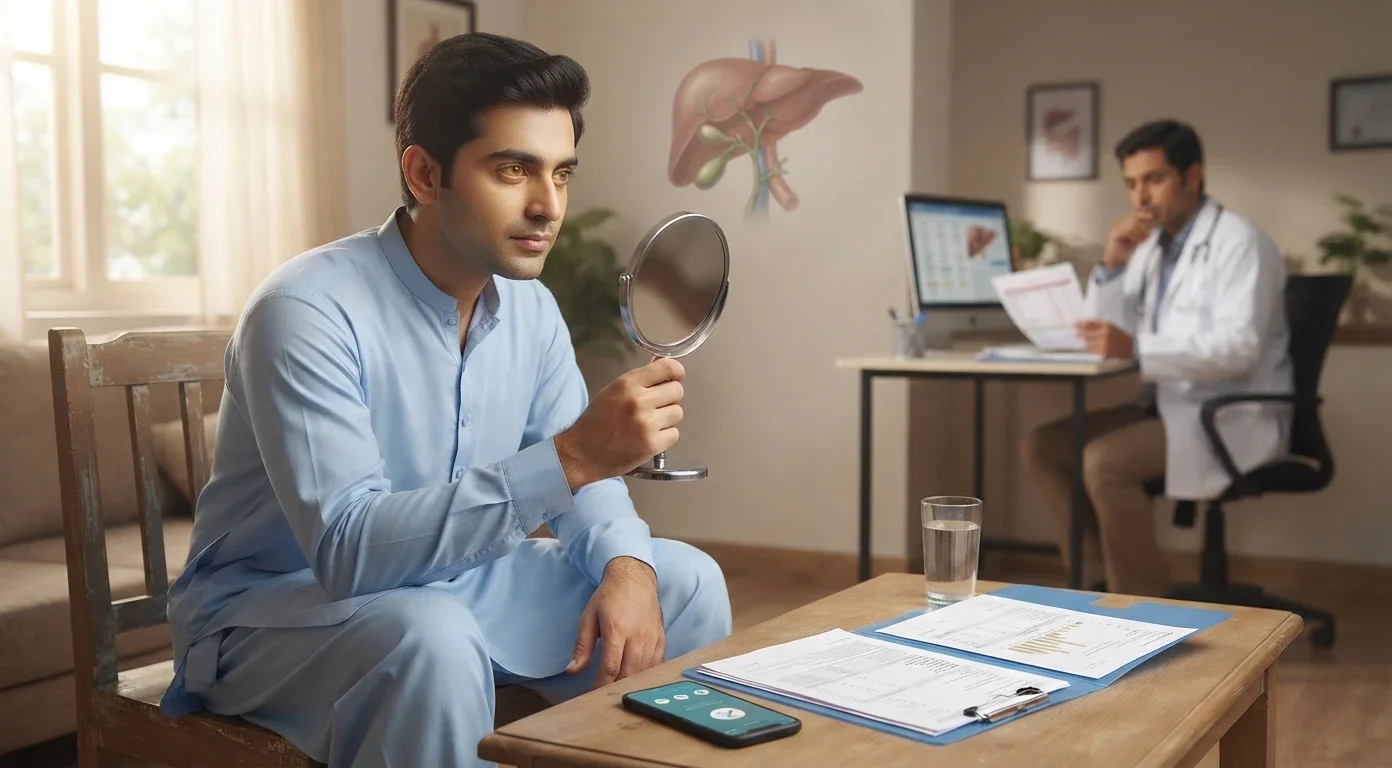
Imagine Bilal, a 24-year-old in Gujranwala, who wakes up one morning and notices that the whites of his eyes look yellow. His urine is the colour of strong tea. He has felt tired for a week and has lost his appetite.
His family reacts the way many families do. A neighbour says it is “peeliya” and suggests sugarcane juice. An aunt knows someone who treats it at home. Bilal’s first instinct is to reach for the paracetamol in the kitchen drawer.
Every one of those instincts comes from love. But none of them answers the question that matters most: why is his skin turning yellow? Jaundice is not an illness in itself. It is a signal, and the cause behind it decides everything that should happen next. This guide explains what jaundice means, how the main hepatitis viruses differ, why testing must come before treatment, and how to support your liver while it recovers.
Jaundice Is a Sign, Not a Disease
Jaundice is a yellow colouring of the skin, the whites of the eyes and the inside of the mouth, caused by a build-up of bilirubin, a yellow pigment made when old red blood cells are broken down. The liver normally processes bilirubin and sends it out of the body in bile, which gives stools their brown colour.
Common signs that travel with jaundice include:
- Dark, tea-coloured urine
- Pale or clay-coloured stools
- Itchy skin
- Tiredness, nausea and loss of appetite
- Pain or discomfort in the upper right abdomen
On darker skin, yellowing can be harder to spot on the skin itself, but NHS Wales notes that the whites of the eyes will still look yellow. And if your skin looks yellow-orange but your eyes are white, the cause may simply be a lot of carrots or other foods rich in beta-carotene. MedlinePlus describes this as not being jaundice.
What can cause it?
The NHS lists gallstones, alcohol-related liver disease, pancreatitis, hepatitis and sickle cell disease among the possible causes, and says some of them are serious. The MSD Manual groups most causes into disorders and medicines that damage the liver, and those that block the flow of bile. Gilbert’s syndrome, a harmless inherited condition, can also raise bilirubin.
That range is exactly the problem. A viral infection, a stone blocking a bile duct and a reaction to a medicine can all turn the eyes yellow. They need completely different care.
Why Diagnosis Must Come First
Both the NHS and Northern Ireland’s nidirect say to get medical advice promptly if your skin or eyes turn yellow. This is not excessive caution. Here is why:
- Treatment depends on the cause. Hepatitis A needs rest and fluids. A blocked bile duct may need a procedure. Hepatitis B or C needs specific antiviral treatment.
- Some causes become dangerous quickly. Swelling of the abdomen, confusion or bleeding can signal serious liver trouble.
- Some causes are silent for years. Hepatitis B and C can damage the liver slowly without strong symptoms.
- Home remedies can delay the right care, or even harm. A struggling liver has difficulty processing medicines, alcohol and unknown herbal mixtures.
Doctors usually start with your history, an examination and blood tests such as liver function tests and a viral hepatitis panel, often followed by an ultrasound. Blood tests show whether the problem is in the liver cells, in the bile flow, or in the blood itself.
Five Hepatitis Viruses, Five Different Stories
Hepatitis means inflammation of the liver. The World Health Organization (WHO) explains that there are five main hepatitis viruses, types A to E, and that they differ in how they spread, how severe the illness is, and how they are prevented. Here is the short version:
- Hepatitis A and E: Spread mainly through contaminated food and water, and most common where clean water is hard to access, according to WHO. They cause acute illness and do not become chronic. A vaccine exists for hepatitis A, and WHO also mentions a vaccine for hepatitis E, so ask your doctor about availability. WHO notes that hepatitis E can be especially serious in pregnant women.
- Hepatitis B: Spreads through blood and body fluids, and from mother to baby. It can become chronic. A safe, effective vaccine prevents it, and chronic infection can be treated with antiviral medicines.
- Hepatitis C: Spreads through blood. It can be acute or chronic and can cause cirrhosis (scarring) or liver cancer over time. There is no vaccine, but it is curable.
- Hepatitis D: Occurs only in people who already have hepatitis B, and makes it more serious. Hepatitis B vaccination also protects against it.
WHO also stresses that many people with hepatitis show only mild symptoms or none at all, which is why jaundice should never be the only trigger for testing.
The Pakistan picture
The numbers are sobering. WHO reports that Pakistan has the heaviest hepatitis C burden in the world, with an estimated 9 million people living with hepatitis C and 3.8 million with hepatitis B. Only about 3 in 10 of those affected know it.
The spread is largely linked to healthcare-associated transmission: WHO points to the widespread reuse of syringes and unsafe blood transfusions, and its Pakistan programme page also lists poorly sterilised medical instruments and shared razors at barbers as risk factors.
The encouraging part is that hepatitis C is curable. WHO has noted that Pakistan produces low-cost medicines that can cure hepatitis C with a course of about three months, and the government has a national programme for hepatitis elimination. The obstacle is not treatment. It is testing. If you have never been screened for hepatitis B and C, ask your doctor.
Red Flags: When Not to Wait
Most people with hepatitis A recover well. Still, some signs mean the liver may be failing, and these need hospital assessment the same day. Several medical sources agree on this list, including the CDC-based guidance that acute liver failure is rare in hepatitis A but serious:
- Confusion, unusual sleepiness, difficulty waking or a change in personality
- Vomiting blood, or black or bloody stools
- Easy bruising or bleeding from the gums or nose
- A swollen abdomen or severe abdominal pain
- Vomiting that stops you keeping any fluids down
- Jaundice that keeps deepening, or fainting and dizziness
- Signs of dehydration, such as sunken eyes, a dry mouth and very little urine
A yellow newborn also needs a prompt check. The NHS says newborn jaundice is common and usually harmless, but a doctor or midwife should look at the baby.
How to Support Liver Recovery (After a Diagnosis)
Once a doctor has found the cause, much of the recovery from acute hepatitis such as hepatitis A is supportive. The body clears the virus itself, and your job is to give the liver the easiest possible time. Always follow your own doctor’s plan, because chronic hepatitis B and C need specific treatment.
1. Rest without guilt
Fatigue can be intense. Rest when you are tired, avoid strenuous activity, and return to work or school when your doctor says it is safe.
2. Drink fluids and eat small, simple meals
Staying hydrated matters especially if you are vomiting. If nausea strikes, small frequent meals are easier than large ones, and bland foods such as rice, toast, bananas and soup are usually tolerated. Many guides advise avoiding very fatty and fried foods while recovering.
3. Avoid alcohol completely
Alcohol puts extra strain on the liver. One health-system guide for hepatitis A advises avoiding it for two to three months, while others say until your doctor says blood tests are back to normal. Ask your doctor for your own timeline.
4. Be very careful with medicines, including paracetamol
This is the step most families miss. Paracetamol (acetaminophen) is the first thing people reach for, but MedlinePlus advises people with acute hepatitis to avoid acetaminophen and other liver-toxic medicines during the illness and for several months afterwards. WebMD adds that the liver struggles to break down any drugs while sick, so ask your doctor which medicines, vitamins and supplements are safe.
The rule of thumb: do not start any new medicine, tonic, herbal mixture or supplement without telling your doctor you have a liver problem. WHO’s hepatitis guidance also advises avoiding unnecessary medications during these infections.
5. Protect the people around you
Wash hands carefully with soap and water after the toilet and before preparing food. Do not prepare meals for others while infectious, and use safe, boiled or filtered water. Ask your doctor whether household members should be vaccinated against hepatitis A or B.
6. Do not skip follow-up tests
Symptoms often settle before the liver enzymes do. Follow-up blood tests show whether the liver has truly recovered.
Where Homeopathic and Natural Care Fit
Many people in Pakistan like to combine conventional care with homeopathic or herbal support. That is understandable, but it needs a clear order of steps:
- Diagnosis first. Do not try to treat yellow eyes at home without knowing the cause.
- Follow the doctor’s plan for the actual infection.
- Treat natural or homeopathic products as supportive only. The US National Center for Complementary and Integrative Health states there is little evidence that homeopathy works for any specific health condition, and it advises against using it in place of proven care or delaying a visit to a health care provider.
- Tell your doctor about everything you take, including herbal tonics and homeopathic medicines, so they can check for interactions. Our guides on using homeopathic and allopathic medicines together and when to see a practitioner before ordering homeopathic medicine online explain how.
If you want to read about Warsan’s general liver-support approach, see Effective Homeopathic Treatment for Liver Support and Homeopathic Medicine for Fatty Liver, or browse the Hepatic Diseases range. These are for general liver care, not a substitute for treating hepatitis or jaundice.
Prevention: A Practical Checklist for Pakistani Families
Many hepatitis infections are preventable. A few simple habits make a large difference:
- Vaccinate. Hepatitis B vaccine protects against hepatitis B (and D). WHO recommends it for newborns, so ask your paediatrician about timing. Ask about hepatitis A vaccine too.
- Insist on safe injections. Ask that a new, sealed syringe be opened in front of you, and avoid unnecessary injections or drips.
- Be careful with razors and sharp tools. Use fresh blades at barbers and clean equipment for ear piercing, tattoos and dental work.
- Choose safe blood transfusion services that screen donated blood.
- Drink safe water and eat food prepared hygienically. Wash hands before eating.
- Get screened for hepatitis B and C, especially before surgery, during pregnancy, or if anyone in the family has liver disease.
Using Technology Sensibly
Technology helps most after diagnosis. Keep photos or PDFs of your liver function and viral test reports on your phone so any doctor can see the trend. A video consultation can help you discuss results with a specialist if you live far from a city. And lab portals and reminders make it easier to follow up.
But an app or AI chatbot cannot examine your eyes, feel your abdomen or interpret your blood tests in context. Use these tools to organise information and prepare questions, not to decide whether yellow eyes can wait.
A Quick Traffic-Light Guide
Red: go to hospital now
- Confusion, extreme sleepiness, vomiting blood, black stools, bleeding or bruising, swollen abdomen, persistent vomiting, fainting
Amber: see a doctor the same day or within 24 hours
- Yellow skin or eyes, dark urine, pale stools, itching, new tiredness with loss of appetite
- A newborn who looks yellow
- Someone at home has been diagnosed with hepatitis
Green: plan a routine appointment
- You have never been tested for hepatitis B or C
- You need vaccination, or a family member has chronic hepatitis
- You want advice on liver-friendly habits and medicines
Conclusion: Find the Cause, Then Care for the Liver
Bilal did the right thing in the end. He went to a doctor instead of waiting, a blood test showed hepatitis A, and he was told to rest, drink fluids, avoid alcohol and, importantly, leave the paracetamol in the drawer. Two months later, his follow-up tests were normal.
That is the heart of this topic. Jaundice is the liver’s way of sending a message, and the first job is to read it correctly. Once you know the cause, you can support recovery with rest, hydration, careful medicine choices and prevention. And if you have never been tested for hepatitis B or C, this might be the best moment to ask.
For questions about Warsan’s liver-support range, you can reach us on the contact page or on WhatsApp (+92 311 2255820). For any red-flag symptom, please go straight to a doctor or hospital.