



Homeopathic Solutions for Hormonal Imbalance
Many women in Pakistan explore Homeopathic Solutions for Hormonal Imbalance to support their menstrual, reproductive, and overall well-being.
Hormones play a significant role in various areas of women’s health, including menstrual cycles, fertility, metabolism, mood, sleep, sexual health, and changes related to menopause. When hormone levels fluctuate due to an underlying health condition, a particular stage of life, or other factors, women may experience symptoms such as irregular periods, hot flashes, acne, weight changes, fatigue, or mood swings.
Many women searching online for homeopathic medicine for hormonal imbalance in women are also exploring natural and complementary approaches. However, hormonal symptoms can have various underlying causes, and there is no single medicine that is suitable for every woman.
Homeopathy is a complementary health system, while hormonal disorders such as polycystic ovary syndrome (PCOS), thyroid disorders and menopause-related changes require appropriate medical assessment. Current evidence does not establish homeopathy as an effective treatment for any specific health condition.
This guide explains common causes and symptoms of hormonal changes, lifestyle approaches, natural remedies for female hormone balance in Pakistan, what to know about homeopathic products, and when professional medical advice is important.
Quick Answer: What Is the Best Treatment for Hormonal Imbalance in Women?
There is no single “best” treatment for hormonal imbalance because hormonal changes are not one specific disease.
The appropriate approach depends on the underlying cause. For example, symptoms associated with PCOS may require a different approach from symptoms caused by thyroid disease or the natural hormonal changes of menopause.
Hormonal health is complex because hormones interact with multiple organs and systems. Reproductive hormones influence menstruation, fertility, menopause and sexual health, while other hormones regulate metabolism, blood sugar, stress responses and many additional functions.
If you are experiencing persistent or unusual symptoms, identifying the underlying cause is more useful than simply trying to “balance hormones” with a single product.
What Is Hormonal Imbalance in Women?
“Hormonal imbalance” is a general term commonly used to describe situations in which hormone levels or hormone activity are outside the range expected for a particular person, life stage or physiological situation.
Women naturally experience hormonal changes throughout life. Hormones fluctuate during:
- Puberty
- The menstrual cycle
- Pregnancy
- The postpartum period
- Perimenopause
- Menopause
These changes are not necessarily signs of a disease.
For example, estrogen levels naturally change during the menstrual cycle and decline during menopause. Lower estrogen during menopause can contribute to symptoms such as hot flashes, night sweats, vaginal dryness and changes in mood or sleep
The important question is therefore not simply whether hormones have changed, but why they have changed and whether the symptoms require treatment.
Common Symptoms of Hormonal Changes in Women
Hormonal symptoms can vary considerably from one woman to another.
Some commonly reported symptoms include:
- Irregular menstrual periods
- Very heavy or unusually light periods
- Hot flashes
- Night sweats
- Mood changes
- Anxiety or low mood
- Sleep difficulties
- Changes in sexual desire
- Vaginal dryness
- Acne
- Changes in body weight
- Unusual hair growth
- Hair thinning
- Fatigue
- Difficulty becoming pregnant
However, these symptoms do not automatically mean that a woman has a hormonal disorder.
For example, fatigue can have many causes, while irregular periods may be associated with PCOS, thyroid problems, stress, changes in body weight, pregnancy or other conditions.
This is why diagnosing a hormonal condition based only on a list of symptoms can be misleading.
What Causes Hormonal Imbalance in Women?
There are several possible causes of hormonal changes.
Polycystic Ovary Syndrome (PCOS)
PCOS is a complex endocrine and reproductive condition that can affect menstruation, ovulation, androgen levels and metabolic health. The Endocrine Society describes PCOS as a heterogeneous disorder with both reproductive and metabolic implications.
Women with PCOS may experience symptoms such as irregular periods, acne, increased facial or body hair, difficulty with ovulation and other metabolic concerns.
If PCOS is suspected, professional evaluation is important rather than relying solely on supplements or complementary treatments.
Thyroid Disorders
The thyroid gland produces hormones involved in regulating metabolism and other important body functions.
Changes in thyroid function can affect menstrual cycles, energy levels, weight and other aspects of health.
Because thyroid disorders can sometimes resemble other hormonal problems, appropriate medical evaluation may be necessary.
Perimenopause and Menopause
Hormonal changes are a natural part of the menopause transition.
Estrogen and progesterone levels change during this period, and women may experience hot flashes, night sweats, sleep problems, mood changes, vaginal dryness and irregular periods.
These symptoms can vary significantly between women.
Pregnancy and Postpartum Changes
Pregnancy produces major hormonal changes, and hormone levels continue changing after childbirth.
Some physical and emotional changes during this period are normal, but persistent or severe symptoms should be discussed with an appropriate healthcare professional.
Stress and Lifestyle Factors
Stress, inadequate sleep, significant changes in body weight, poor nutrition and other lifestyle factors can affect overall wellbeing and may influence menstrual and reproductive health.
Lifestyle improvements can be valuable, but they should not be considered a universal cure for hormonal disorders.
Homeopathic Medicine for Hormonal Imbalance in Women
Searches for homeopathic medicine for hormonal imbalance women are common among people looking for complementary approaches.
Homeopathy is a distinct system of complementary medicine based on principles such as “like cures like” and highly diluted preparations. Different people with similar symptoms may receive different homeopathic preparations under the individualized approach used by homeopathy.
However, it is important to distinguish between traditional homeopathic practice and evidence-based medical treatment.
According to the National Center for Complementary and Integrative Health (NCCIH), there is little evidence supporting homeopathy as an effective treatment for any specific health condition.
Therefore, a responsible article should not identify one homeopathic product as a scientifically proven treatment for hormonal imbalance.
Women who choose to explore homeopathic products should consider them a complementary approach and should not use them to delay diagnosis or replace medically recommended treatment.
Homeopathic Medicines for Women
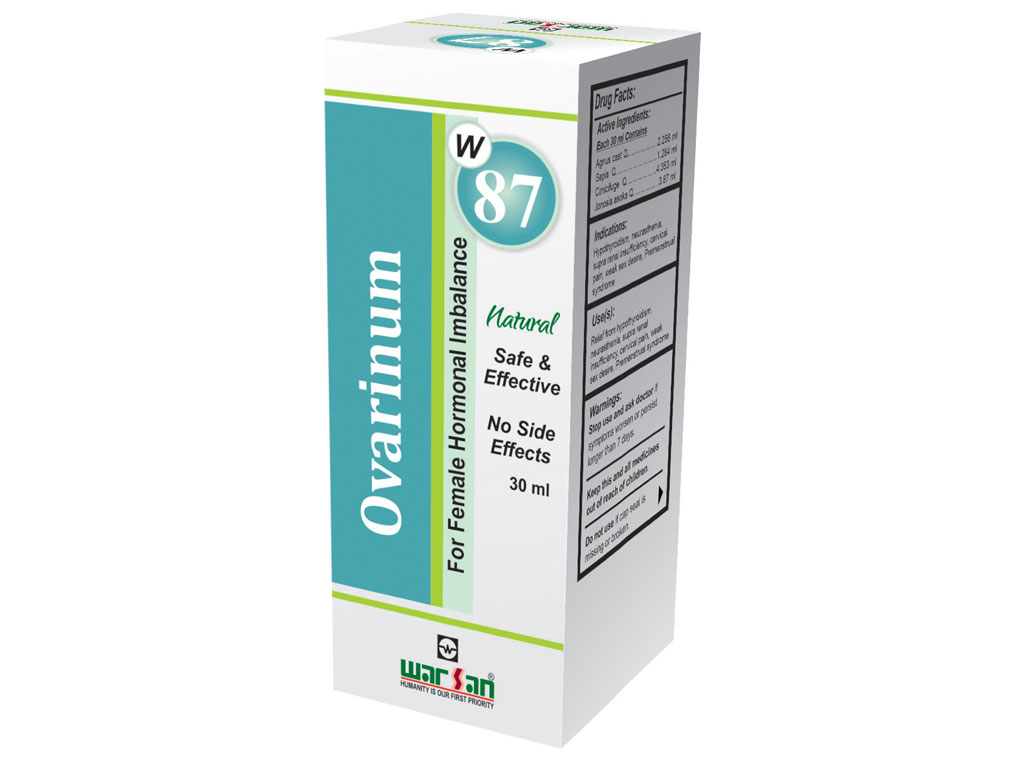
Warsan No. 87 (Ovarinum) 30ml
Warsan Homeopathic • Women’s Health
Explore Warsan No. 87 (Ovarinum) 30ml and review its
formulation, product information, recommended use, and dosage
before use.
Natural Remedies for Female Hormone Balance in Pakistan
The phrase natural remedies female hormone balance Pakistan can refer to a broad range of lifestyle and dietary practices.
It is important to understand that “natural” does not automatically mean effective or safe. Natural products can have active ingredients, side effects and interactions with medicines.
Nevertheless, several healthy lifestyle habits can support general health.
1. Eat a Balanced Diet
A varied diet provides the nutrients the body needs for normal physiological functions.
Try to include:
- Vegetables
- Fruits
- Whole grains
- Beans and legumes
- Protein-rich foods
- Healthy fats
- Adequate fluids
A balanced diet is particularly important when menstrual health, metabolic health or weight management is a concern.
2. Maintain Regular Physical Activity
Regular physical activity supports cardiovascular and metabolic health and can contribute to maintaining a healthy body weight.
The appropriate type and amount of exercise varies according to age, health status and fitness level.
Women with specific medical conditions should ask their healthcare professional about appropriate activity levels.
3. Prioritize Sleep
Poor sleep can affect mood, energy and overall health.
Maintaining a consistent sleep schedule, reducing unnecessary screen exposure before bed and creating a comfortable sleeping environment can support better sleep habits.
Sleep improvements should be considered part of overall health management rather than a guaranteed way to correct a diagnosed hormonal disorder.
4. Manage Stress
Stress management can support overall wellbeing.
Useful approaches may include:
- Walking
- Breathing exercises
- Yoga
- Mindfulness
- Relaxation techniques
- Spending time outdoors
- Maintaining social connections
These approaches may help with wellbeing and stress management, although they should not be promoted as cures for endocrine diseases.
5. Avoid Unnecessary Supplements
Taking several supplements simultaneously does not necessarily improve hormonal health.
Some supplements can interact with medicines or produce unwanted effects. If you are considering herbal or dietary supplements, discuss them with a healthcare professional, particularly if you take prescription medicines.
Hormones and Women’s Health
Hormones influence several important functions throughout a woman’s life.
Estrogen
Estrogen is an important reproductive hormone involved in the menstrual cycle, reproductive development, bone health and other physiological processes.
Changes in estrogen levels occur naturally during the menstrual cycle and menopause.
During menopause, declining estrogen levels are associated with symptoms such as hot flashes, vaginal dryness and changes in sleep and mood.
Progesterone
Progesterone plays an important role in the menstrual cycle and pregnancy.
Its levels naturally fluctuate during the menstrual cycle.
Androgens
Women also produce and use androgen hormones. Changes in androgen activity can be relevant to conditions such as PCOS.
However, hormone levels cannot always be interpreted simply as “high” or “low.” The clinical meaning of a hormone result depends on the specific hormone, timing, symptoms, age and medical context.
Can Hormonal Imbalance Be Diagnosed From Symptoms Alone?
Not reliably.
Symptoms such as acne, fatigue, weight changes, irregular periods and mood changes can occur for many different reasons.
For example, irregular periods may be related to PCOS, thyroid disease, pregnancy, stress, changes in weight or other causes.
Similarly, hot flashes can occur during menopause but may have other explanations in some circumstances.
A healthcare professional may consider the person’s medical history, symptoms, physical examination and, when appropriate, laboratory testing.
Even hormone tests require context. For example, the Endocrine Society notes that AMH levels alone are not sufficient to make a clear diagnosis of conditions such as PCOS or primary ovarian insufficiency.
This demonstrates why online symptom checklists should not be used as a substitute for diagnosis.
When Should Women Seek Medical Advice?
Hormonal symptoms should be evaluated when they are persistent, severe, unusual or affecting daily life.
Consider speaking with a qualified healthcare professional if you experience:
- Persistent irregular periods
- Very heavy menstrual bleeding
- Periods stopping unexpectedly
- Severe pelvic pain
- Unexplained weight changes
- Persistent or severe acne
- Significant unwanted facial or body hair
- Difficulty becoming pregnant
- Severe hot flashes or night sweats
- Persistent vaginal dryness
- Significant mood changes
- Symptoms that suddenly become much worse
Women experiencing unusual bleeding, severe pain, fainting, pregnancy-related concerns or other potentially urgent symptoms should seek appropriate medical care promptly.
Can Homeopathic Products Be Used Alongside Medical Treatment?
Anyone considering a complementary health product should tell their healthcare provider about it.
This is particularly important for women who:
- Are pregnant
- Are breastfeeding
- Take prescription medicines
- Have PCOS
- Have thyroid disease
- Have diabetes
- Have high blood pressure
- Have a chronic medical condition
- Are undergoing fertility treatment
- Are preparing for surgery
NCCIH advises that people should not use homeopathy to replace proven conventional care or postpone seeing a healthcare provider. It also notes that some products labeled as homeopathic may contain substantial amounts of active ingredients and could cause side effects or drug interactions.
Therefore, “homeopathic” should not automatically be interpreted as meaning risk-free.
How to Choose Homeopathic Products Responsibly in Pakistan
If you are exploring homeopathic products in Pakistan, consider the following before purchasing.
Check the Product Label
Look for clear information about the product, ingredients, formulation, manufacturer and recommended use.
Avoid Guaranteed Claims
Be cautious about products claiming to permanently “balance hormones,” guarantee fertility or cure PCOS, thyroid disease or other medical conditions.
Consider Your Medical History
A product that may be appropriate for one person may not be appropriate for another.
Don’t Replace Prescribed Treatment
If a doctor has prescribed medication or treatment for a hormonal condition, do not stop it simply because you want to try a complementary product.
Ask a Qualified Professional
If you have an existing medical condition or take medicines, professional advice can help you make a safer decision.