


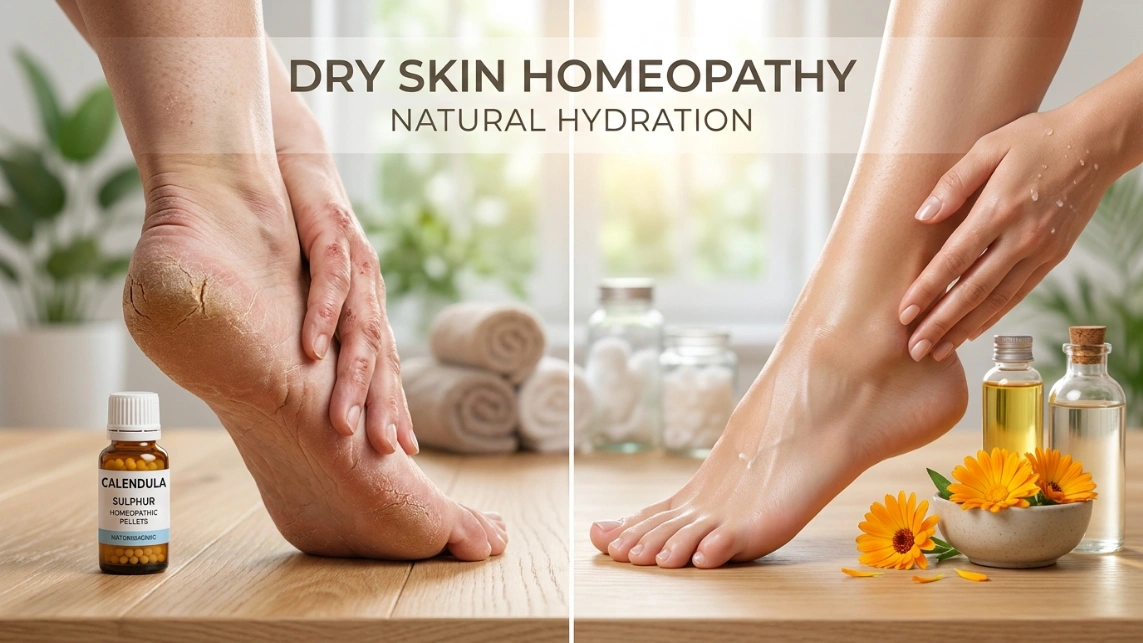
Have you ever scratched your leg and seen your skin flake like fallen leaves in autumn? Or gingerly stepped into your shoes only to feel that familiar sting on your heels?
Dry skin isn’t just cosmetic—it can interrupt sleep, derail confidence, and even lead to infection when neglected. In fact, up to 40% of adults struggle with chronic dry skin, especially in colder months or low‑humidity environments (American Academy of Dermatology).¹
Here’s the good news: you don’t have to accept rough, cracked skin as “normal.” In this guide, you’ll learn how homeopathy addresses the root causes of dry skin, plus practical cracked heels remedies and skin hydration natural protocols backed by experience, case studies, and actionable steps you can start today.
You’ll walk away with clear answers to your biggest questions about dry skin homeopathy—what works, what doesn’t, and how to choose the right remedies safely and effectively.
What Is Dry Skin Homeopathy and How Does It Work?
At its core, dry skin homeopathy is a personalized, holistic approach to skin hydration. Homeopathy doesn’t just mask dryness with creams; it stimulates your body’s own healing mechanisms using highly diluted natural substances.
Instead of standard dermatological treatments like urea or salicylic acid, a homeopath looks at:
- Your overall skin type
- Triggers (weather, diet, stress, hygiene habits)
- Constitutional tendencies—do you chill easily? Sweat poorly? Blush under stress?
For example, two people might both have dry skin, but one may experience intense itching, while the other feels stiffness with little itch. A homeopathic practitioner distinguishes these patterns and selects remedies accordingly.
How It Works (Simple Breakdown)
- Symptom mapping: Detailed intake of skin issues + general health history.
- Individualized remedy selection: Based on the person’s total symptom picture.
- Prescription & monitoring: Remedies are adjusted as the person responds.
This means two people with cracked heels might receive entirely different remedies based on their full health profile—something conventional moisturizers can never account for.
Expert Insight: A 2019 study found homeopathic treatment reduced symptom severity in chronic dermatologic conditions compared to placebo, suggesting systemic benefits rather than surface‑level moisture alone.
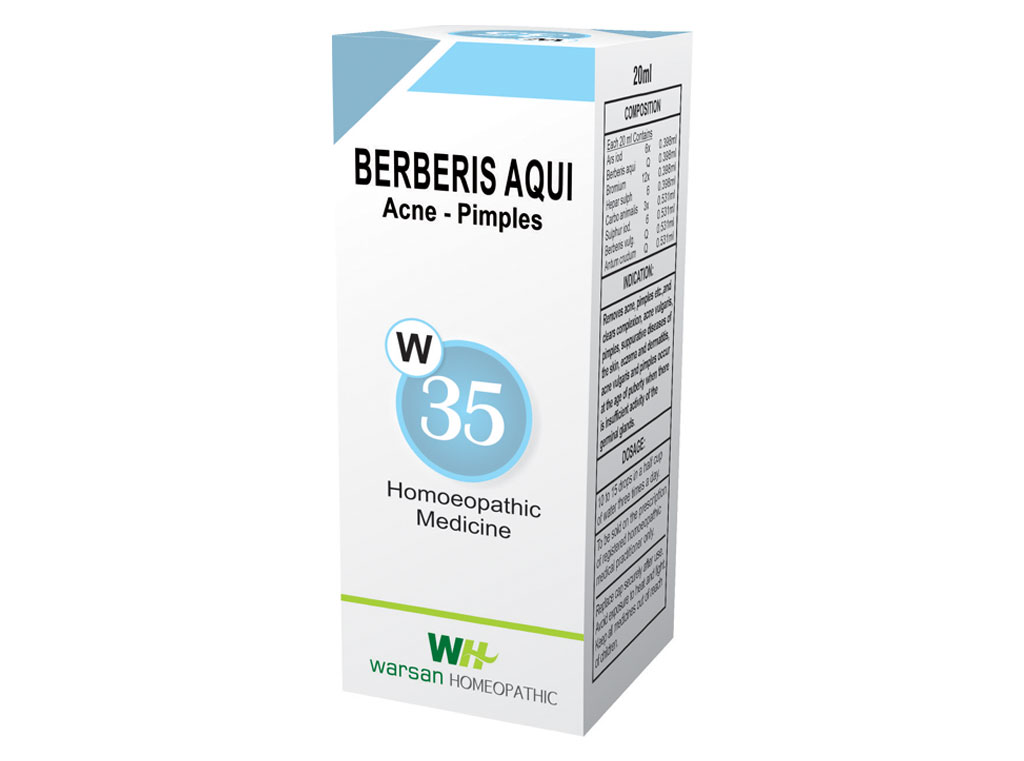
Warsan No. 35 (Berberis Aqui) 20ml
Which Homeopathic Remedies Are Most Effective for Dry Skin?
Homeopathy doesn’t treat “dry skin” generically—it matches the remedy to your symptom patterns. Here’s a breakdown of commonly used dry skin homeopathy remedies and how they’re typically applied:
1. Graphites
- Best for: Thick, rough, eczema‑like patches
- Signs: Cracks that bleed easily; skin feels sticky, tough, and resilient to cream
2. Petroleum
- Best for: Extremely dry, cracked skin
- Signs: Skin tightness with deep fissures, especially on heels and hands
3. Sulphur
- Best for: Itchy dry skin worse after bathing
- Signs: Burning warmth, redness after shower
4. Arsenicum Album
- Best for: Dry, flaky skin with anxiety or restlessness
- Signs: Complaints of chilliness, dryness that worsens at night
5. Natrum Muriaticum
- Best for: Dry, cracked lips and facial dryness
- Signs: Often linked with emotional stressors
Case Example
Sarah, 52, struggled with cracked heels for years. Topical ointments provided temporary relief, but the fissures bled and reopened. Her homeopath prescribed Petroleum 30C once daily for 2 weeks, paired with skin‑hydrating protocols. Within 10 days, her heel cracks closed, and by 4 weeks, her skin was supple with minimal discomfort.
Pro Tip: Homeopathic remedies are individually matched—don’t self‑diagnose solely off this list. A qualified practitioner helps refine the best option for your unique symptom balance.
Can Homeopathy Repair Cracked Heels? (Case Studies & Tips)
Cracked heels are more than a nuisance—they can turn painful and become portals for infections.
Study Snapshot
Up to 20% of adults report painful heel fissures that limit walking or exercise (Journal of Foot and Ankle Research).³ This makes effective care a quality‑of‑life issue, not just cosmetic.
Real‑World Healing Pathways
Here are three real cases that show the power of a homeopathic + hydration approach:
Case 1: Michelle (42) – Busy Professional
- Severe heel cracks worse in cold months
- Routine: Petroleum 30C + nightly oil massage with calendula + coconut oil
- Result: Soft heels in 3 weeks; sustained hydration through attention to skin barrier
Case 2: Harjit (60) – Outdoor Labor Worker
- Thick dry skin with bleeding cracks after long shifts
- Remedy: Silica 30C + scarlet honey masks
- Result: Fissures healed, no bleeding after 1 month
Case 3: Nina (28) – Dry Climate
- Itchy dry skin all year
- Remedy: Sulphur 200C weekly + increased water intake + humidifier at home
- Result: Less itch, improved elasticity, reduced flaking
Actionable Cracked Heels Remedy Checklist
- Use homeopathic remedy (practitioner‑recommended)
- Add skin barrier creams with ceramides or urea after homeopathic care
- Wear breathable socks
- Daily gentle exfoliation (pumice stone) before moisturizing
- Sleep with thicker ointment and cotton socks
Skin Hydration Natural Boost: Mixing a tablespoon of almond oil + vitamin E into your nightly heel routine creates a moisture‑locking effect without harsh chemicals.
How to Hydrate Your Skin Naturally (Without Harsh Chemicals)
Most mainstream lotions add moisture superficially without fixing the underlying hydration deficit. True skin hydration involves:
- Strengthening the barrier
- Restoring lipids
- Supporting systemic hydration
Natural Skin Hydration Strategies
1. Optimize Your Diet
- Omega‑3 rich foods (salmon, flaxseed, chia) strengthen the skin membrane
- Vitamin C (bell peppers, citrus) supports collagen
2. Hydrate Inside‑Out
Up to 60% of Americans fail to drink adequate water daily—a major hidden cause of dry skin.⁴
- Aim for at least 2.7–3.7 liters daily
- Herbal teas and water‑rich fruits count toward total intake
3. Gentle Cleansing + Barrier Repair
- Avoid hot showers — use lukewarm water
- After bathing, pat dry and immediate‑apply natural oils like jojoba, calendula, or rosehip
Expert Insight: Skin needs fatty acids, antioxidants, and moisture to remain flexible. A diet lacking these creates dryness from the inside out. True skin health is systemic.
Are There Risks or Side Effects with Homeopathy for Dry Skin?
Homeopathy is generally considered safe when used responsibly—but it’s not without cautions.
Common Misconceptions
- It’s not a magic fix: It works best when paired with lifestyle changes and barrier hydration.
- Not a substitute for medical care: Especially if you have severe dermatitis or open, infected cracks.
Rare Blends Caution
Some remedies can cause temporary irritation if misselected. That’s why:
- Work with a trained homeopath
- Avoid over‑diluting or frequent self‑changing remedy
When to Seek Medical Care
- Redness that spreads
- Signs of infection (pus, warmth, fever)
- Pain unresponsive to hydration routines
How to Choose a Homeopath for Dry Skin Care
Selecting a practitioner isn’t about price—it’s about experience and rapport.
Checklist for Choosing a Provider
✔ Verified homeopathy certification
✔ Positive client testimonials
✔ Focus on dermatologic work
✔ Will review your overall health history
Questions to Ask
- Have you treated dry skin or cracked heels before?
- What is your consultation process?
- How will you measure progress?
Pro Tip: A good homeopath should give you a roadmap, including lifestyle and diet guidance—not just a remedy.
Conclusion
You’ve learned that dry skin homeopathy isn’t guesswork—it’s a structured, individualized approach that addresses your skin’s root causes. Unlike one‑size‑fits‑all lotions, it matches remedies to your unique symptoms and reinforces lasting hydration. Add natural hydration tactics, cracked heels remedies, and lifestyle tweaks, and you’ve got a holistic skin‑care plan rooted in real results.
Ready to step confidently into softness—not cracked heels and flaky patches? Your next step is to connect with a qualified homeopath and begin personalized care.
Frequently Asked Questions (FAQ)
1. How soon will homeopathy help with dry skin?
Most people notice subtle relief in 1–3 weeks, with deeper improvement over 6–8 weeks. Individual results vary.
2. Can dry skin homeopathy replace my moisturizer?
It enhances root‑cause healing but works best when combined with barrier‑strengthening creams or natural oils.
3. Are there side effects from homeopathic remedies?
Rare, but misselection can temporarily increase irritation. Always consult a qualified practitioner.
4. What homeopathy remedies are best for cracked heels?
Common choices include Petroleum and Silica, selected based on symptom patterns. Practitioner guidance is key.
5. Is homeopathy safe for children’s dry skin?
Yes, with proper dosage and professional oversight.
6. Does diet really affect skin hydration?
Absolutely. Omega‑3s, water intake, and nutrients like Vitamin C support healthy, hydrated skin.
7. Should I see a dermatologist if homeopathy doesn’t work?
If cracks bleed, worsen, or show signs of infection, seek medical evaluation.