


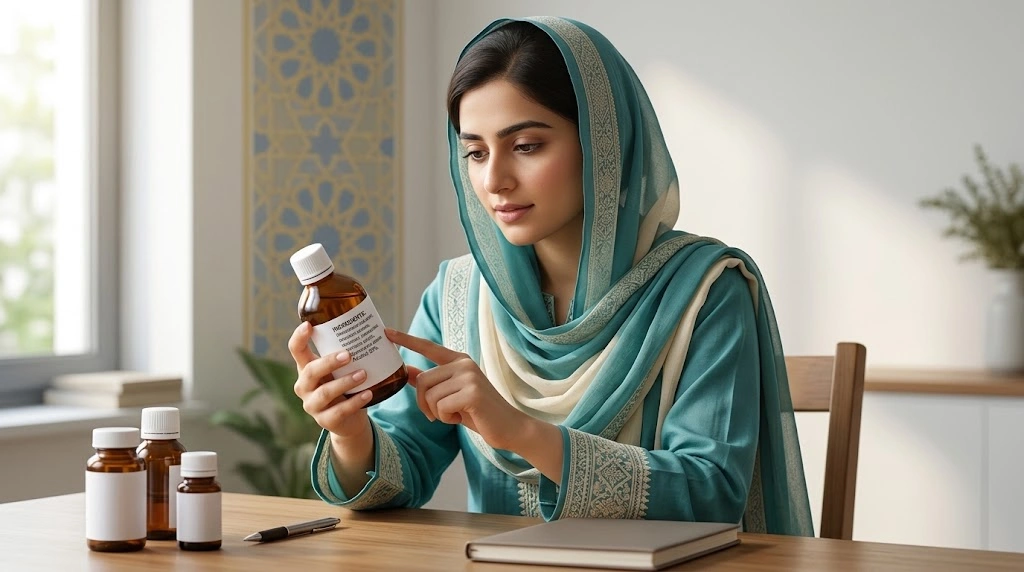
For many Pakistani households, homeopathy is a trusted, everyday part of family healthcare — but for observant Muslim buyers, one question often comes up before they add a bottle to their cart: is homeopathy halal in Pakistan? The concern is a fair one. Many homeopathic preparations, particularly liquid dilutions and mother tinctures, use alcohol as a solvent and preservative, which naturally raises questions for anyone trying to keep their household medicine cabinet in line with their faith. This article looks at where the concern comes from, what different scholars have said about it, and what practical steps a buyer can take before choosing a halal certified homeopathic medicine or any homeopathic product more broadly.
Why the Question Comes Up
Homeopathic remedies are typically prepared through a process of repeated dilution, where a starting substance is mixed into a liquid carrier and progressively diluted. That carrier is very often alcohol, because alcohol helps preserve the preparation and prevents bacterial growth over its shelf life. Depending on the dosage form, alcohol content in the finished product can vary considerably: liquid mother tinctures and low dilutions can retain a meaningful percentage of alcohol, while later dilutions used to prepare pills, tablets, or sugar globules generally involve only a small amount of alcohol-based liquid applied to an inert, sugar-based pellet. Some homeopathic preparations also use pure water rather than alcohol as the diluent. This variation is exactly why the question of what is and isn’t acceptable doesn’t have one single, one-line answer — the dosage form itself makes a real difference.
What Islamic Scholars Have Said
This is a matter of religious interpretation, and it’s worth being upfront that Islamic scholars have not reached a single unanimous position on it. A buyer researching is homeopathy halal Pakistan will find genuinely differing views, and it is not this article’s place to declare one view correct over another — this is a matter best resolved with a qualified religious scholar or mufti a person already trusts.
Broadly, the positions fall into a few camps:
Views that permit use under certain conditions. A number of scholars, drawing on classical rulings around alcohol used in medicine rather than consumed for intoxication, have held that homeopathic remedies containing alcohol can be permissible. Common reasoning includes: the alcohol is present for preservation, not consumption for pleasure or intoxication; the quantity present in a typical dose is very small; and in many cases the alcohol used is derived from non-grape sources such as sugarcane, potatoes, or grains rather than wine. Some scholars in the Hanafi tradition, for instance, have applied the principle that non-intoxicating alcohol added for a functional purpose does not fall under the prohibition of khamr (intoxicating wine), particularly where there is genuine medical need and no suitable alternative.
More cautious or restrictive views. Other scholars and fatwa bodies take a stricter position, holding that any alcohol content — regardless of quantity or purpose — should be avoided where a non-alcoholic alternative exists, since the underlying prohibition in Islamic teaching is generally understood to apply to the substance itself rather than the amount consumed.
A conditional, dosage-form-dependent view. A middle position, echoed across several of these opinions, focuses less on homeopathy as a category and more on the specific product: a low-alcohol or alcohol-free tablet, pellet, or globule is viewed differently from a liquid tincture with a higher alcohol percentage.
Given this range of opinion, the most practical approach for a Pakistani buyer is to check the specific product’s composition and, where the answer matters to them personally, ask their own trusted religious scholar rather than relying on a blanket rule for “homeopathy” as a whole.
What This Means for Choosing a Product
If avoiding alcohol matters to you, dosage form is the single most useful thing to check:
- Liquid dilutions and mother tinctures are the forms most likely to contain a meaningful percentage of alcohol, since alcohol is commonly used both as the diluting medium and as a preservative for these liquid preparations.
- Tablets, pills, and sugar globules are typically prepared by applying a small amount of liquid dilution to an inert sugar or lactose base, meaning the alcohol content per dose is generally far lower than in a liquid tincture.
- Water-based dilutions, where available, avoid alcohol as the diluent altogether, though water-based preparations are less common for long-shelf-life retail products because of preservation requirements.
For anyone specifically looking for a halal certified homeopathic medicine, it’s worth being clear-eyed about the current market reality in Pakistan: formal, third-party halal certification (the kind seen on packaged food products) is not yet a standard or widely required practice across the homeopathic medicine industry here, and Warsan does not currently list a specific halal certification on its products. This isn’t unique to any one manufacturer — it reflects where the wider industry stands today. Buyers who want more certainty should check a product’s listed ingredients and dosage form, and reach out to the manufacturer directly if the information on the label or product page isn’t sufficient to make a personal decision.
An Everyday Example
Consider a Karachi household where a mother wants to give her child a homeopathic remedy for a common cold but is unsure whether it fits her family’s dietary principles. Rather than avoiding homeopathy altogether or assuming every product is the same, she checks the product listing for its dosage form and ingredient list, notices it’s a tablet made with a sugar-globule base rather than a liquid tincture, and decides that’s an acceptable option for her family. Another buyer, more cautious about any residual alcohol regardless of quantity, might choose to consult their local scholar or select only water-based or externally applied products, such as creams or ointments, where the question doesn’t arise in the same way. Both approaches are reasonable — the point is simply that an informed choice is possible once you know what to look for.
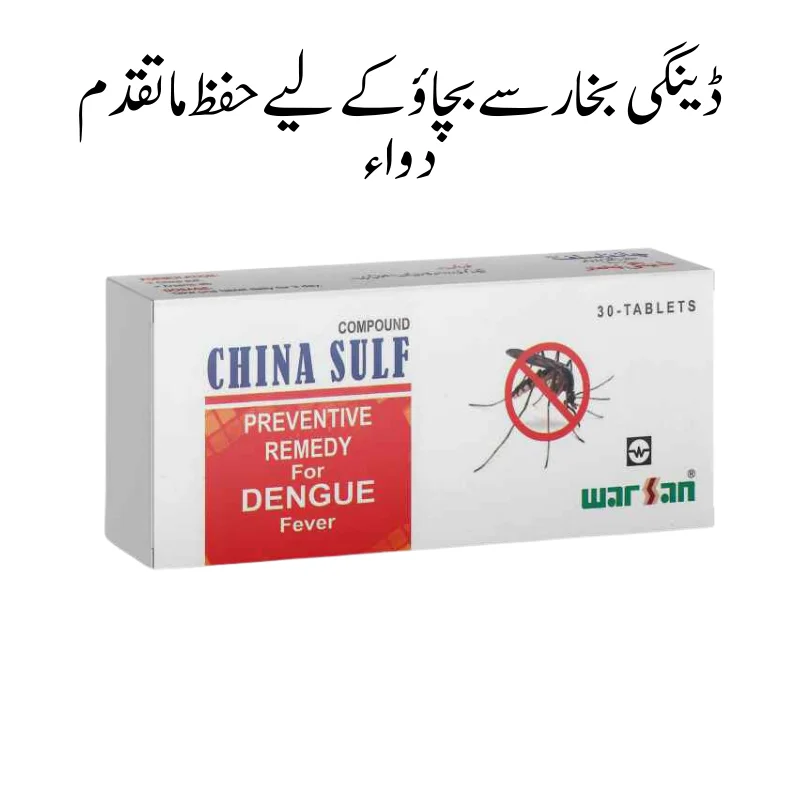
Warsan China Sulf
Warsan Homeopathic · Herbal Products
Explore Warsan China Sulf and learn more about the product, ingredients, recommended use, and dosage before use.
Warsan’s Approach to Quality and Transparency
Because trust matters in healthcare purchasing decisions, it helps to know who is manufacturing the product in question. Warsan Homoeopathic Laboratories has been manufacturing homeopathic medicines in Lahore since 1977, and its facility operates under ISO 9001:2015 quality management certification and GMP (Good Manufacturing Practice) standards, with its GMP certificate issued by Pakistan’s Ministry of Health. Warsan’s product range spans dilutions and mother tinctures through to tablets, capsules, syrups, and topical preparations, meaning the alcohol content genuinely does vary by product rather than being a fixed feature of “Warsan medicine” as a whole. Buyers with specific concerns about a particular product’s composition are encouraged to review the product’s listed ingredients or contact Warsan directly for clarification before purchasing.
General Safety Guidance
Regardless of the halal question, a few general precautions are worth keeping in mind with any homeopathic product. Homeopathic remedies are generally considered gentle, but they are not automatically appropriate for every situation, and they are not a substitute for professional medical care — particularly for children, pregnant or breastfeeding women, people with chronic conditions, or anyone with symptoms that are severe, worsening, or prolonged. Always follow the dosage directions on the product label, and consult a qualified homeopathic practitioner or doctor if you’re uncertain which product or potency is right for your situation.
A Note on Terminology
It’s worth clarifying what “halal” actually refers to when applied to medicine, since the term is sometimes used loosely. In this context, it specifically concerns whether the ingredients and preparation method of a product align with Islamic dietary and consumption principles — most commonly the question of alcohol content, and less commonly the sourcing of any animal-derived ingredients, which are uncommon in classical homeopathic preparations but worth checking on a product-by-product basis if relevant to you.