


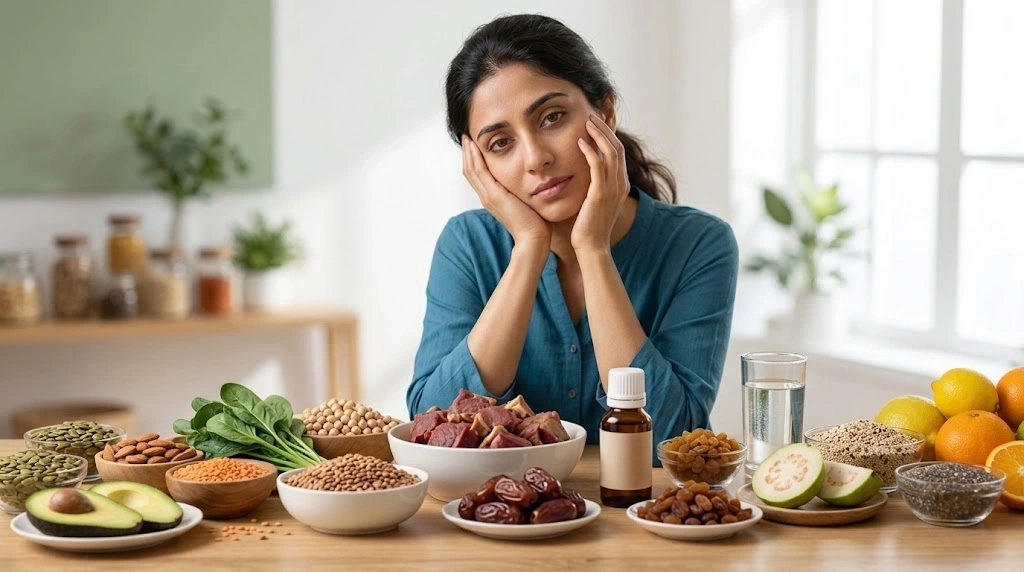
Feeling tired all the time, looking pale, or getting out of breath climbing a flight of stairs are easy to brush off as “just being busy” — but they’re also some of the most common signs of anemia and iron deficiency. If you’re researching homeopathic medicine for anemia and iron deficiency, you’re likely looking for a gentler, supportive way to help your body rebuild its iron stores alongside proper medical care. This guide covers what anemia and iron deficiency actually are, what typically causes them, how homeopathy is traditionally used alongside conventional treatment, and practical ways to support healthy iron levels naturally.
 China Officinalis (Cinchona): Traditionally referenced for weakness following blood loss or prolonged illness, and for recovery of strength and vitality afterward.
Calcarea Phosphorica (Calcium Phosphate): Often discussed for general debility and fatigue, particularly in growing children, students, or people recovering from illness.
Natrum Muriaticum: Sometimes referenced in cases where anemia is accompanied by emotional exhaustion or a history of significant fluid loss.
As with any homeopathic approach, remedy selection is traditionally guided by an individual’s overall symptom picture, and outcomes can vary meaningfully from person to person. These remedies should not be used as a substitute for a proper blood test or a doctor’s diagnosis of the type and severity of anemia involved.
A practical scenario: Consider a working mother in Karachi who has felt increasingly drained over the past few months, with pale skin and occasional dizziness. Rather than assuming it’s simply stress, she first visits her doctor for a blood test, which confirms mild iron deficiency. Alongside the doctor’s dietary advice and any prescribed supplementation, she looks into a general wellness tonic — such as a product from Warsan’s range formulated for anemia-related weakness — and discusses it with a qualified homeopathic practitioner before adding it to her routine. This layered approach, testing first and adding supportive care second, reflects how homeopathy is typically integrated into anemia management.
China Officinalis (Cinchona): Traditionally referenced for weakness following blood loss or prolonged illness, and for recovery of strength and vitality afterward.
Calcarea Phosphorica (Calcium Phosphate): Often discussed for general debility and fatigue, particularly in growing children, students, or people recovering from illness.
Natrum Muriaticum: Sometimes referenced in cases where anemia is accompanied by emotional exhaustion or a history of significant fluid loss.
As with any homeopathic approach, remedy selection is traditionally guided by an individual’s overall symptom picture, and outcomes can vary meaningfully from person to person. These remedies should not be used as a substitute for a proper blood test or a doctor’s diagnosis of the type and severity of anemia involved.
A practical scenario: Consider a working mother in Karachi who has felt increasingly drained over the past few months, with pale skin and occasional dizziness. Rather than assuming it’s simply stress, she first visits her doctor for a blood test, which confirms mild iron deficiency. Alongside the doctor’s dietary advice and any prescribed supplementation, she looks into a general wellness tonic — such as a product from Warsan’s range formulated for anemia-related weakness — and discusses it with a qualified homeopathic practitioner before adding it to her routine. This layered approach, testing first and adding supportive care second, reflects how homeopathy is typically integrated into anemia management.
What Is Anemia and Iron Deficiency?
Anemia is a condition where the blood doesn’t have enough healthy red blood cells, or enough hemoglobin within those cells, to carry adequate oxygen throughout the body. Iron deficiency is the single most common cause of anemia worldwide, since iron is essential for the body to manufacture hemoglobin in the first place. It’s worth understanding the relationship here: not everyone with low iron has full-blown anemia yet, but ongoing iron deficiency, if left unaddressed, commonly progresses toward it. This is why catching low iron early — through diet, lifestyle, and appropriate medical testing — matters as much as treating anemia once it’s confirmed.Common Signs and Symptoms
Iron deficiency and anemia can develop gradually, which is part of why symptoms are often dismissed at first. Common signs include:- Persistent fatigue and low energy, even after adequate rest
- Pale skin, lips, or inner eyelids
- Shortness of breath during light activity
- Dizziness or lightheadedness
- Brittle nails or unusual hair thinning
- Cold hands and feet
- Difficulty concentrating or “brain fog”
- Rapid or irregular heartbeat in more pronounced cases
What Causes Iron Deficiency Anemia?
Several factors commonly contribute to low iron levels, particularly in Pakistan’s dietary and health context: Inadequate dietary iron: Diets low in iron-rich foods — red meat, lentils, leafy greens — can gradually deplete the body’s iron reserves. Poor iron absorption: Certain digestive conditions, or regularly pairing iron-rich meals with tea (common in many Pakistani households), can reduce how much iron the body actually absorbs. Blood loss: Heavy menstrual periods, childbirth, or gastrointestinal bleeding are frequent, often under-recognized causes of iron deficiency, particularly in women. Increased demand: Pregnancy, breastfeeding, and rapid growth in children and teenagers all raise the body’s iron requirements beyond typical dietary intake. Chronic illness: Some long-term health conditions can interfere with how the body produces or maintains healthy red blood cells.Homeopathic Medicine for Anemia and Iron Deficiency: How It’s Traditionally Used
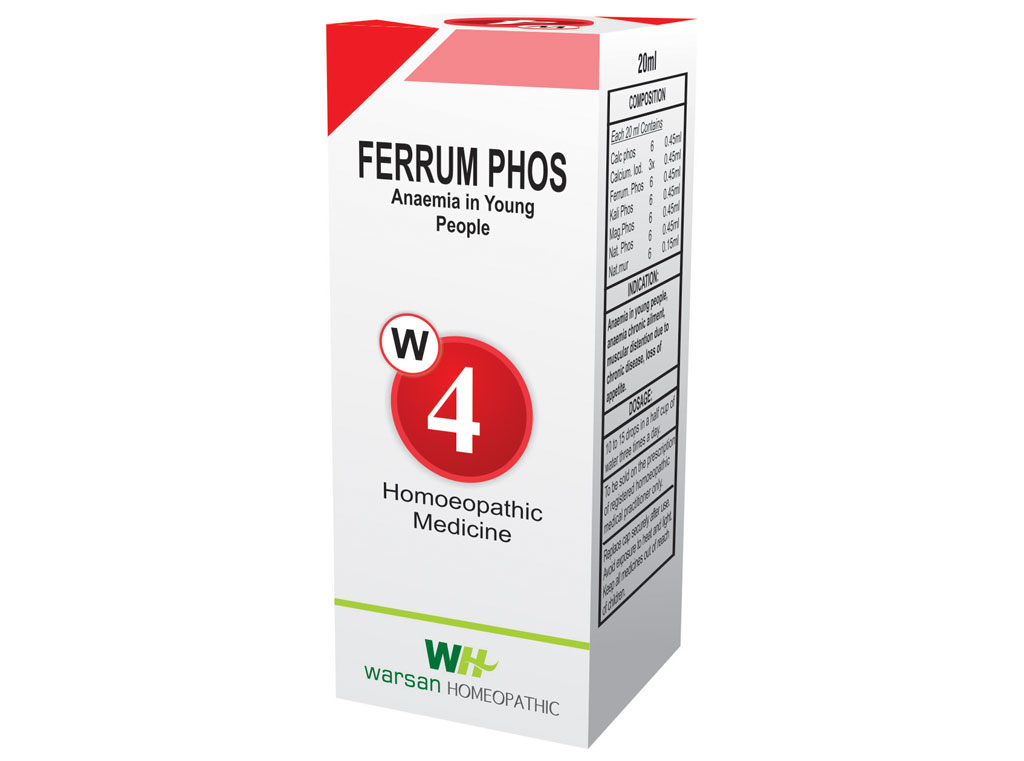
In classical homeopathic practice, remedies for anemia and iron deficiency are generally used to support the body’s own blood-building processes and general vitality, rather than functioning as a direct iron replacement in the way a prescribed iron supplement does. This distinction matters: homeopathic remedies are typically positioned as a complementary, supportive measure alongside dietary correction and, where needed, medically supervised iron supplementation — not as a substitute for either. A few remedies are frequently referenced in classical homeopathic literature in connection with anemia-related weakness and fatigue: Ferrum Phosphoricum (Iron Phosphate): Commonly discussed in relation to early-stage anemia, general weakness, and pale complexion, particularly where fatigue develops gradually.
Warsan No. 4 (Ferrum Phos) 20ml
Ferrum Phosphoricum product from Warsan Homoeopathic Laboratories.
View ProductNatural Iron Booster Pakistan: Diet and Lifestyle Support
Diet remains the foundation of any approach to correcting iron deficiency. For those exploring a natural iron booster in Pakistan, everyday food sources go a long way:- Red meat and organ meats: Among the most readily absorbed (heme) iron sources.
- Lentils (daal), chickpeas, and beans: Widely used staples in Pakistani cooking and a strong plant-based (non-heme) iron source.
- Leafy greens: Spinach (palak) and similar greens contribute iron along with other nutrients.
- Dried fruits: Dates, apricots, and raisins are commonly available, iron-containing snacks.
- Vitamin C-rich foods: Citrus fruits, guava, and tomatoes significantly improve how well the body absorbs non-heme iron when eaten alongside iron-rich meals.
- Jaggery (gur): A traditional Pakistani sweetener that also contributes a modest amount of iron.
When to See a Doctor
While mild dietary gaps can sometimes be corrected through better nutrition alone, certain signs call for a proper medical evaluation rather than home remedies:- Fatigue that persists for several weeks despite rest and dietary changes
- Noticeable paleness, breathlessness, or a rapid heartbeat
- Heavy or prolonged menstrual bleeding
- Anemia symptoms during pregnancy
- Anemia in children, especially if growth or development seems affected
- Any sign of gastrointestinal bleeding, such as dark stools
Choosing a Safe, Quality Homeopathic Product
If you’re considering a homeopathic remedy or tonic to support healthy iron levels, a few practical checks can help:- Confirm the product clearly lists its ingredients and potencies rather than vague claims.
- Follow age-appropriate dosage instructions, or the guidance of a qualified homeopathic practitioner.
- Be cautious of any product promising guaranteed results or an instant cure — responsible manufacturers present their products as supportive of general wellness, not a replacement for medical treatment.
- Buy from an established, traceable manufacturer with clear contact information and product details.