



What Are Homeopathic Medicines — and How Do They Differ from Allopathic?
Homeopathic medicines (dawai-e-misl — دوائے مثل) are preparations derived from plant, mineral, and animal sources that are diluted and potentized through a process called succussion. The resulting remedy carries a therapeutic signal believed to stimulate the body’s own healing response, rather than introducing a chemical that directly fights a pathogen or suppresses a symptom.
Allopathic medicine — the system most Pakistanis encounter at government hospitals, private clinics, and pharmacies — works on the principle of opposite treatment. An antibiotic kills bacteria; an antihypertensive lowers blood pressure; an antihistamine blocks the histamine response. The chemistry is direct, measurable, and often immediately effective.
Pakistan’s healthcare system sits at a fascinating crossroads. In major cities like Karachi and Lahore, both systems operate side by side. Many families consult an allopathic doctor for acute emergencies and a homeopathic practitioner for chronic, recurring, or constitutional complaints. This parallel usage is not contradiction — it reflects a practical wisdom about what each system does well.
The best homeopathic medicine for any condition in Pakistan is not selected by diagnosis alone but by the complete symptom picture of the individual: their temperament, the modalities that make symptoms better or worse, and the pattern of their illness over time. This individualization is the fundamental philosophical difference between the two systems.
Allopathy standardizes treatment by diagnosis. Homeopathy individualizes treatment by the person behind the diagnosis. Neither approach is inherently superior — they answer different questions.
How Does Homeopathy Work? The Science and the Experience
Homeopathy operates on two core principles. The first is “similia similibus curentur” — like cures like. A substance that produces a set of symptoms in a healthy person can, when prepared homeopathically, help resolve those same symptoms in a sick person. The classic example: raw onion causes watery eyes and a runny nose. Allium Cepa 30C, prepared from onion, is one of the first remedies considered for hay fever and colds with exactly that profile.
The second principle is potentization: remedies are serially diluted and vigorously shaken between each dilution. At higher potencies, no molecules of the original substance remain — which is the basis of mainstream science’s skepticism. The proposed mechanism involves water memory or electromagnetic imprinting, neither of which has been fully validated through conventional double-blind trials.
Here is what we can say honestly from 47 years of clinical observation at Warsan Homoeopathic: homeopathic remedies produce consistent, reproducible results in patients who are correctly matched to their remedy. We have seen Arsenicum Album 200C resolve chronic anxiety-driven digestive complaints in Lahore professionals who had failed on antacids and anxiolytics for years. We have seen Calcarea Carbonica 30C support immunity in children with recurrent ear and throat infections in Rawalpindi.
A 44-year-old woman from Faisalabad came to us with a 6-year history of migraines — two to three attacks monthly, each requiring hospital-grade painkillers. After careful case-taking, Natrum Muriaticum 200C was prescribed. Over four months, the frequency dropped to one episode every six weeks, then further reduced. She has not required emergency medication in over a year. That outcome required no suppression, only stimulation of her own healing capacity.
The mechanism remains debated. The clinical outcomes, when the right remedy is matched to the right patient, are often difficult to dismiss as placebo alone.
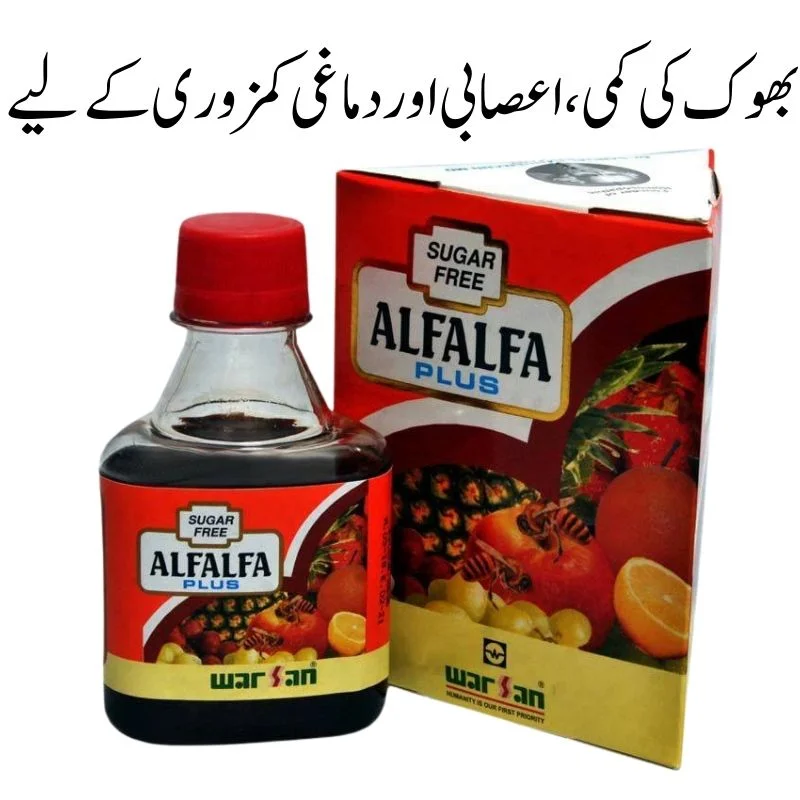
Alfalfa Plus Syrup 180ml
Key Differences: A Head-to-Head Look
Below is an honest, side-by-side look at how these two systems compare across the dimensions that matter most to Pakistani patients.
| Dimension | Homeopathic Medicines | Allopathic Medicine |
| Basis of treatment | Individualized symptom picture | Standardized diagnosis protocol |
| Speed of action | Slower in acute cases; effective with correct remedy | Faster in acute emergencies |
| Side effects | Minimal at correct potency | Documented and often significant |
| Chronic conditions | Strong track record | Often manages, rarely resolves |
| Cost (Pakistan) | Generally affordable; accessible online | Variable; high for branded drugs |
| Emergency suitability | Supportive only | Essential — life-saving |
| Patient individuation | Central to prescription | Not typically considered |
| Regulatory status (Pakistan) | Recognized by DRAP | Primary regulatory framework |
When Homeopathy Has the Edge
Homeopathic medicines consistently show their strengths in conditions that are chronic, recurrent, or rooted in constitutional vulnerability. These include recurring respiratory infections (especially in children), allergic conditions, skin disorders like eczema and psoriasis, hormonal imbalances, anxiety and stress-related physical complaints, and post-viral fatigue.
Pakistan’s environmental and lifestyle context makes several of these categories especially relevant. The high rates of antibiotic over-use in the country have produced patients whose gut flora is disrupted, whose immunity is weakened, and who cycle through infections despite treatment. Homeopathy offers an approach that does not add further antibiotic burden while supporting immune resilience from within.
Children respond particularly well. Pediatric homeopathy in Pakistan is widely practiced, partly because parents understandably worry about long-term antibiotic exposure in young immune systems. Remedies like Calcarea Phosphorica 6X for growth-related complaints, Chamomilla 30C for teething fever, and Pulsatilla 30C for ear infections with thick yellow discharge can support recovery without side effects.
Homeopathic medicines also have an edge in patient experience. Consultations tend to be longer and more attentive; practitioners ask about sleep, food preferences, emotional triggers, and life circumstances. For patients who feel dismissed by a 5-minute allopathic appointment, this level of attention itself carries therapeutic value.
When Allopathic Medicine Has the Edge
We would do our patients a disservice if we did not say this directly: allopathic medicine is irreplaceable in emergencies. A broken bone, a bacterial infection progressing to sepsis, a diabetic crisis, a heart attack, or a fever climbing past 104°F in a child — these situations require immediate conventional intervention. Homeopathy can play a supportive role, but it cannot replace the ICU.
Allopathy is also superior in conditions requiring precise physiological measurement and management: insulin-dependent diabetes, thyroid disorders, severe hypertension, and organ-level disease requiring surgery or chemotherapy. The diagnostic infrastructure of allopathic medicine — imaging, blood panels, biopsy — is unmatched.
The honest integrative position, which we at Warsan Homoeopathic have held for nearly five decades, is this: use allopathic medicine for what it does best, and use homeopathic medicines for what they do best. The enemy of good health is not the other system — it is the false belief that one system alone can answer every health question.
💡 Expert Tip from Warsan’s Clinical Team
One of the most common errors we see in Pakistan is patients stopping their prescribed homeopathic remedy the moment they feel better — then returning two months later with the same complaint. Homeopathic treatment for chronic conditions requires completing the prescribed course even after symptom resolution. The remedy is still working on the underlying susceptibility, not just the surface symptoms. Think of it as a course, not a single dose.
Warsan Product Recommendation
🌿 Looking for a ready-made formulation? Warsan Homoeopathic’s General Immunity Complex is a thoughtfully formulated blend designed to support patients transitioning from repeated antibiotic use, or those managing recurrent infections with a constitutional approach.
For a condition-specific recommendation, we strongly encourage a consultation with a qualified practitioner. Self-prescribing complex chronic cases often produces incomplete results. Warsan’s clinical team is available for online and in-person consultations.
How to Use Homeopathic Remedies — Dosage, Timeline & Lifestyle Tips
The most important thing to understand about homeopathic dosing is that frequency matters more than quantity. You are not increasing the dose to increase the effect — you are repeating the signal until the body responds, then stepping back to let the response develop.
For acute conditions (fever, sudden cold, injury response), use 30C potency every 2–4 hours, reducing frequency as symptoms improve. For chronic conditions (recurring infections, allergies, hormonal issues), potencies of 200C or higher are typically used once weekly or even once monthly under practitioner guidance. Never self-prescribe 1M or higher without professional oversight.
📌 Did You Know? Certain common Pakistani habits can reduce homeopathic remedy effectiveness — particularly strong chai taken within 15 minutes of dosing, camphor-based balms (commonly used in winter in Punjab and KPK), and menthol-heavy toothpastes. These are not myths; they are observed antidotal effects documented across classical homeopathic literature and confirmed in clinical practice.
Pakistan-specific lifestyle tips: During Ramadan, dosing can be adjusted to pre-sehri and post-iftar timing, 15–20 minutes away from food and drinks. In summer heat (especially in Sindh and southern Punjab), store remedies away from direct sunlight — heat and strong electromagnetic sources are known to affect remedy stability. Remedies in a sealed glass vial stored in a cool drawer remain potent for years.
If you are currently taking allopathic medication, do not stop without your doctor’s guidance. Homeopathic and allopathic treatments can run concurrently in many cases — your homeopathic practitioner should know your full medication list.
Common Mistakes That Prevent Recovery
These are the patterns we see most often — not as criticism, but because understanding them genuinely improves outcomes.
Mistake 1: Treating Homeopathy Like Allopathy
Patients often take a homeopathic remedy the way they would a painkiller — once, immediately before an event, expecting rapid relief. Homeopathy requires repetition and patience, especially for chronic conditions. It also requires stopping when the response begins, which is the opposite instinct to conventional dosing.
Mistake 2: Switching Remedies Too Quickly
If a remedy does not produce dramatic results within two days, many patients move on to the next option they find online. In homeopathy, the first 48–72 hours of a well-chosen remedy may show a temporary worsening (the “homeopathic aggravation”) before improvement. Switching at this point interrupts a genuine healing response. If there is genuinely no change after 5–7 days, then reassess with a practitioner.
Mistake 3: Ignoring the Full Symptom Picture
Searching online for “homeopathic medicine for headache” and picking the top result rarely works. Homeopathy requires that you describe your specific headache — right side or left, throbbing or pressing, better in the dark or better with pressure, worse in the morning or evening. The correct remedy depends on these distinctions.
Mistake 4: Using Expired or Improperly Stored Remedies
Remedies stored near strong-smelling substances, in direct sunlight, or in proximity to electronic devices may lose their therapeutic imprint. Always buy from a registered manufacturer — Warsan Homoeopathic’s GMP certification ensures that storage and potentization standards are maintained from production to packaging.
Homeopathy vs. Conventional Medicine — A Fair Comparison
This debate deserves more nuance than most online comparisons offer. Here is where we stand after nearly five decades in this field.
Allopathic medicine has produced some of the most important medical advances in human history — vaccines, surgical techniques, antibiotics that saved millions of lives before resistance became a crisis. Its evidence base is larger, its emergency applications are unmatched, and its diagnostic tools are irreplaceable.
Homeopathic medicines, at their best, address what allopathy frequently cannot: the constitutional terrain that makes one person susceptible to recurrent illness while another in the same household stays well. They can offer resolution rather than management for chronic complaints, without adding pharmacological burden to an already taxed body.
The Pakistani patient who needs both systems — who takes insulin for Type 1 diabetes and Natrum Sulphuricum 30C for recurrent skin infections — is not being inconsistent. They are being rational. Neither system alone serves every need. The goal is an informed patient, not a loyal one.
Conclusion
Three things worth carrying away from this comparison:
- Homeopathic medicines excel in chronic, recurrent, and constitutional conditions — especially where allopathic medicine has produced dependency or incomplete resolution.
- Allopathic medicine is irreplaceable in emergencies, acute infections requiring rapid intervention, and conditions requiring precise physiological management.
- The best health outcome for most Pakistani patients comes from understanding what each system is designed for — not from choosing sides.
Warsan Homoeopathic Laboratories has spent 47 years building formulations that fit real patients in real Pakistani contexts. Explore our full product range and find a practitioner at warsan.com.pk. Your health deserves more than a slogan from either camp.
Frequently Asked Questions (FAQs)
1. Are homeopathic medicines scientifically proven?
Homeopathic medicines have a mixed evidence base. Some clinical trials, including meta-analyses published in peer-reviewed journals, show effects greater than placebo for specific conditions. Others find no significant difference. The challenge is that homeopathy’s individualized prescribing model is difficult to test in the standardized double-blind format that conventional research requires. Clinical experience across millions of patients, including our own at Warsan Homoeopathic, supports their therapeutic value.
2. Can I take homeopathic medicines with allopathic medicines?
In most cases, yes. Homeopathic medicines can run concurrently with allopathic treatment, including blood pressure medication, thyroid treatment, and diabetes management. The main consideration is timing — take remedies 15–20 minutes away from food and any strongly aromatic substances. Always inform both your allopathic doctor and homeopathic practitioner of your full treatment plan. Do not stop any prescribed allopathic medication without medical guidance.
3. Which is better for children — homeopathy or allopathy?
Both have roles. Allopathy is essential for acute infections with high fever, bacterial pneumonia, ear infections with hearing risk, and any emergency. Homeopathic medicines for children can support immunity, reduce recurrence of tonsillitis and ear infections, and manage allergic and behavioral conditions without side effects. Many Pakistani families use both: allopathy for acute crises, homeopathy for building constitutional strength between episodes.
4. Where can I buy homeopathic medicine online in Pakistan?
You can buy homeopathic medicine online in Pakistan from warsan.com.pk, which offers GMP-certified single remedies and complex formulations with nationwide delivery. When purchasing from any source, verify that the manufacturer holds a valid Drug Registration Certificate from DRAP and clearly lists potency on each product. Avoid unlabeled or unregistered products, which are common in some local markets.
5. Do homeopathic medicines have side effects?
When correctly prescribed at appropriate potencies, homeopathic medicines have minimal side effects. A temporary worsening of symptoms — called a homeopathic aggravation — can occur at the start of treatment, particularly with chronic cases and higher potencies. This is generally brief and followed by improvement. Incorrect remedy selection typically produces no effect rather than harm. Self-prescribing very high potencies (1M and above) for complex chronic conditions without guidance is not recommended.
6. How long does homeopathic treatment take to work?
Treatment timelines vary significantly. Acute conditions — sudden fever, first-stage cold, injury response — can show improvement within hours when the correct remedy is used. Chronic conditions, especially those present for years, follow a general guideline: one month of treatment for each year of illness. A five-year chronic skin condition may take three to five months before meaningful resolution. Impatience is the most common reason homeopathic treatment appears to fail.
7. Is homeopathic medicine effective for chronic diseases?
Chronic disease management is where homeopathic medicines show their strongest case. Conditions like eczema, psoriasis, irritable bowel syndrome, recurrent respiratory infections, hormonal imbalances, and anxiety-linked physical complaints frequently respond well when the constitutional remedy is correctly identified. The treatment does not suppress symptoms but aims to shift the patient’s underlying susceptibility — which is why results, when they come, tend to be durable rather than temporary.
8. What does 30C or 200C mean on a homeopathic medicine label?
The number indicates the dilution level and the C indicates the centesimal scale (diluted 1:100 at each step). 30C means 30 such dilutions; 200C means 200 dilutions. Counterintuitively, higher dilutions carry greater potency and depth of action in homeopathic theory, not less. 30C is standard for most acute self-prescribing. 200C and above are used for deeper constitutional work and should generally be prescribed by a practitioner familiar with the patient’s full case.