



Turning 40 often comes with a quiet shift most people don’t notice until it’s already underway — mornings feel stiffer, a knee that never bothered you starts to ache on stairs, or a routine checkup flags lower bone density than expected. This is the age range where bone mass naturally begins to decline and joints start showing the cumulative effects of decades of use, making homeopathic medicine for bone strength a topic more people start searching for once they cross this threshold.
This guide looks specifically at what changes in bone and joint health after 40, where homeopathy may offer supportive care, and where it should sit alongside — not instead of — proven medical approaches to bone and joint health.
 Weight-bearing exercise — walking, light resistance training, or activities that make bones and muscles work against gravity — is one of the most well-supported ways to help maintain bone density as you age. Combined with adequate protein intake to support muscle mass, this forms the real foundation of bone and joint health, with homeopathic support functioning as a complementary layer rather than the primary strategy.
A practical example: Consider a 45-year-old office worker in Lahore who notices increasing stiffness in his knees after long days at a desk, along with a recent bone scan showing early signs of reduced density. Rather than relying on a single remedy or supplement, a sensible approach would combine dietary changes, a structured walking or light resistance routine, medical follow-up on the bone scan results, and — if he chooses to explore it — a conversation with a qualified homeopath about remedies that might support his specific symptom pattern alongside these fundamentals.
Weight-bearing exercise — walking, light resistance training, or activities that make bones and muscles work against gravity — is one of the most well-supported ways to help maintain bone density as you age. Combined with adequate protein intake to support muscle mass, this forms the real foundation of bone and joint health, with homeopathic support functioning as a complementary layer rather than the primary strategy.
A practical example: Consider a 45-year-old office worker in Lahore who notices increasing stiffness in his knees after long days at a desk, along with a recent bone scan showing early signs of reduced density. Rather than relying on a single remedy or supplement, a sensible approach would combine dietary changes, a structured walking or light resistance routine, medical follow-up on the bone scan results, and — if he chooses to explore it — a conversation with a qualified homeopath about remedies that might support his specific symptom pattern alongside these fundamentals.
Why 40 Is a Turning Point for Bones and Joints
Peak bone mass is typically reached in early adulthood, and from around the late 30s to early 40s onward, the body gradually shifts toward more bone breakdown relative to bone formation. For women, this process often accelerates further around perimenopause, as declining estrogen affects bone density. For men, testosterone-related bone loss tends to happen more gradually but is still a real factor after 40. At the same time, joints that have absorbed decades of movement, weight-bearing, and in many cases old injuries, start to show wear. Cartilage cushioning can thin, and stiffness — especially first thing in the morning or after long periods of sitting — becomes more noticeable. It’s a combination many people in their 40s and beyond describe simply as “I don’t bounce back the way I used to.”Common Signs to Watch For After 40
- Morning stiffness in the knees, hips, or lower back that eases with movement
- Joints that ache more in cold or damp weather
- A noticeable drop in grip strength or stamina during physical activity
- Height loss or a stooped posture over time, which can signal bone density changes
- Increased susceptibility to fractures from relatively minor falls
Where Homeopathy Fits Into Bone and Joint Support
Homeopathic remedies commonly associated with bone and joint support include Calcarea Carbonica, which is often used for people experiencing age-related stiffness and a tendency to feel cold or fatigued easily, and Rhus Toxicodendron, associated with stiffness that improves with continued gentle movement. Symphytum has traditionally been associated with bone-related support, and Ruta Graveolens is often used for stiffness affecting tendons and ligaments around joints. It’s worth being direct about what current evidence shows: clinical research on homeopathy’s ability to produce measurable, structural changes in bone density is limited. Some people report subjective improvements in comfort and mobility when using homeopathic remedies as part of a broader routine, but homeopathy should be understood as a supportive option alongside evidence-based approaches — not a replacement for proven bone-health fundamentals like adequate calcium and vitamin D intake, weight-bearing exercise, and medical monitoring where appropriate.Calcium, Nutrition, and Lifestyle Fundamentals After 40
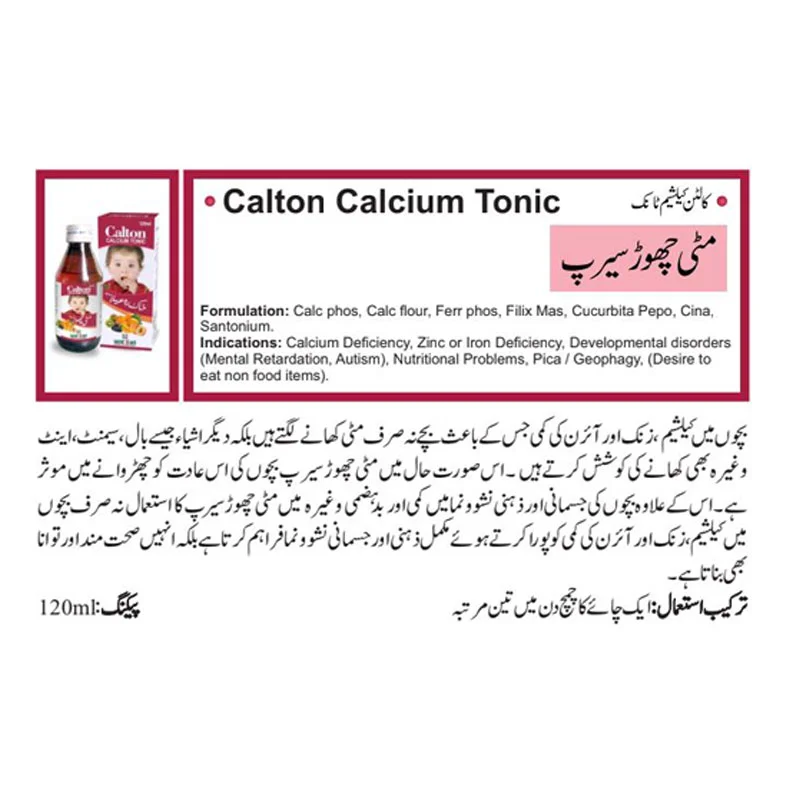
Adults generally need consistent daily calcium intake, and pairing it with adequate vitamin D is essential since vitamin D helps the body actually absorb the calcium it takes in. In Pakistan, where dietary calcium intake can vary widely and vitamin D deficiency is common due to limited sun exposure in daily routines, this combination deserves particular attention after 40.Calton Calcium Tonic
Calton Calcium Tonic helps fulfill daily calcium needs, strengthening weak bones, supporting joint structure, and improving overall physical vitality after 40.
View Product